The rise of virtual power plants in recent years reflects the complexity of the modern grid and the pressure to squeeze as much additional capacity out of it as possible.
Technology is raising regulator and ratepayer expectations for how utilities manage the multidirectional flow of power. At the same time, aggressive forecasts of rising electricity demand are fueling a surge in construction of utility-scale power plants, resulting in less emphasis on energy efficiency, grid utilization and distributed energy resources, some say.
Get caught up on the latest developments in virtual power plants and the aggregation of distributed resources in this Trendline.
Nevada ‘misses an opportunity’ in performance-based DER tariffs: advocate
The new demand response frameworks bring the state in line with other pay-for-performance virtual power plants while keeping NV Energy in the driver’s seat.
By: Brian Martucci• Published Aug. 26, 2026
Nevada utility regulators have cleared the way for NV Energy to develop two performance-based credit programs for distributed energy resources that provide energy or capacity services during load flexibility events.
Under the Energy Grid Services and Capacity Grid Services riders, customer-sited resources would be eligible to receive payments for dispatched energy based on hourly market pricing in NV Energy territory and for load reduction based on an avoided cost of generation and transmission calculation, the Public Utilities Commission of Nevada said in an Aug. 11 order.
But by limiting participation of third-party resource aggregators, the commission “misses an opportunity to establish a broader market that could have expanded customer choice, encouraged innovation, and helped lower energy costs,” one of the intervenors in the proceeding said in August.
The Grid Services Rider tariffs will replace a narrower demand response framework that has been on the books for 15 years and adds NV Energy to the list of U.S. utilities overseeing or participating in pay-for-performance virtual power plants, the commission said.
Most Nevadans get their power from NV Energy’s two subsidiary electric utilities, Nevada Power Company and Sierra Pacific Power Company. NV Energy is owned by Berkshire Hathaway Energy, a subsidiary of the publicly traded industrial conglomerate founded by Warren Buffett.
The Solar Energy Industries Association, Solar United Neighbors and Advanced Energy United pushed the commission to modify the tariffs to allow customers to assign performance compensation from batteries, thermostats and other distributed resources to third-party owners, portfolio aggregators and original equipment manufacturers.
They also asked the commission to require NV Energy to implement a digital platform to facilitate secure electronic data sharing with third parties with customers’ consent; and to require the NV Energy to include a virtual power plant resource type in its next integrated resource plan that would account for VPP capacity and energy like other supply resources.
NV Energy pushed back on all three asks, the commission said in a summary of the proceedings.
On compensation assignment, it said technological, commercial and wholesale market barriers made that impractical in the near term. On open data sharing, it argued that a digital exchange platform would not be required to successfully implement the proposed tariffs or load flexibility programs nor would be particularly relevant in a vertically integrated utility market like Nevada’s, which does not permit competition between electricity retailers. As for the VPP request, intervenors could raise that issue in an upcoming IRP proceeding, NV Energy said.
In its order, the commission largely accepted NV Energy’s arguments. It declined to allow assignment of compensation; require open data sharing; or require NV Energy to include a VPP resource type in its next IRP, citing “insufficient information to determine whether a VPP is a viable resource option for Nevada.”
In an email, commission spokesperson Peter Kostes declined to comment beyond the text of the order but noted the proceeding remains open at least until this week’s deadline for parties to file a reconsideration request.
Brian Turner, a senior director with Advanced Energy United, told Utility Dive that while his group was “very supportive of [the commission] going to this grid services tariff and transforming to a pay-for-performance grid services structure,” the order will curtail customer choice and could hinder adoption of behind-the-meter batteries in a state with relatively high residential solar penetration.
“Nevada is one of the sunniest states in the country, and it has pretty good solar deployment, but very low [battery] attachment rates … there’s huge potential to add batteries to the system to get that attachment rate up and get dispatchable capacity into neighborhoods where it’s needed,” Turner said.
Assignability is particularly important for behind-the-meter battery adoption after the federal investment tax credit for customer-owned residential batteries expired at the end of 2025, Turner said. Third-party battery providers that own and operate customer-sited energy storage systems have stepped up to keep behind-the-meter batteries affordable, thanks in part to available revenue from utility and market programs, he said.
Third-party aggregators also tend to be more reliable program participants than individual customers because they aggregate more distributed capacity than needed to meet their obligations, creating a buffer when customers opt out, Turner added.
He noted that Xcel Energy’s Colorado subsidiary, another vertically integrated utility in a Western market, chose to put forward an aggregator-based tariff recently for its Aggregated Virtual Power Plant program.
“They did so because it gave them more certainty and visibility into the performance of the portfolio overall,” Turner said.
In an email, NV Energy spokesperson Katie Jo Collier said the PUCN's initial guidance on the grid service tariffs "had a narrower scope than what Advanced Energy United understood."
"Very simply, it was not the forum for deciding upon the definition and role of competitive aggregators and curtailment service providers in the State of Nevada, nor the place for the PUCN to review and approve VPP programs or competition frameworks," Collier said.
Collier said stakeholders would continue to discuss the role of third party aggregators in Nevada as part of a PUCN investigatory docket related to NV Energy's future planned participation in the CAISO Extended Day Ahead Market.
NV Energy is expected to join the EDAM in late 2028, Turner said.
Article top image credit: Getty Images
VPP value proposition expands to affordability, reliability and resilience
Robust compensation and metering, along with strong customer protections, are needed to drive participation in utility virtual power plant programs, according to experts.
By: Brian Martucci• Published Aug. 19, 2026
Successful virtual power plants are reliable distributed resource aggregations that deliver targeted, predictable benefits for distribution or bulk power grids, a group of experts said August 18 during a webinar organized by the Regulatory Assistance Project.
Utilities increasingly see VPPs as affordability levers, too, said Kevin Brehm, who manages RMI’s carbon-free electricity practice. On the bulk system, they can decrease power demand when wholesale prices are high and reduce both capacity and transmission costs; on distribution grids, they can free up load interconnection headroom and help reduce, defer or avoid incremental system investments, he said.
To scale customer participation in VPP programs and improve dispatchability, utilities and resource aggregators should provide robust and predictable compensation; use “revenue-grade metering” to measure performance and embed customer protections like penalty-free opt-out, said Bronte Payne, senior manager for policy at Sunrun.
VPPs are becoming more sophisticated as utilities and aggregators learn from early deployments and new resources enter the mix, said Brehm, whose team helped develop RMI’s comprehensive catalog of active U.S. VPP programs.
Brehm said VPPs based around residential batteries and active managed electric vehicle charging are growing particularly fast amid slower growth in thermostat-based programs. Multiple operational models have emerged, he added: Utility-run VPPs that compensate consumers directly or use third-party aggregators as intermediaries; “market participant” VPPs, in which resource aggregations participate directly in energy, capacity or ancillary markets; and “bring your own capacity” VPPs, an emerging model that Brehm described as a hybrid of the two.
For utilities, well-designed VPPs can improve reliability on constrained distribution grids or provide resilience benefits in areas prone to weather-related outages or load shedding, Brehm said. Consolidated Edison Co. of New York’s demand-response VPP is a good example of the former, while Puerto Rico utility Luma Energy’s Customer Battery Energy Sharing program typifies the latter, he said.
VPPs continue to evolve, with new resource models like bidirectional electric vehicle charging on the horizon, Brehm added. An analysis commissioned by General Motors last month found vehicle-to-grid integration can deliver up to 15 times more value per vehicle than one-way managed charging.
“We would love to see more vehicle-to-grid participation in VPPs … I know some of the [auto manufacturers] are beginning to advocate and get a little restless,” Brehm said.
Nick Watson, director of flexible resource engineering at National Grid, said his utility is tapping distributed resource aggregations in 19 non-wires alternatives projects across its Massachusetts service territory.
Watson said National Grid has 7.2 MW of active or committed capacity across two separate programs: ConnectedSolutions+, a residential- and small business program that leans on stationary batteries, EVs and other resources; and a more market-based front-of-meter framework for commercial and industrial customers.
ConnectedSolutions+ is an outgrowth of New England’s long-running ConnectedSolutions VPP that aggregates customer-sited resources in targeted areas of high need. In exchange for payments higher than standard ConnectedSolutions participants receive, ConnectedSolutions+ participants allow National Grid to dispatch their resources “a little bit more” and at different times of day that may reflect local demand peaks, such as Friday or Saturday evenings, Watson said.
Eversource, National Grid’s main investor-owned utility competitor in Massachusetts, has also been enrolling customers in ConnectedSolutions+.
After calculating the potential value of non-wires alternatives in constrained grid nodes, National Grid looks at factors like customer type and present ConnectedSolutions enrollment levels to determine whether ConnectedSolutions+ or the market-based framework — which requires a request for proposals process — makes more sense, Watson said.
“We screen for how much dispatchable resource we [already] have in a location,” Watson said. If the answer is ‘not much,’ an RFP may be needed.
Xcel Energy is also tapping multiple distributed resource frameworks to address emerging grid issues in Colorado, said Zach Pollock, the company’s director of grid strategy and emerging technologies.
With more than 1 GW of solar on its 7-GW Colorado system, much of it distributed on rooftops, Xcel is “starting to see some operational issues in terms of voltage swings and reverse power flow that we need to get ahead of,” he said. A corresponding reduction in the incremental value of midday solar has Xcel looking toward a “direct-participant model” that emphasizes DERs’ capacity value, he said.
“It really becomes about how do you leverage DERs not just to generate [renewable energy credits] … but really from a system perspective, how do you generate value for all the customers being asked to contribute to the cost of the grid,” Pollock said.
Xcel issued a competitive solicitation earlier this summer for the state-mandated Dispatchable Distributed Generation program, which will enroll megawatt-scale batteries “operating on a schedule to provide meaningful load reduction benefits” in areas with distribution-system constraints, Pollock said.
Pollock said Xcel has also signed up “a few megawatts” for its Active VPP program, or AVPP, which aims to enroll 25 MW of behind-the-meter resources per year for five years. Though Xcel “reserves the right” to act as its own aggregator in the future, those resources will be managed for now by third-party aggregators, he said.
Xcel’s goal with AVPP is “let’s make this look like a four-hour battery … we don’t care what resources someone is going to bring us,” Pollock said.
Article top image credit: Mario Tama via Getty Images
The VPP value proposition for US utilities is steadily expanding. The benefits are increasingly clear. In an era of rising and more complex power demand, VPPs are stepping up at the 11th hour as a precise, powerful tool for tackling increasingly troublesome supply and demand patterns – cutting costs and increasing reliability in the process.
Still, most VPPs continue to operate according to a static paradigm: dispatching on inflexible “events.” This stands in the way of fully leveraging the technology and reaping the associated benefits. Today, the real solution lies in continuous optimization, which maximizes benefits for both grids and customers – and in the groundbreaking software that makes it all possible.
Event-based demand flexibility vs continuous optimization
Historically, demand response programs have operated in a relatively static way, relying on consumers to reduce consumption during defined events. Yet this paradigm has left VPP potential untapped outside of those events (especially given that event frequency is often limited by contract). These programs remain a relatively blunt tool for grid balancing, being difficult to adjust mid-event in line with real time grid conditions and becoming increasingly ineffective as supply and demand become more volatile.
Today, however, VPPs are capable of so much more. Connected EVs, chargers, batteries and other modern flexible assets can respond continuously, unlocking the opportunity for more consistent, precise, efficient VPPs that are active for far greater portions of the day. This, in turn, unlocks far more flexibility in today’s era of increasingly complex, volatile demand and allows utilities to capture value that event-based dispatch simply misses. A Pacific Northwest National Laboratory study found that continuous coordination could reduce peaks by 9–15% compared to static events, delivering $3.3–5.0 billion in annual net savings for a Texas-sized region (DSO+T Study, Vol. 1 (Reeve et al., PNNL-32170-1, Jan 2022), page i).
Location matters as much as timing
Continuous, next-generation dispatch benefits from being able to take location into account. Static and event-based flexibility generally responds to a common schedule, price or dispatch signal set across a wide geographic area.
For example, EV owners across a particular utility-sized network could be offered cheaper energy for charging during a particular off-peak window. But in areas with high concentrations of EVs, widespread charging during that off-peak window could strain local grid infrastructure even if demand remains low across the wider system. A uniform system-wide signal would still encourage EV owners in those locations to charge, potentially worsening local congestion and delivery costs.
Continuous, location-specific optimization enables a smarter response: in this case, keeping EVs charging where energy is abundant, and dialling them down where the grid is under pressure. PG&E’s Electrification Impacts Study illustrates the difference. Orchestrating devices at the local, secondary-network level reduced projected distribution costs by approximately $1.8 billion through 2040. System-wide-only orchestration delivered around $150 million in savings and triggered new local overloads — a roughly twelvefold gap in value. (PG&E, Electrification Impacts Study Part 2, CPUC R.21-06-017, 2026).
Continuous optimization is a hit with customers
Continuous optimization is able to provide substantial financial benefits for utilities and the customers they serve, while accounting for consumer preferences, such as the times customers want to charge their cars, how much charge they require by a certain time, and the opportunity to override an automated schedule. Respecting these boundaries keeps customers engaged and builds trust in the program.
In the UK, for example, 500,000 customers have signed up to a next generation tariff (rate) designed for EV drivers, Octopus Energy’s Intelligent Octopus Go – making it the UK’s most popular EV tariff. These customers set their preferences and plug in overnight to allow their utility to manage and optimize their charging. A study by the UK’s Centre for Net Zero’s AI in Charge study found that managed charging reduced customers’ electricity bills by around £343 – approximately $450 – per year, while removing the burden of manually adjusting behaviour in line with events.
Organizing to capitalize on the benefits of continuous flexibility
Many of the largest challenges standing in the way of successful, continuous VPP deployment are now organizational and software based.
There is a tendency toward singular use cases and a reliance on multiple vendors managing different device types. Traditionally, the utility teams (customer operations, grid planning, operators, etc.) that must work together seamlessly to create an effective, scalable VPPs have no legacy of collaboration and often don’t share data or systems.
Rather than handing responsibility for a VPP over to a singular department, leading utilities are creating cross-functional teams whose mission is to secure the full benefits of their VPPs, with full visibility and authority that transcends traditional utility silos to ensure alignment. These teams can then work together to establish what a VPP is attempting to accomplish – such as deferring substation upgrades, defining and measuring success, choosing which experts from other teams to involve, as well as deciding how to encourage engagement, and whether to consolidate programs under one umbrella.
Unlockingflexibility takes the right software
A VPP's ability to optimize thousands of devices in real time depends on the quality of data it receives. Octopus Energy’s Intelligent Octopus Go is able to consider grid imbalance, wholesale energy costs and customer scheduling to shift peak demand on the grid, for example. Powerful VPPs therefore also need an underlying software platform that is able to handle these data streams and put them to good use.
In a similar vein, managing a cross-functional VPP team with visibility over grids, devices, optimizations and customer engagement not only requires overcoming organizational siloes, but also underlying technological siloes as well. Relying on a range of disparate, cobbled together legacy systems that talk to each other in different languages can make it incredibly difficult to combine this information to make the best decisions for your VPP.
Fortunately, next-generation VPP is rising to the challenge on all fronts. Today, holistic platforms such as Kraken can leverage a range of data while dismantling siloes and simplifying rollout. These systems are built around unified data models, giving cross-functional teams visibility over a range of seamlessly integrated devices and broader systems – from customer management to grid monitoring. In a similar vein, these platforms streamline once challenging and time-consuming aspects of the VPP journey, such as rate creation and customer engagement. Octopus Energy used Kraken to rapidly build Intelligent Octopus GO, and continue to leverage the software to maintain this VPP product’s value and popularity.
The path to more powerful VPPs
It’s clear that a static, event-based model is reaching its limits and holding back VPPs from their full potential. Today’s flexible devices can respond continuously, precisely and efficiently – but capturing that value requires a new operating model, and new tech to power it. With good data, cross-functional teams and a unified software platform, connected devices can work far more effectively, delivering far greater rewards for grids, utilities and the customers they serve.
Article top image credit:
Adobe.stock.com/G_stockerthailand
Pay-as-you-go batteries: ‘One weird trick’ for the distribution grid?
Battery leases with low or no up-front costs are attractive in markets with well-developed virtual power plant programs and persistent grid congestion, but experts see them taking off elsewhere, too.
By: Brian Martucci• Published Aug. 11, 2026
Until about 10 years ago, homeowners seeking reliable backup power had little choice but to shell out thousands of dollars for a professionally installed standby generator.
Stationary batteries added a cleaner, fuel-free choice to the mix, but they can be even more expensive to purchase outright than diesel or natural gas generators, putting them out of reach for most middle-class homeowners. With import tariffs, country-of-origin restrictions and other factors putting upward pressure on component and module pricing for small battery systems, this dynamic seems unlikely to change soon.
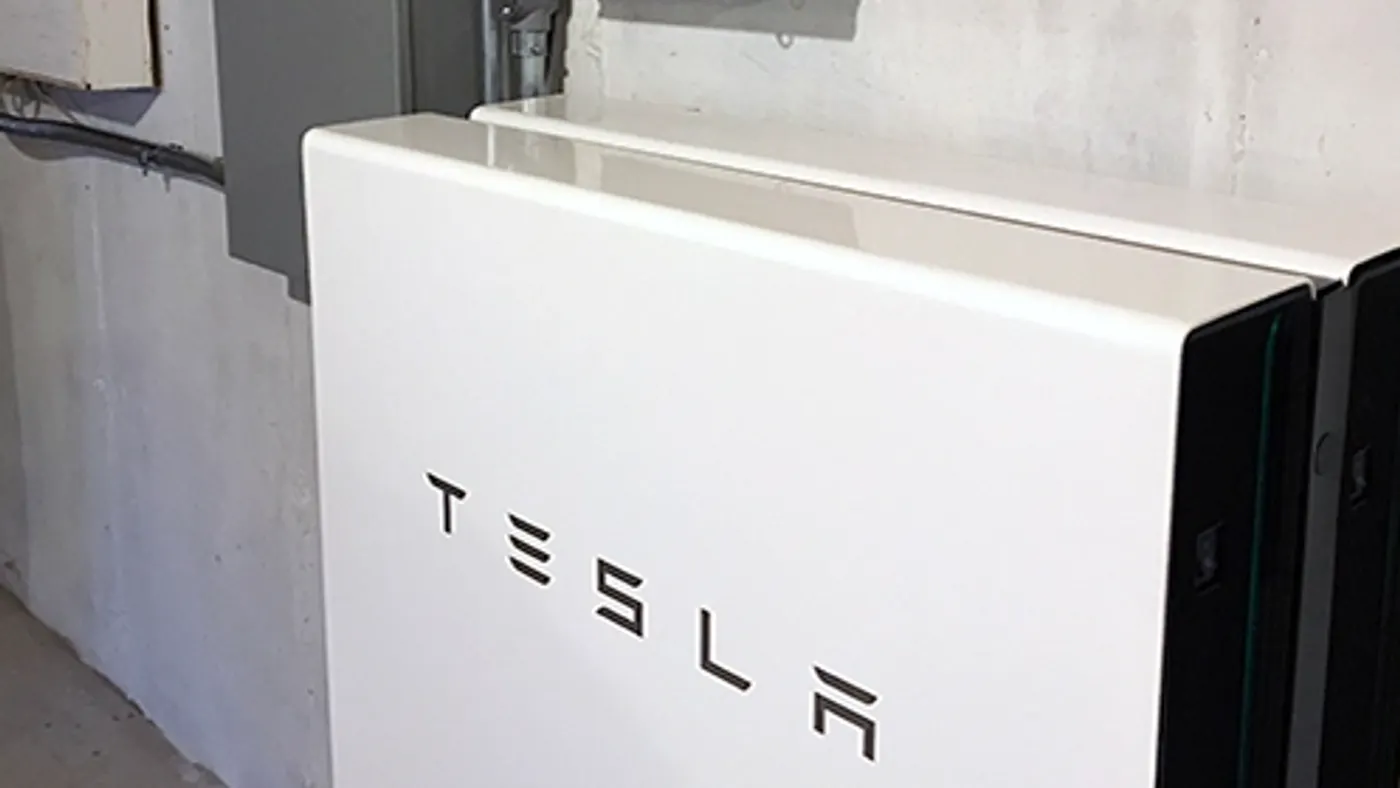
Yet distributed battery adoption could still grow, propelled by retailers marketing home batteries for little or nothing up front and a monthly fee that in some electricity markets costs a little more than a top-tier Netflix or Hulu subscription. Company representatives and distributed energy experts tell Utility Dive the model works — at least for now — because small-scale batteries are uniquely positioned to deliver value to their hosts and to the distribution grids that serve them.
Texas: ground zero for battery subscriptions
Base Power, an Austin, Texas-based startup that began operations in 2023, markets itself as an energy choice retailer to millions of Texans, no battery required. It offers backup-only battery subscriptions to customers of Texas public power entities including Austin Energy and Guadalupe Valley Electric Cooperative, charging customers a one-time initial fee of a few hundred dollars — sometimes waived — to place an oversized battery that it owns and promises to operate and maintain for 10 years. Customers normally pay $19 to $29 per month for the service, but Base waives the fee for some, including Guadalupe Valley Electric Cooperative members.
To customers served by the Oncor and CenterPoint Energy transmission networks, Base Power offers a separate energy-plus-backup plan that bundles an up-front payment that ranges from about $700 to $1,000 for one or two 39.2-kWh batteries, a monthly subscription fee under $30, and an energy rate under 14 cents/kWh, according to its website. The plans lock in subscription and energy pricing for the first 36 months.
Palmetto, a North Carolina-based company that offers solar and backup battery plans in about two dozen states, has a similar retail product for eligible Texas customers.
The Palmetto plan is new enough that it doesn’t have an official name — “internally, we’re calling the program ‘Lonestar’ until we come up with a better name,” Jesse Brennan, Palmetto’s director of business development, battery and home electrification, said in an email — but customers can expect an “effective cost” of $25 to $50 a month after rebates, Brennan said. “Lonestar” joins other recent battery-enabled retail entrants into the Texas market including Terra Energy’s TerraOne product and the planned launch of Octopus Energy’s PowerStore.
Action in Illinois
These retail arrangements aren’t unique to Texas. Base Power offers an even less-expensive energy-plus-backup deal in the northern Illinois territory of Commonwealth Edison, which is in the westernmost PJM Interconnection load zone. The 24-month plan offers a $95 installation fee and on-peak energy for less than 8 cents per kWh. That’s at least 25% less than ComEd charges, it says.
Will Kenworthy, senior Midwest regulatory director for Vote Solar, said Base can likely offer such favorable pricing in Illinois, a retail choice state, because of a 2022 tariff change that allows load-serving entities to aggregate their customers’ capacity obligations, including those of customers with on-site batteries that may export power at demand peaks, to reduce the LSE’s total net load — potentially down to zero. (The California Independent System Operator has proposed a similar aggregation methodology in its territory.)
“So when an electric supplier is trying to figure out what it costs to serve their customers, they can shape those customer loads to make it cheaper to supply energy and, thus, make it cheaper for the customers themselves,” Kenworthy, who is not affiliated with Base Power, told Utility Dive in an interview.
“That business model is kind of amazing … the opportunity has been there for a number of years, and I’ve always wondered why competitive suppliers didn’t jump on it earlier,” he said.
In June, Illinois regulators approved ComEd’s proposal for a battery-based “scheduled dispatch virtual power plant” that Andrew Plenge, ComEd’s vice president of strategy and energy policy, said in a statement would strengthen the regional grid while “helping customers receive additional value for their support at a time when supply costs are rising.”
Kenworthy said the SDVPP could attract more battery-toting energy suppliers to Illinois.
“Attention is turning to this as a particularly powerful tool for not just helping customers manage their own energy requirements, but also providing value to the grid,” he said.
Justin Lopas, Base Power’s co-founder and chief operating officer, said in an email to Utility Dive that “market dynamics” led his company to choose Illinois for its first venture outside Texas. ComEd’s supply rates have increased about 50% in 18 months, due mainly to a capacity shortage in PJM, which sets the stage for distributed storage to alleviate grid strain while lowering customer bills, he said. Similar potential exists in energy choice markets across the region, he added.
“Illinois is our first state in the PJM region, but certainly not our last,” Lopas said.
Responding to grid constraints
Distribution-connected battery aggregations “could play a disproportionate role in terms of mitigating power price volatility” on transmission-constrained regional grids like PJM and the Electric Reliability Council of Texas, Kasim Khan, a senior research analyst in Wood Mackenize’s power and renewables practice, said in an email.
These aggregations are especially useful when there’s not enough transmission capacity connecting areas with abundant generation resources, like renewables-rich West Texas, to demand centers like the cities and industrial zones of Central and East Texas, Khan said.
Those constraints create incentives for utility-scale developers to deploy batteries closer to demand centers, but permitting and siting challenges sometimes get in the way, he added.
Distributed battery providers are also working to solve localized grid constraints.
Fresh off a 10-MW residential battery deployment in its home state, California-based Haven Energy expanded into New England last month with a targeted offer for National Grid and Eversource customers in four Massachusetts counties. Pricing varies by location, utility and whether the customer already has solar, but early customers in particularly constrained grid pockets may qualify for pricing similar to that in Base’s Texas plans: a one-time up-front fee of a few hundred dollars and an ongoing subscription fee of $29/month.
These customers are generally eligible for Massachusetts’ new ConnectedSolutions+ VPP, an effort to bring more managed electric vehicle charging, stationary batteries and other types of flexible capacity onto distribution feeders that are particularly constrained due to high peak demand or daytime solar saturation.
Haven Energy co-founder and CEO Vinnie Campo said Haven uses real-time pricing signals from distribution utilities to determine how to value the batteries it manages and develop accurate pricing for its customers, who make one monthly payment to Haven and another to their utility.
“The value of a battery to the grid can be fundamentally different even one mile apart,” Campo told Utility Dive in an interview.
While battery lease economics turn on multiple factors, including state-level net metering permitting and interconnection rules, pricing is generally lower in markets with well-developed VPP programs, Palmetto’s Brennan said.
“The short-term opportunity we're most focused on is markets where VPP program development is accelerating because that's where the value proposition is strongest for homeowners and where we can move quickly,” Brennan said. The most enticing prospects in those markets are homeowners with existing solar arrays, for whom a backup battery means a step change in resilience, he added.
“It’s a natural next step [that] helps them to ‘upgrade’ their solar and get the most out of their batteries, since they can charge up with their [photovoltaic system] during an outage,” Brennan said.
$700M microgrid bill has state energy office, electrical manufacturer support
The bill would make microgrids and distributed energy resources eligible for state energy program grants and establish state-run grid resilience programs.
By: Robert Walton• Published Aug. 4, 2026
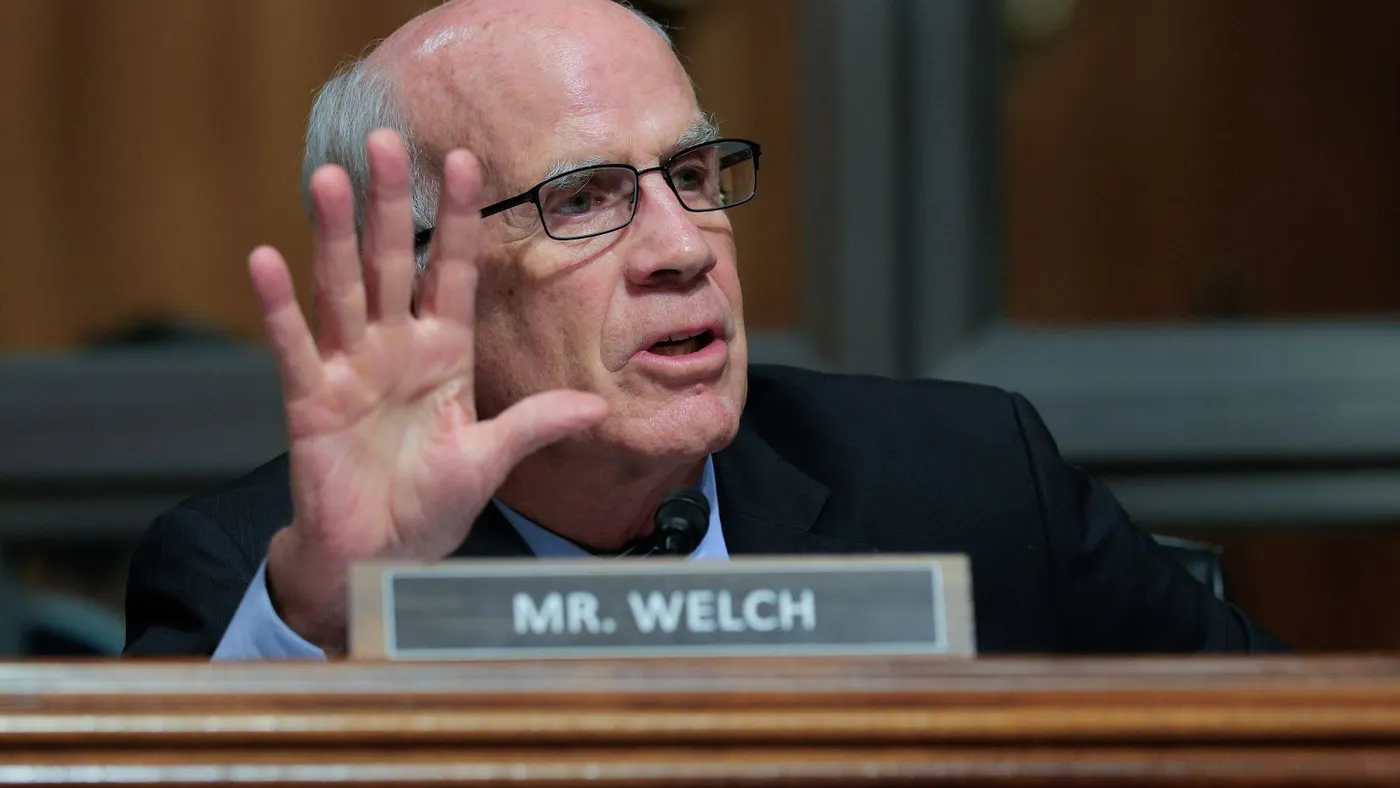
A bill to bolster the adoption of microgrids with a $200 million U.S. Department of Energy pilot and $500 million in state grants was introduced in the Senate July 29 by Sen. Peter Welch, D-Vt., ranking member on the Senate Agriculture Subcommittee on Rural Development, Energy, and Credit.
The STRONG GRID Act, which stands for Supporting Transformative Resilience, Operations, and Next-Generation Grid Innovation Deployment, aims to make microgrids and distributed energy resources eligible for funding under state energy program grants and establish state-run grid resilience programs to support their deployment.
The National Association of State Energy Officials, the GridWise Alliance and manufacturers and distributors of grid equipment have endorsed the bill, saying it could help advance the national conversation around grid modernization. “Microgrids, generally, they're not new. But they’re new to a lot of policymakers and states,” Peter Ferrell, senior director of government relations at the National Association of Electrical Manufacturers, told Utility Dive.
Over the last four to five years, much of the national electric conversation has focused on the “macro grid,” Ferrell said, culminating in the current discussion around how to bring growing numbers of large loads like data centers online quickly.
As those conversations focus on the challenges involved, particularly around reliability, “microgrids have become a little more front and center,” Ferrell said.
NEMA’s support for the Welch legislation goes beyond the bill’s particulars; it’s focused on broadening state and regulatory understanding of the technology and its ability to strengthen the electric grid, Ferrell said. Microgrids can provide options for grid modernization on constrained systems while also freeing up capacity to serve loads of all sizes, from electric vehicle chargers to data centers and manufacturers, he said.
“Microgrids are a tool to help provide more options to get those customers onto the grid in a responsible, reliable way,” Ferrell said.
Welch’s bill would direct DOE to establish a $200 million pilot program within one year to award competitive grants to projects demonstrating microgrid capabilities, including:
Providing ancillary grid services and supply and demand management.
Aggregating distributed energy resources into virtual power plants.
Facilitating load transfers to alleviate transmission congestion; and
Managing voltage instability or collapses.
And it would appropriate $500 million for state energy program grants for:
Conducting a microgrid needs assessment or feasibility study.
Designing and engineering a microgrid, including a solicitation of technical assistance.
Constructing a microgrid and its energy resources, including generation assets and energy storage; and
Implementing advanced cybersecurity systems.
The U.S. electric grid “is under more pressure now than at any point in our history, and extreme weather events are exacerbating that strain,” Sen. Welch said in a statement. “Our bill capitalizes on the potential of microgrids to help keep essential services online and reduce the economic impact of natural disasters.”
“As grid operators issue resource adequacy warnings and utilities revise demand forecasts upward at an unprecedented pace, tapping into local resources is an increasingly important way to protect communities from reliability risks,” GridWise Alliance CEO Karen Wayland said in a statement.
Welch’s legislation offers “a faster path to microgrid deployment in areas at high risk where extending or hardening traditional infrastructure can take years,” Wayland said.
Article top image credit: Chip Somodevilla/Getty Images via Getty Images
Battery-eligible New Jersey VPP program begins to take shape
Utility-owned storage could help mitigate grid congestion, a utility manager said at a July stakeholder meeting. Another said customer-centric program design is crucial to reducing attrition.
By: Brian Martucci• Published Aug. 4, 2026
Customer-sited energy storage devices will be among the assets cleared to participate in a two-year, technology-neutral virtual power plant program administered by electric distribution companies in New Jersey beginning next year, the state Board of Public Utilities said in a straw proposal released on July 15.
The “explicitly transitional” two-year program would evolve into a market-based, open-access VPP tariff from 2029 onward, according to the straw proposal. Where permitted, it would allow batteries and other distributed energy resources to stack payments for distribution-level grid services with PJM Interconnection wholesale market participation payments, the BPU said.
The framework makes New Jersey one of a growing number of states in both restructured and vertically integrated utility markets moving toward open-access VPP programs that allow non-utility companies to aggregate electric vehicles, residential batteries and other small-scale resources.
The BPU is accepting written comments on the straw proposal until Aug. 17. It sought input on the proposal from utilities, technology providers, ratepayer advocates and other stakeholders at an all-day public meeting on July 30.
The proposal fulfills a key directive in one of the energy-related executive orders Democratic New Jersey Gov. Mikie Sherrill issued upon taking office in January, the BPU said.
Executive Order No. 2 set aggressive capacity targets and timelines for BPU procurement of distributed, community-scale and utility-scale solar and energy storage capacity. It also directed the BPU to develop a VPP program within 180 days that would leverage existing demand response programs, look for opportunities to boost third-party electricity supply offerings and enable “operational and policy changes” to allow distributed energy assets in New Jersey to participate “to the fullest extent possible” in the PJM Interconnection capacity market.
The BPU said it would coordinate the straw proposal with several ongoing proceedings, including a virtual power plant request for information issued on April 20, the multi-phase Garden State Energy Storage Program proceeding and multiple proceedings on passive and managed electric vehicle charging.
It outlined eight principles governing the future VPP program, including equitable design and inclusive participation; technology neutrality and inclusive participation opportunity; “non-discriminatory aggregator access and friction-free enrollment and exit for qualified, participating resources”; and cross-program coordination to prevent double compensation.
The two-year transitional program would be administered by New Jersey’s four electric distribution companies and begin no later than July 1, 2027, the BPU said. It would take advantage of the utilities’ existing advanced metering infrastructure, direct load control platforms and demand response customers enrolled under New Jersey’s Triennium energy-efficiency program, it said.
The proposal sees the open-access second phase beginning in 2029 and running indefinitely thereafter. Bringing it to fruition will require “substantial stakeholder inputs, EDC investment, and third-party systems integration around a fully specified service architecture,” the BPU said.
At the July 30 stakeholder meeting, utility representatives detailed present and future battery-based demand response programs and the factors — both internal and external — that may increase their chances of success.
Tim Fagan, manager for planning and evaluation at PSE&G New Jersey, said the utility plans to roll out a VPP program this month that would provide an upfront incentive of about $5,000 for an 8-kW home battery and allow the customer to pay off the remaining installation balance through PSE&G’s on-bill repayment program. In return, the customer would allow PSE&G to discharge the battery during so-called peak-shaving events, he said.
Future battery-eligible VPP programs could feature recurring payments to customers, Fagan said, adding that PSE&G believes resilience-minded customers have already deployed “several thousand” small-scale batteries in New Jersey.
“Certainly we see a lot of opportunities for expansion … there’s an opportunity to enroll existing battery owners into a similar type of VPP program which would be a pay-for-performance type of program,” he said.
Fagan urged New Jersey to consider allowing electric distribution companies to own energy storage, a practice he said is increasingly common in both restructured eastern states like Massachusetts, New York and Maryland, and in vertically integrated markets like Hawai’i and Minnesota. With geographically targeted procurements for customer-sited batteries falling short recently in Hawai’i and Massachusetts, utility-owned storage can act as a backstop to add capacity on increasingly congested distribution circuits, he said.
Andrew Bayne, manager for energy efficiency programs at Pepco Holdings, said his company was thinking about how to minimize attrition among the 100-to-300 devices enrolled in its Delaware “bring your own battery” pilot.
Participating Delmarva Power customers will receive an estimated $1,080 in annual performance payments by direct deposit, not bill credits, Bayne said.
Among the questions Bayne said PHI is hoping to answer with the pilot — and potentially bring to customers of Atlantic City Electric, its New Jersey utility — is whether “that juice [is] worth the squeeze for the customer — is that $1,000 a year worth it” to allow the utility to cycle the battery? And, relatedly, how many called events can customers tolerate each season?
“These devices behave differently when you call upon them,” he said. “That behavior drives customer attrition from the program … [which affects] the value we can glean.
Article top image credit: Photo by Eduardo Munoz Alvarez/Getty Images via Getty Images
Illinois regulators approve ComEd VPP under new clean energy law
The program will discharge power from small batteries during events like the early-July heatwave that pushed PJM Interconnection demand to near-record levels.
By: Brian Martucci• Published July 8, 2026
The Illinois Commerce Commission has approved Commonwealth Edison’s proposal for a battery-based “scheduled dispatch virtual power plant,” or SDVPP, the Chicago-area utility said June 30.
The program replaces a previous, more limited VPP proposal ComEd withdrew in November following the passage of Illinois’s landmark Clean and Reliable Grid Affordability Act. The CRGA aims to increase distributed battery storage capacity across northern Illinois, the westernmost extent of the PJM Interconnection, amid increasing grid congestion and rising capacity prices.
The SDVPP program “is an important step in bolstering the potential of customer-sited energy resources to make the grid more resilient during periods of peak demand while helping customers receive additional value for their support at a time when supply costs are rising,” Andrew Plenge, ComEd’s vice president of strategy and energy policy, said in a statement.
Democratic Illinois Governor J.B. Pritzker signed the Clean and Reliable Grid Affordability Act in January, shortly after a U.S. Ccongressional report found Illinois retail electricity prices rose more than 15% in 2025. Illinois’s grid is split between PJM and the Midcontinent Independent System Operator, both of which have seen sharp increases in capacity prices.
The CRGA directs Illinois electric utilities to deploy 3 GW of energy storage by 2030 and develop VPPs that leverage distributed assets like residential and small commercial batteries, electric vehicle chargers and HVAC controls. The law contains other load management measures, including expanded energy efficiency programs and a requirement that utilities offer residential time-of-use pricing plans.
ComEd’s SDVPP is “exactly what Illinois lawmakers intended” when they passed the Clean and Reliable Affordability Grid Act last fall: “a way to quickly put distributed energy resources to work for the whole grid,” Will Kenworthy, Midwest regulatory director for Vote Solar, said in a statement.
Kenworthy praised ComEd for moving quickly to stand up the program, which he called “a model for how the clean energy transition can save people money.”
ComEd said the SDVPP will discharge power from enrolled batteries during periods of high power demand, helping shave load peaks that can strain the grid in the densely populated Chicago area.
PJM’s instantaneous load hit 162.7 GW on July 2, less than 3 GW shy of its all-time demand peak in 2006. The grid operator, whose territory stretches from northern Illinois to New Jersey, said it would likely have broken the 2006 record were it not for robust demand response participation.
ComEd says it has connected approximately 1.8 GW of distributed energy resources to its grid.
SDVPP participants must commit to five consecutive seasons, each running from June 1 to September 30, according to a ComEd filing with the ICC. Participants receive seasonal performance payments based on how much energy they inject into ComEd’s distribution grid during peak event.
Article top image credit: Getty Images
Google to fund 100-MW virtual power plant in PJM in ‘first-of-its-kind’ deal
Google has worked to make its own data centers flexible, but reasons it is often faster and more cost effective to pay other customers to shift their electricity usage, an executive told Utility Dive.
By: Meris Lutz• Published June 3, 2026
Google will fund a three-year, 100-MW virtual power plant in the PJM Interconnection with the aim of creating an “industry-leading scalable blueprint” for unlocking capacity to meet data center demand, the tech giant announced June 2.
The company is partnering with VPP operator Voltus, which will aggregate distributed energy resources from residential, commercial and industrial customers across the regional transmission organization, a spokesperson for Voltus said in an email.
Google has also worked to make its own data centers flexible, Amanda Peterson Corio, the company’s global head of data center energy, told Utility Dive, but reasons that it is often faster and more cost effective to pay other customers to shift their electricity usage. “The cost of capital in the data center, of our chips, can be billions and billions of dollars of hardware that only gets utilized to our customers if it’s running,” she said. “While there may be optionality for flexibility for some of our training of those chips, we want to make sure that we’re bringing all resources to bear from the system.”
The Google-Voltus deal, which the companies call a “first-of-its-kind,” comes amid rising electricity costs, shrinking reserve margins and aggressive load growth from artificial intelligence data centers, particularly in PJM.
PJM’s struggles, which have played out over several years of record-high capacity auctions and, more recently, reliability margin shortfalls, have prompted calls to overhaul the market or bring back some elements of the vertically integrated utility model.
Amanda Peterson Corio, Google’s global head of data center energy.
Permission granted by Google
Corio offered a diplomatic answer when asked in an interview if Google prefers to work in vertically integrated or deregulated markets, saying the company “partners across the ecosystem.”
“What’s really important, across any system, is transparency,” she said. “One of the great things about markets is that it allows us to get more information, to be more clear, to be able to do the modeling where distributed energy resources could be deployed, or to understand where there are bottlenecks.”
“There can be improvements in all market structures, quite frankly,” she added.
The pressure to meet rising demand, not only from large commercial and industrial loads but also broader electrification, is spurring a utility capital spending spree that is expected to surpass $1 trillion over the next five years. A significant amount is going to new gas-fired power plants that threaten the climate goals large companies like Google have spent years promoting.
But public backlash could alter those plans, with electricity prices taking center stage in several recent statewide elections. Three-quarters of Americans say they want stronger utility oversight, according to one recent report, which also calculated that utilities filed $9.4 billion in rate increase requests impacting 81 million people in the first quarter of this year.
The Google-Voltus announcement emphasized its potential to save on system costs, noting that expanding the grid to handle short periods of peak demand is “a primary driver of costs for electricity customers.”
“As a result, much of the nation’s electricity infrastructure and available capacity sits unused for most of the year,” it said. It said the partnership “establishes a repeatable path for other large energy users to follow.”
Corio said advancements in recent years have made it possible to build a multidirectional grid, not just a generation-to-load system, and she hopes the company’s new VPP can help.
“Our message to utilities is: Talk to us,” she said. “We’re very, very thoughtful about designing the structures today that 10 years from now we’re still going to like, and that can only happen if we work together and have greater transparency on both ends.”
Article top image credit: Mario Tama via Getty Images
Minnesota approves Xcel’s utility-owned battery program
Xcel will own up to 200 MW of energy storage under the second phase of its Capacity*Connect program.
By: Robert Walton• Published April 6, 2026
The Minnesota Public Utilities Commission on April 2 approved Xcel Energy’s utility-owned, battery-based virtual power plant, despite objections by clean energy groups and others who argued for opening the program to competition from independent developers.
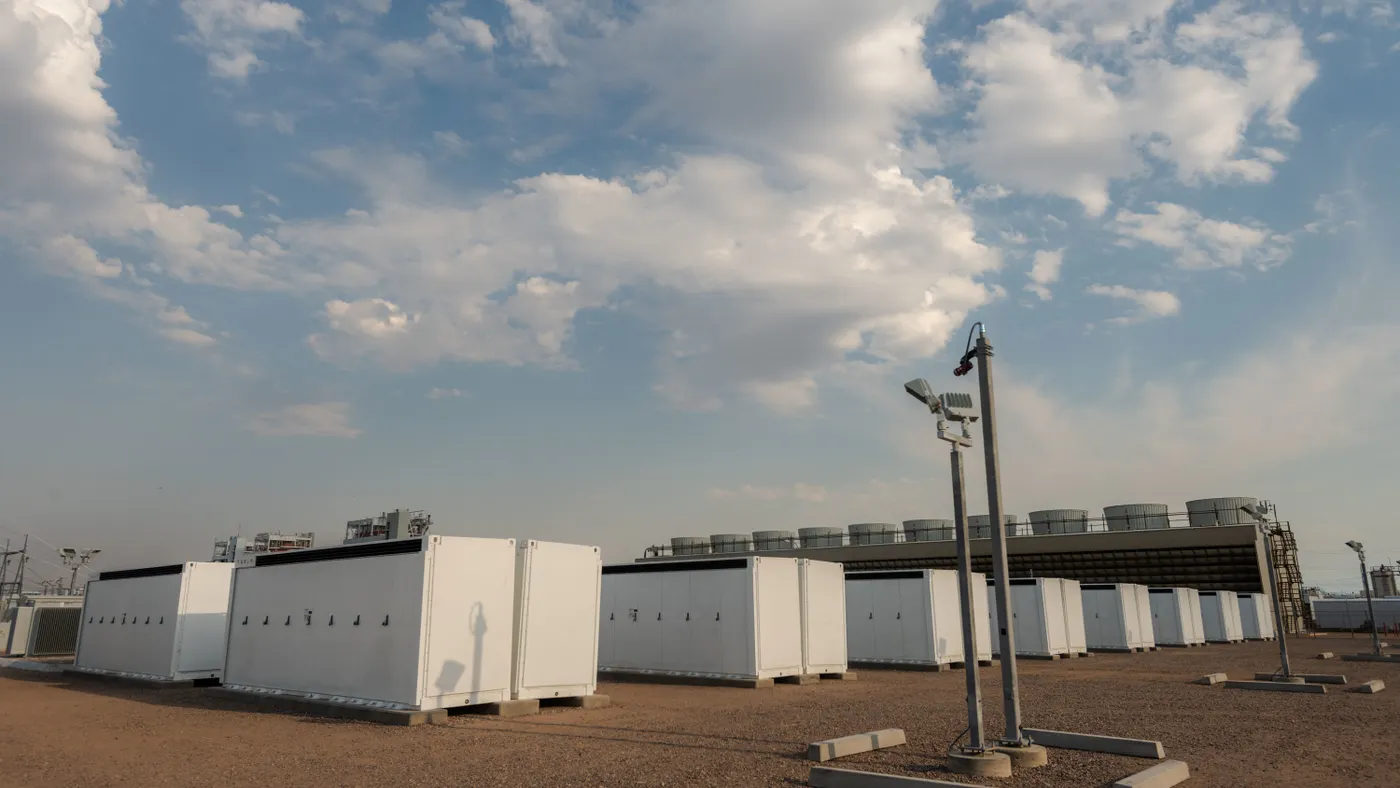
Through phase 2 of the Capacity*Connect program, Xcel will deploy up to 200 MW of energy storage systems across its distribution grid by 2028, with batteries sized from 1 MW to 3 MW. Battery deployment will be done in collaboration with deployment services company Sparkfund, the utility said.
The proposal has been closely watched both inside and outside the state for its potential implications for distributed energy resources. In a statement to Utility Dive, Xcel said it would install “cost-effective battery storage resources at strategic locations on the grid,” such as local businesses and nonprofits, to “help meet increasing demand for electricity, maintain reliable service for our customers, maximize the efficiency of existing infrastructure and support local jobs.”
The PUC considered a more limited version of the distributed battery program, but ultimately approved Xcel’s proposed 200 MW with an interim program assessment at 50 MW.
The program’s full-capacity budget is $430 million.
Regulators also indicated that they are open to other resource procurement approaches, however.
They called for Xcel to report on whether lessons from its behind‑the‑meter VPP pilot project in Colorado could be applicable in Minnesota. And the PUC required Xcel to provide regular status reports on Capacity*Connect and “a comprehensive evaluation of the program by an independent party.”
Capacity*Connect represents “a vital step toward modernizing the energy grid and meeting the growing electricity needs of our communities,” PUC Commissioner Hwikwon Ham said in a statement. Leveraging battery technology and virtual power plant models will help ensure a more reliable grid for Minnesota while creating a “more equitable energy future that delivers real value back to the communities,” he said.
The PUC directed Xcel to consider placing batteries in underserved communities and to partner with Building Strong Communities, a multi-trade apprenticeship preparatory program, to expand access to construction careers.
Minnesota clean energy advocate Fresh Energy said it supported Xcel’s proposal as a way to offset investment in fossil fuel infrastructure and get the most out of the existing electric system.
The group “is pleased with Xcel Energy and Sparkfund’s inclusion of several items that will allow small and diverse business owners to have the opportunity to bid on the Capacity*Connect contracts,” Shubha Harris, chief equity policy officer at Fresh Energy, said in a statement. “This is a step in the right direction to allow more people to benefit from the investments in the clean energy economy.”
Some solar and storage trade groups, however, called the PUC decision a missed opportunity.
Minnesota is the only state to adopt a distributed storage model that “forces everyday ratepayers to cover the investment risk instead of leveraging private capital,” according to a joint statement from the Minnesota and the national branches of the Solar Energy Industries Association, and the Coalition for Community Solar Access.
Capacity*Connect “unfortunately bears little resemblance to other states’ storage programs that are proven to lower energy costs and increase grid reliability,” Andrew Linhares, SEIA midwest director of state affairs, said in a statement. “Competitive markets for energy storage deployment ensure that ratepayers get the best, most affordable deal possible.”
Vote Solar called the PUC approval “positive progress” in bringing more battery storage to Minnesota, and highlighted the data analysis regulators required Xcel to do, but also argued the state is leaving “meaningful energy bill savings on the table” with the utility-owned resources.
Regulators required Xcel to develop specific estimates of the distributed energy resources benefits Capacity*Connect will provide to the grid by November 2027, and to submit a report as part of its integrated distribution plan. Xcel will also need to submit a plan within 180 days outlining how it will measure cost savings and grid benefits.
“This decision lays important groundwork for the future,” Will Kenworthy, Vote Solar’s Midwest regulatory director, said in a statement. “By requiring Xcel to define the grid value of all types of distributed energy resources, Minnesota is taking a key step toward fully recognizing the value of local clean energy like solar.”
Article top image credit: Courtesy of Salt River Project
In 2026, virtual power plants must scale or risk being left behind
The AI data center frenzy is shifting utilities’ focus to large-scale generation. But advocates say flexible, distributed energy resources still provide the biggest bang for the buck.
By: Herman K. Trabish• Published Jan. 27, 2026
Rising demand and new technologies are forcing utilities to coordinate distributed energy resources on an unprecedented scale, a trend likely to continue in 2026, analysts and stakeholders say.
But intimidating demand forecasts from power-hungry data centers, coupled with aggressive policy shifts away from renewables and efficiency standards, are turning power providers toward large-scale generation like nuclear, geothermal, gas and coal — possibly to the detriment of aggregation and demand response programs, they say.
“Utilities are shifting away from DER to focus on [utility-scale] wind and solar in the near term and then new natural gas, [extending the life of] aging coal, and [restarting] shuttered nuclear plants,” said Sally Jacquemin, vice president of power and utilities at AspenTech Digital Grid Management, Emerson.
Investment in distribution system modernization is also growing, but DER “is a lower priority,” she added.
But grid advocates and utility leaders say distributed resources could provide crucial benefits at a time of rising prices and accelerate the interconnection of large loads, which is a priority of the Trump administration.
In order to do that, virtual power plants must evolve and scale more rapidly or skyrocketing electricity demand and costs will force attention to traditional resources, industry sources say. The value of DER to the system will be determined by policies set by states, grid operators, federal regulators and officials in the Trump administration.
Allison Wannop, vice president of regulatory affairs and wholesale markets for Sparkfund, predicted that demand growth and affordability challenges will drive innovation to make the most of distribution system resources.
“20th century solutions will not build a 21st century grid,” she said.
‘Visibility will be key to VPP proliferation’
2025 was a good year for distributed energy resources and virtual power plants.
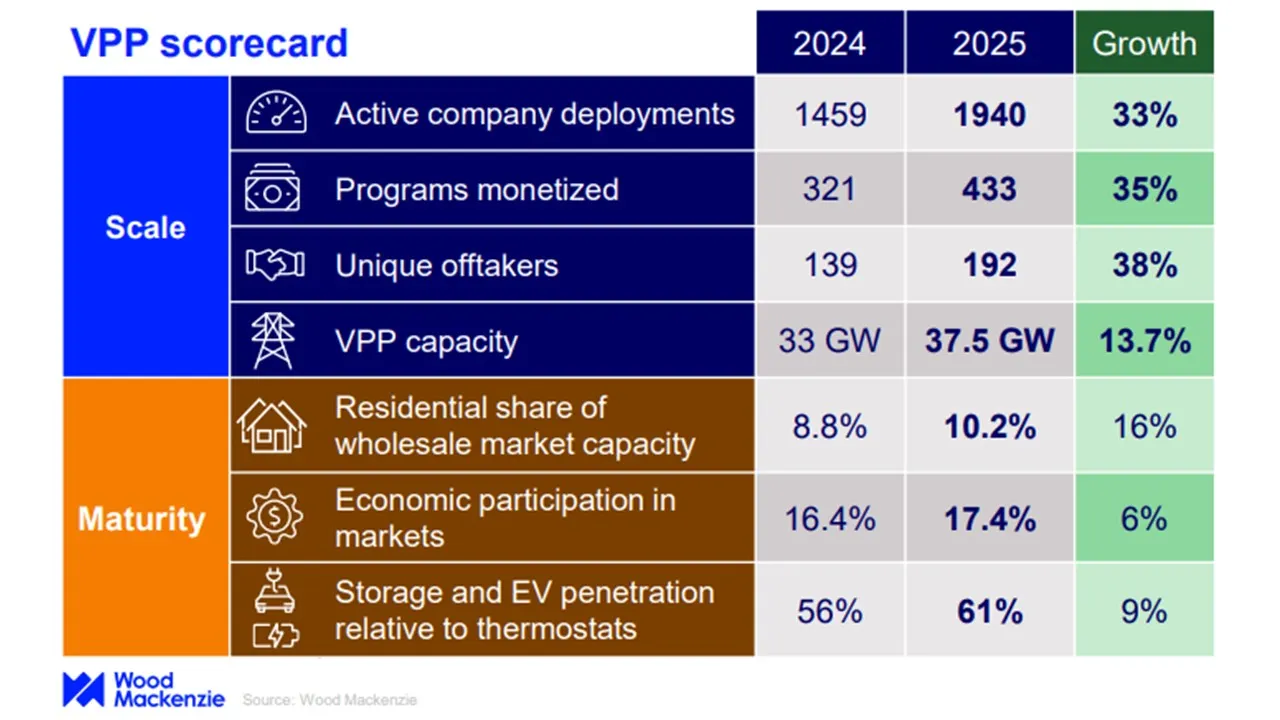
The numbers of active company deployments, unique offtakers for VPP capacity and monetized VPP programs all grew by at least one-third year over year, according to a September analysis by Wood Mackenzie.
But overall VPP capacity in North America grew only 13.7%, to 37.5 GW, a sign that the market is “broadening faster than it is deepening” due to persistent barriers to adoption, said Ben Hertz-Shargel, WoodMac’s Global Head of Grid Edge.
Many of these programs are still in pilot phase or otherwise limited in scope and effectiveness.
According to one recent analysis, VPPs are still a long way off from being considered an alternative to gas peaker plants.
The One Big Bueatiful Bill Act cut tax credits for residential rooftop solar.
Getty Images
The analysis from software provider EnergyHub proposed a Turing Test-inspired evaluation, called the “Huels Test” after one of the company’s data scientists, whichcompares a VPP’s performance against a peaker. On a scale of zero to four for “maturity” needed to pass the test by delivering “plant-like performance,” the most advanced VPPs only scored about a two.
2026 could be a decisive year for improving those scores.
Amid an unprecedented capital spending spree, utilities are poised to make foundational investments in distributed energy resource management systems, or DERMS, and data management systems to modernize their grids.
“Pressure on utilities to serve new loads will drive adoption of new system capabilities,” said Jen Downing, a former senior advisor in the Department of Energy and co-author of DOE’s VPP Lift-Off reports.
VPPs will not meet large baseload needs, but “for peak demand reductions of up to 20%, they are a proven cost-effective option,” she added. That could make them competitive against, for example, diesel generators deployed by hyperscalers to meet a daily two-hour peak, she said.
Of course, she noted that the total cost over time “is project-specific and depends on capital costs, fuel costs, the local grid and other variables.”
Prominent VPP technology providers expressed optimism about the sector’s outlook.
“Affordably meeting the new loads is the priority,” said Gisela Glandt, vice president of VPPs for grid edge software provider Uplight.
In 2026, utilities and their partners will develop “end-to-end distribution system management,” and “that visibility will be key to VPP proliferation,” she added.
Important federal policy shifts for distributed resources
At the federal level, regulatory, legislative and other policy decisions could have big impacts on VPPs and aggregated DER adoption.
The One Big Beautiful Bill Act signed by President Donald Trump on July 4 cut incentives for both utility-scale and residential solar systems, as well as tax credits aimed at weatherization, energy efficiency and appliance upgrades. The administration has also moved to weaken support for electric vehicles, roll back efficiency standards, ease pollution rules and cancel clean energy grants and loans.
Taken together, these actions could slow the pace of electrification and the proliferation of resources like solar panels, electric vehicles, batteries, heat pumps, smart appliances and thermostats that could be harnessed into virtual power plants.
“The macro trends for utilities in 2026 will be driven by the loss of tax incentives for renewables and customer-owned resources,” said AspenTech’s Jacquemin.
And with increasing costs for transmission and distribution infrastructure, “pricing to consumers is what is most on utility executives’ minds,” she added.
Optional Caption
Permission granted by WoodMac
At the same time, however, federal regulators – at the urging of the White House – are considering ways to accelerate the interconnection of data centers, which the administration considers critical to the economy and national security.
The Federal Energy Regulatory Commission has initiated a rulemaking process for connecting large loads after Energy Secretary Chris Wright called for it to take a more active role, including by prioritizing flexibility.
Any order resulting from that process is likely to include flexibility requirements, said Nancy Chafetz, vice president of regulatory and government affairs for DER aggregator CPower.
The question in 2026 will be whether VPP compensation for energy, capacity and ancillary services at the wholesale and retail levels will be adequate to incentivize participation, she said.
Emerald AI, one of the most advanced providers of software to manage data center load flexibility, is in the process of including distribution system resources, including aggregated customer-owned DER, into its platform, said Varun Sivaram, its CEO. That capability should be in place in 2026, he added.
FERC will also continue to review compliance filings for 2020’s Order 2222, which required system operators to include aggregated DER in their wholesale markets.
But Kay Aikin, CEO of software platform provider Dynamic Grid, said “the lack of coordination at the wholesale-local market overlap will lead to operational issues.”
MISO’s Joundi, CPower’s Chafetz, and the Wood Mackenzie report also said they expected little from Order 2222 compliance.
Market rules shape incentives
Some of 2026’s most influential policy will be determined by system and market operators.
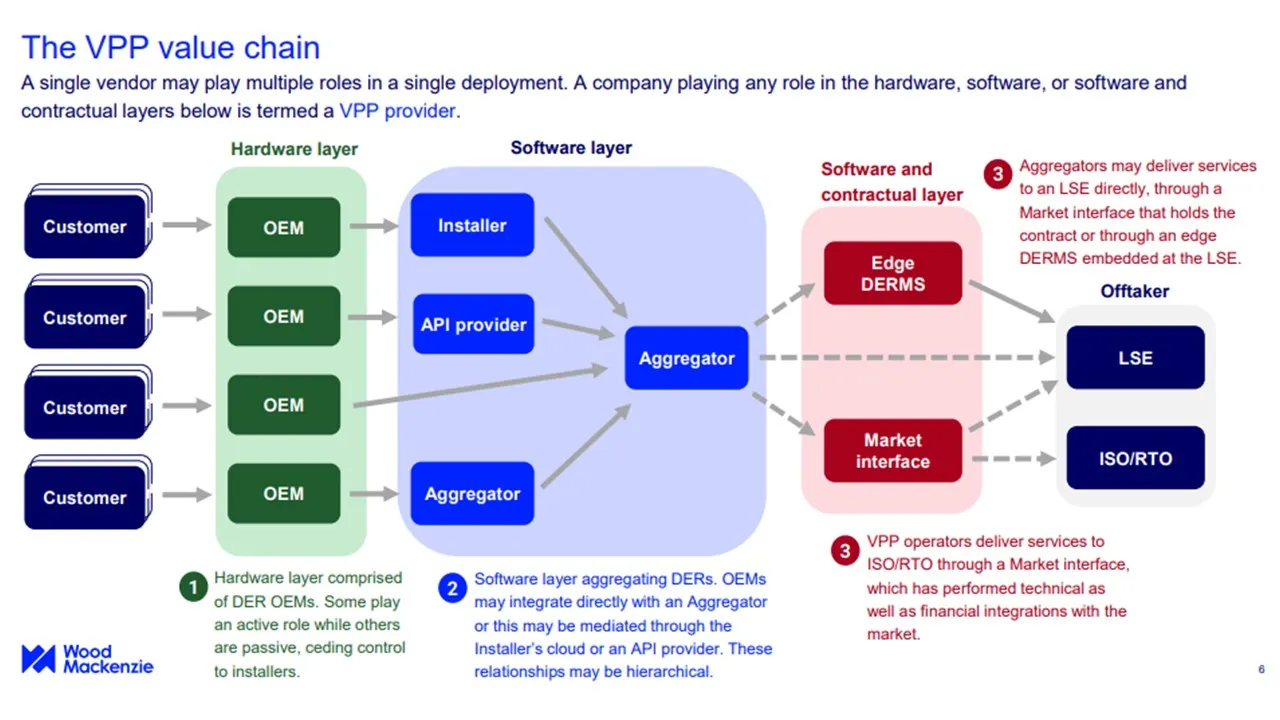
In 2025, federally-regulated regional systems integrated more VPP capacity than investor-owned utilities, Wood Mackenzie reported. Markets facing the biggest proposed data center loads – the PJM Interconnection and the Electric Reliability Council of Texas – used VPPs the most, it added.
But an October announcement from PJM, the biggest U.S. system operator, could have less favorable impacts for DER than it might seem.
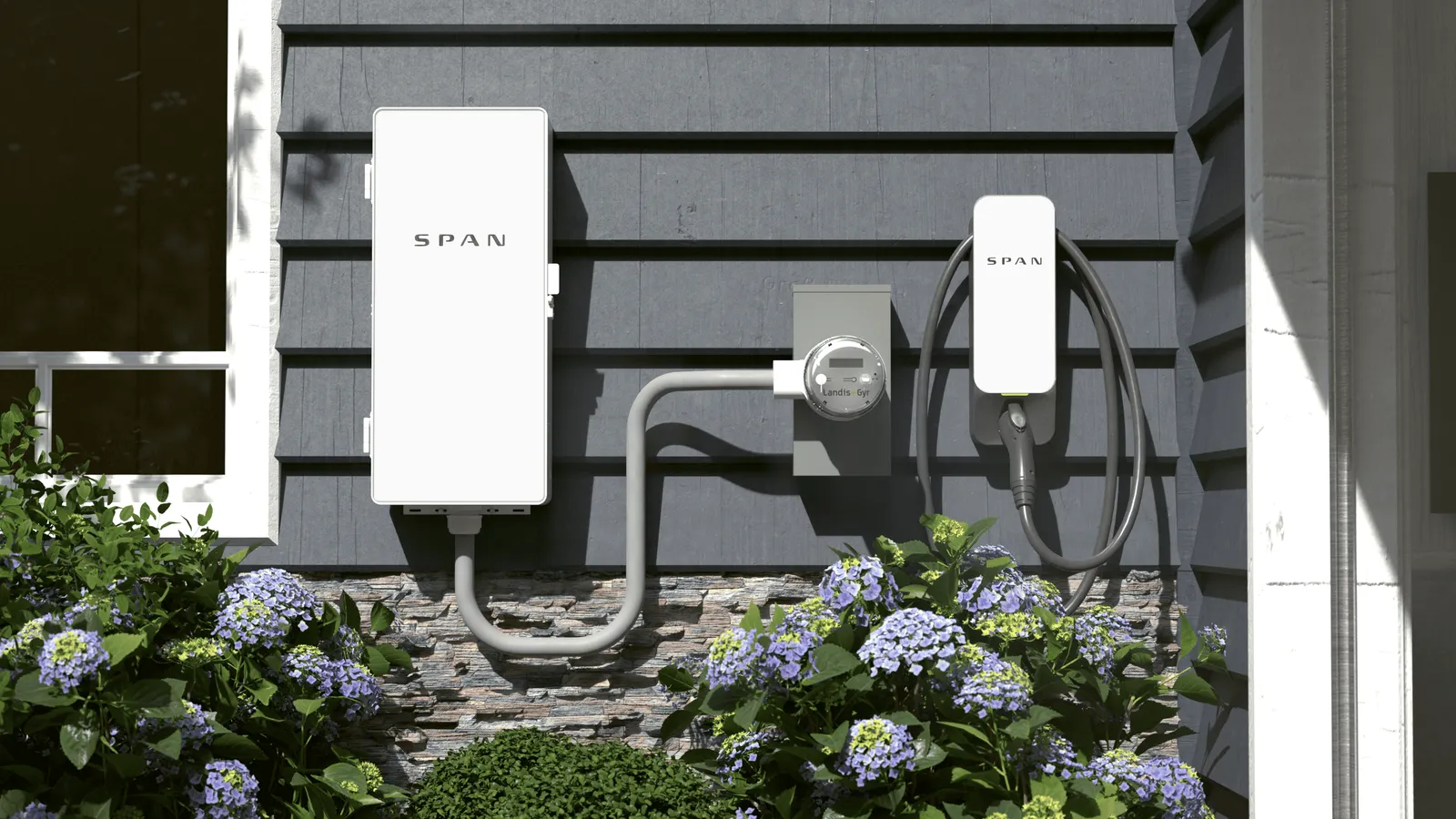
A SPAN Edge device attached to an electricity meter on the side of a house. The at-the-meter load control device is designed for utilities to better manage the distribution grid and was used in at least one VPP pilot last year.
Courtesy of Span
PJM increased the Effective Load Carrying Capability, or ELCC, value for demand side resources in its 2027-28 capacity auction from 69% to 92%. ELCC is used to evaluate reliability and seeks toquantify a resource’s availability to reduce demand spikes.
The higher valuation favors distributed demand-side resources by effectively assigning them a greater reliability score. But narrowed eligibility requirements shut out many residential and smaller commercial participants, Uplight’s Glandt said.
Existing PJM rules credit demand resources for reducing load more than they actually do, which means that their “actual performance has never been good,” said Joe Bowring, president of PJM independent market watchdog Monitoring Analytics.
And PJM’s proposed rule revisions will not improve their performance because they do not link compensation to availability, he said. The new rules “are equivalent to the status quo that has increased the costs to PJM customers by about $16.6 billion over the last two capacity auctions,” Monitoring Analytics reported in November.
Proposed MISO reforms would drive more flexibility in its load-modifying and demand response resources, said Zak Joundi, MISO’s head of market development. Under this system, new price signals will “support reliability by either reducing load or turning on distribution system generation,” he added.
Those reforms are still proposals that are expected to be reviewed for approval by MISO member states and FERC between 2026 and 2028, Joundi said. And under the existing market incentives, use of demand resources could dip in 2026 if sudden demand peaks are less frequent, he added.
But, Joundi stressed, “the business case for wholesale market resources that can come online faster and be more flexible will likely grow over time.”
Nicholas Papanastassiou, director of market development for software provider EnergyHub, agreed. But “targetedutility demand response programs” of aggregated DER “can more reliably shave demand peaks” and “deliver ratepayer savings without the complexities of wholesale market programs,” he added.
Use of DER has grown in the Texas Emergency Response Service program available through retail electric providers, Papanastassiou said. That shows the effectiveness of demand response for distribution system companies, he added.
Optional Caption
Permission granted by WoodMac
Already, the market for aggregation and flexibility services appears to be growing.
While federal and regional market policies shake out, states could push for greater aggregation, policy advocates said. Public anger over rising power bills is already pushing some elected officials to take action.
Her order came on the heels of Illinois Gov. JB Pritzker signing the Clean and Reliable Grid Act setting new storage targets and VPP requirements for that state.
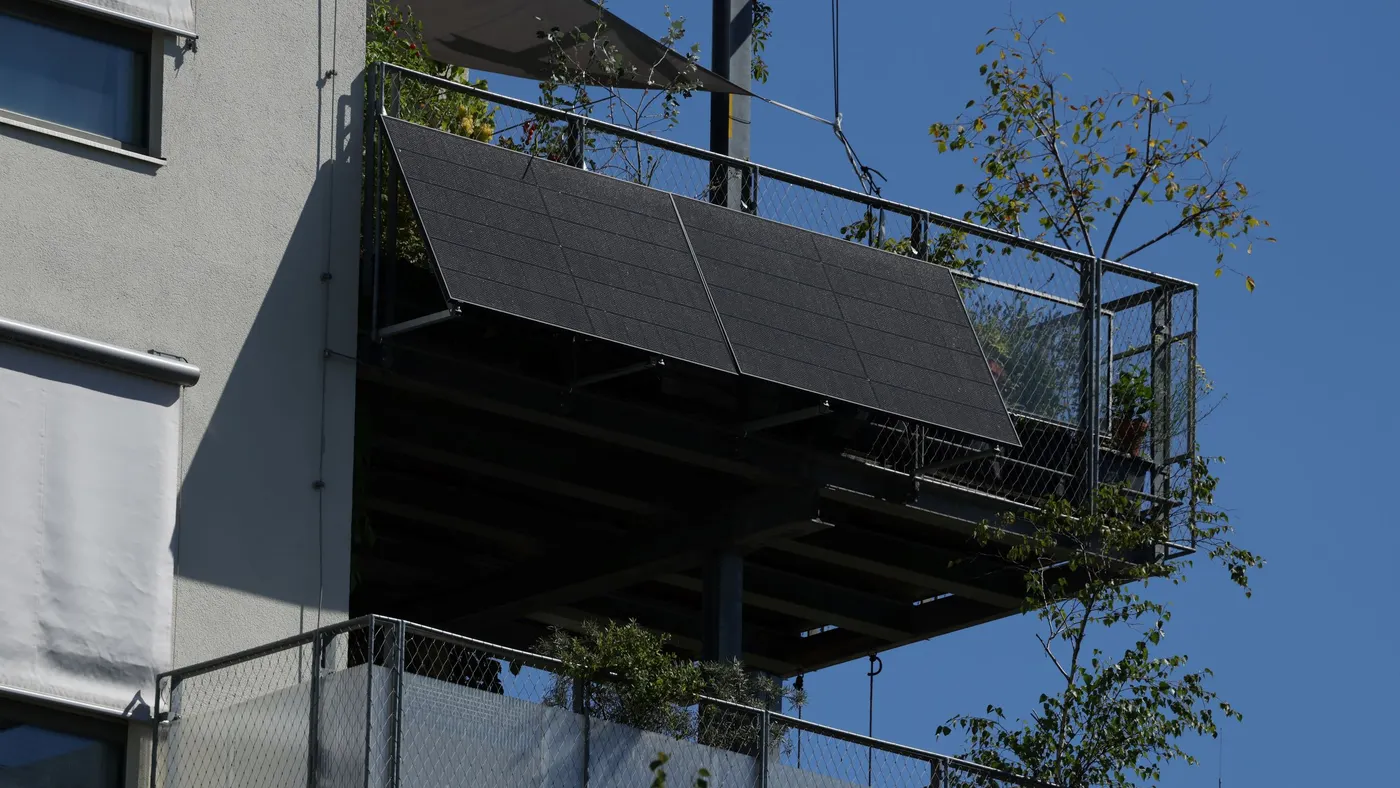
A number of states are also weighing legislation to promote consumer access to small, plug-in “balcony” solar, heat pumps and other resources that could be aggregated. Others are proposing that large load data centers pay for customer-sited resources in return for the use of them during demand peaks.
“20th century solutions will not build a 21st century grid."
Allison Wannop
Vice President of Regulatory Affairs and Wholesale Markets for Sparkfund
California, which advocates say boasts the largest virtual power plant in the country and possibly the world, has cut state funding for aggregation but continues to set new records for deployed capacity.
The growing role of states is the reason the Energy Policy Design Institute launched its VPP Convergence Project, a coalition of advocates attempting to standardize regulatory approaches to VPPs, said its Founder and Executive Director Ted Ko.
The variety of VPP business models, technologies, use cases and system services makes state regulators’ decision-making increasingly difficult, Ko said. The VPP Convergence Project, which is working with the National Association of Regulatory Utility Commissioners, intends to “bring clarity to those decisions,” he added.
Programs for different resources are often very different, which has complicated the understanding of distribution system resources, Proudlove said. But there are a lot of ongoing regulatory proceedings, and “increasing interest in linking VPP programs to load growth,” she added.
Article top image credit: Sean Gallup via Getty Images
Inside the rise of virtual power plants
As electricity demand increases, states and federal agencies are looking to virtual power plants to enhance grid reliability, lower energy costs, and shape load. Experts across the energy industry agree that standardization of VPPs and additional options are needed for utilities to adopt and integrate them more widely.
included in this trendline
Nevada ‘misses an opportunity’ in performance-based DER tariffs: advocate
VPP value proposition expands to affordability, reliability and resilience
Pay-as-you-go batteries: ‘One weird trick’ for the distribution grid?
Our Trendlines go deep on the biggest trends. These special reports, produced by our team of award-winning journalists, help business leaders understand how their industries are changing.





.png)