Dive Brief:
-
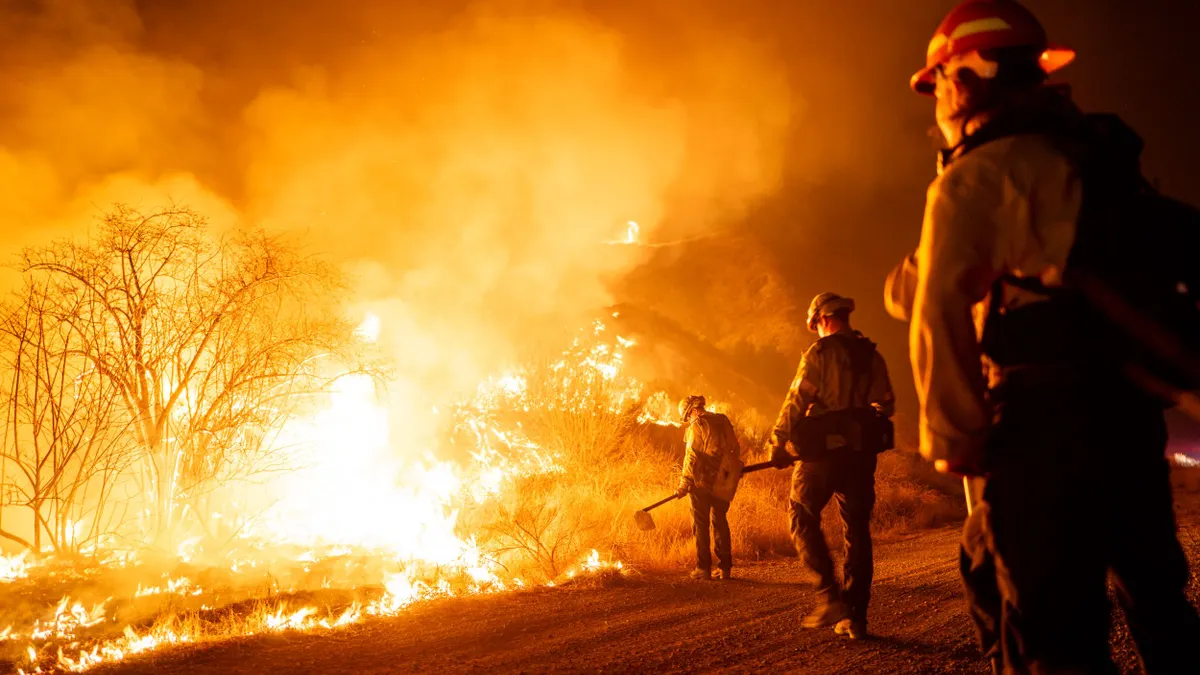
An extremely dry winter across the western U.S. has increased the risk of serious fires for 2026, according to National Interagency Coordination Center Manager Sean Peterson.
-
The center, tasked with coordinating wildfire response throughout the U.S., tallied 77,850 total wildfires and 5 million acres burned in 2025, compared with 67,897 wildfires and nearly 9 million acres burned in 2024.
-
Despite total wildfire acreage in 2025 falling from the previous year, a few high-profile fires reopened policy discussions and made the year feel bigger than it was, said.
Dive Insight:
While fire starts were higher in 2025, the total acreage burned by wildfire last year fell below the 10-year average of 7.6 million acres, according to the NICC.
The location of last year's fires can explain most of the acreage decline, Peterson said. Typically the largest fires take place in Alaska or the Southern Plains, but frequent precipitation through the spring and early summer last year suppressed fire activity in the Southern U.S.
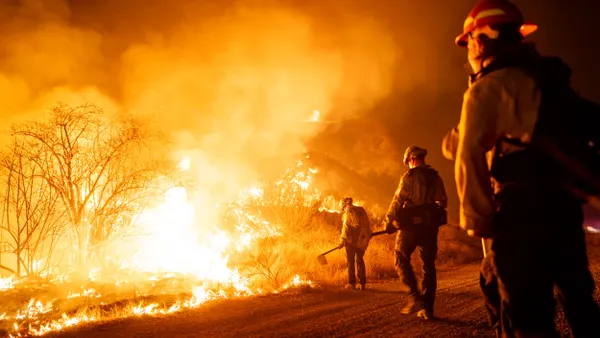
Some 2025 fires garnered headlines not for their size, but for what they burned, Peterson said. The Dragon Bravo Fire on the North Rim of the Grand Canyon destroyed the historic Grand Canyon Lodge in September, and the concurrent Eaton and Palisades fires in the Los Angeles area in January 2025 triggered the most destructive 48-hour disaster in recorded California history.
The Eaton Fire was also the first major utility-related fire to occur after the legislation creating the California Wildfire Fund took full effect. It demonstrated just how quickly a single fire might deplete the $20 billion fund, according to Jack Buckley, a vice president on Capstone's Energy advisory team.
“There is a growing recognition that more work needs to be done in terms of mitigation and liability reforms,” Buckley said. “Because I don't think the state or any stakeholder wants to get into a position where every three to four years you need to find another $10 billion for the fund. What you need is holistic reform.”
Where those reforms go is another question. California lawmakers have already seen pushback from constituents and groups, such as the insurance industry, that fear they will be left holding the bag if utilities' liability is curtailed, Buckley said. He believes a wholesale repeal of the state's inverse condemnation legal doctrine is unlikely.
Inverse condemnation, a legal construct unique to California, allows utilities to be held liable for wildfire damages regardless of whether the utility is found negligent. The concept is derived from the state constitution, so overturning it would require a 2/3 vote by the state legislature and a ballot measure — at a time when voters are primarily concerned with the rising cost of living, Buckley said.
Ongoing conversations about Wildfire Fund reforms are likely to focus on other solutions, he said.
“I don't think there is a silver bullet here. It's a multi-stakeholder issue that requires change across the spectrum,” Buckley said.
Meanwhile, 2026 is off to a rough start for wildfires, Peterson said. Southern Plains states that tend to generate the largest wildfires have already experienced early-season fires, and an extremely dry winter has increased the odds of severe fires in most Western states, including California.
It's anyone's guess how the next year will unfold, however, Peterson said. This time last year, forecasters predicted major fires in 2025 across the Southern U.S., where potential fuel had built up through a wet fall and winter. But in the end, the rains continued through spring and early summer, and the anticipated fires never materialized.