Dive Brief:
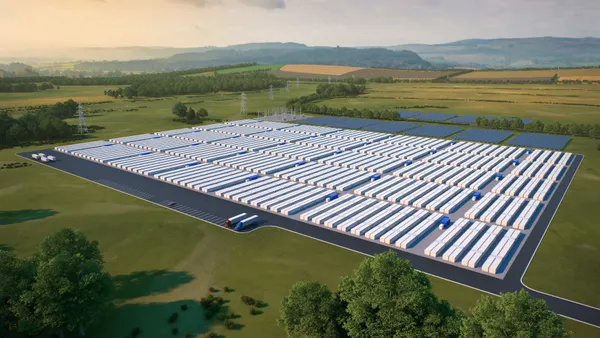
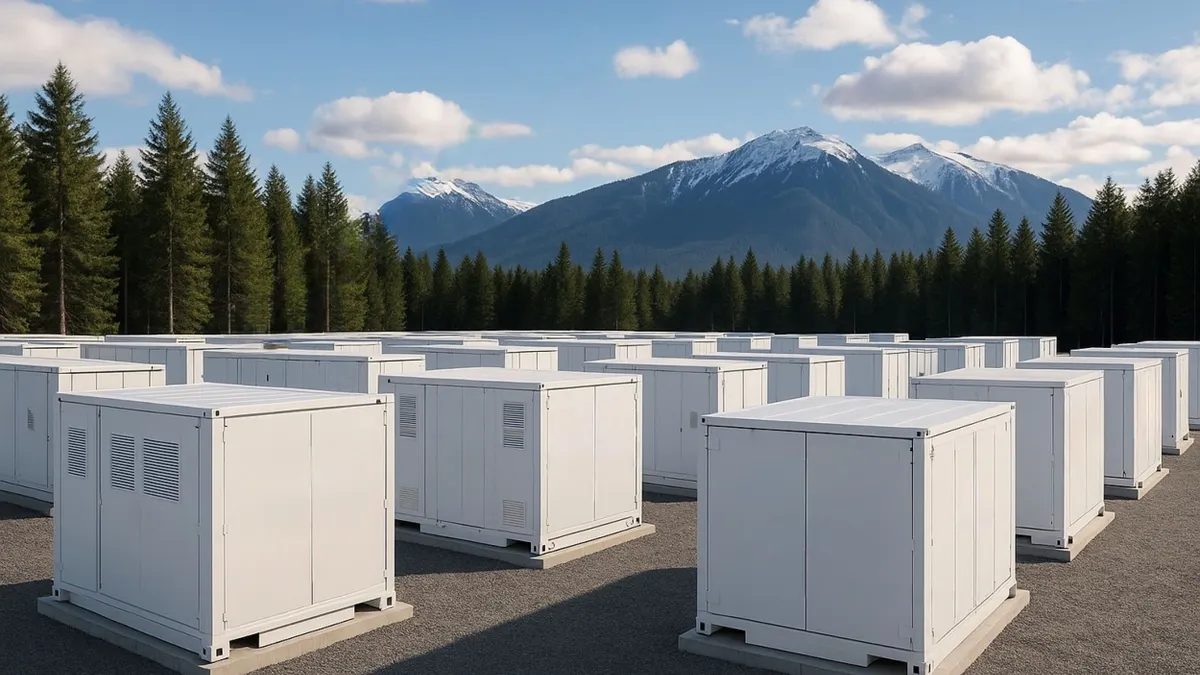
- A 200-MW/800-MWh standalone battery energy storage project near Tacoma, Washington, could be “the first of several” builds from power and digital infrastructure company BrightNight in transmission-constrained parts of the Pacific Northwest, according to a company executive.
- After receiving $400 million in project financing, the Greenwater Energy Storage Project will provide grid services and firm power to Puget Sound Energy, the utility for much of the Seattle-Tacoma region, BrightNight and its joint venture partner, Cordelio Power, said Wednesday.
- “There’s a strong and growing case [for battery storage] throughout the whole region, and especially west of the Cascades,” Scott Bolton, senior vice president of external affairs for BrightNight, said in an interview.
Dive Insight:
BrightNight and Cordelio said in a news release that they expect the Greenwater project to come online next year. A spokesperson for Puget Sound Energy said in an email that it’s “scheduled to be operational by mid-year 2027.”
“Battery energy storage systems are an important part of PSE’s plans to meet peak energy demand while delivering more of the clean energy required by Washington’s ambitious clean energy laws,” the spokesperson said.
Bolton said PSE will operate the asset through a tolling agreement that allows the utility to match the storage system’s charge and discharge cycles to local power flows.
Those power flows have changed significantly over the past five to seven years. Historically, the hydropower-heavy Pacific Northwest grid had ample capacity to support exporting electricity to California and the desert Southwest, Bolton said.
Now, the region is just as likely to be a net importer of electricity as generation capacity expands to the south, he said. Standalone battery installations play an increasingly important role in managing those flows by warehousing electrons during periods of overgeneration and discharging them when demand rises, just as highway rest stops accumulate cars in heavy traffic and empty out as rush hour subsides, Bolton said.
“There’s not a lot of new transmission or transmission upgrades that are able to happen along the Interstate 5 corridor” between Seattle and Portland, Oregon, Bolton said.
Bonneville Power Administration, the federal agency that operates the bulk power system in the area and provides about one-third of the electricity generated in the Pacific Northwest, said last year it would invest about $3 billion to expand transmission capacity in Washington and Oregon.
Those investments include new and expanded 500-kV circuits between the 6.8-GW Grand Coulee Dam substation in north-central Washington — the United States’ largest power plant by nameplate capacity — and the Olympia, Washington, area, southwest of the Greenwater project. But cost, timing and permitting challenges will delay or kill a slew of other generation and transmission projects proposed for the region, current and former BPA executives said last year. With more than 65 GW of unstudied service requests in its transmission queue, BPA earlier this year said it would not consider requests submitted after Aug. 15, 2024.
A coalition of five ratepayer advocates, environmental organizations and renewable energy groups said earlier this year that BPA’s transmission system could come under further strain if it joins the Southwest Power Pool’s Markets+ day-ahead market instead of the California Independent System Operator’s competing Extended Day-Ahead Market.
In a lawsuit filed July 10, the groups said BPA’s decision to join Markets+ would increase the risk of blackouts in the region due to the “many and complex” transmission seams connecting its territory with the noncontiguous Southwest Power Pool grid.
Bolton said regional grid challenges mean Oregon and Washington will remain “significant areas of focus” for Florida-based BrightNight, which is interested in deploying both hybrid generation and storage facilities and standalone storage installations that can integrate growing volumes of renewable power generated elsewhere. BrightNight’s proprietary AI platform, PowerAlpha, helps it game out how installations are likely to perform after deployment, he added.
“It’s going to be fairly case-by-case, with each site having its own unique attributes,” Bolton said. “[We feel] pretty well-positioned to come in with optimized solutions … that comes from doing the hard work of understanding Bonneville’s topology and load-serving entities’ needs.”