Jigar Shah is founding advisory chair, and Arnab Pal is executive director, of Deploy Action
Electricity bills are becoming the next major cost-of-living crisis, and unlike groceries or housing, most governors can’t blame “the market” and move on.
Utility rates are set through public processes, and today’s increases are driven by record spending plans, a wave of rate cases and a grid planning model that rewards building more infrastructure, often to serve just a handful of congested hours.
The load-growth “supercycle” is real. Data centers, industrial reshoring and electrification are pushing demand growth at a pace the United States hasn’t seen in decades. The temptation is obvious: Build new natural gas-fired generation fast, tell voters you’ve got it handled and hope the bill doesn’t come due until after the next election.
But the bill is coming due now and customers are facing sticker shock. Across just the past few months, major utilities have come back with rate requests and capital plans that are materially higher than last year’s already inflated projections because their default response to load growth is to build the most expensive set of solutions on the menu.
Duke Energy, for example, recently raised its five-year capital plan to $103 billion — an 18% jump from last year — driven in part by data center demand. And this trend is nationwide. Power Lines’ year-end 2025 analysis reveals that electric and gas utilities requested nearly $31 billion in rate increases in 2025, more than double 2024’s total, putting higher bills in front of roughly 81 million Americans.
The good news is that we don’t have to choose between reliability, economic growth and affordability. But we do have to stop defaulting to the most expensive playbook in the binder. Across the country, a particular brand of conventional wisdom has set in: The only way to power the AI boom is a massive buildout of gas — both on the grid and “behind the meter” at data center campuses. The assumption is that anything else will be too slow, too risky or too complicated.
But “gas first” is simply a reflex, and it comes with two problems that are colliding with politics. First, it’s expensive. New generation and the upgrades to support it cost real money, and the utility model often pushes those costs onto ratepayers. Second, it’s slow, particularly where the grid is constrained. In many regions, equipment timelines are now measured in years rather than months.
If states respond with peak-driven planning — building the grid to serve the hottest hour of the year plus a reserve margin — customers will pay for infrastructure that sits underutilized most of the time. In our analysis, the grid is only 50% used throughout the year. There’s a better way: Build smarter before you build bigger.
The U.S. grid has a lot of unused capacity waiting to be unlocked. Today, we face rapid load growth and rising bills. If we treat every new megawatt like it must be served with new poles, wires, substations and peakers, we will lock in another decade of rate shock.
Instead, states should pursue an affordability roadmap that does three things immediately: increases utilization of existing grid assets; scales flexible capacity fast; and ensures large new loads pay their fair share so households aren’t subsidizing growth.
This is not just some far-flung theory. It’s happening now, beginning in Virginia under the leadership of Governor Abigail Spanberger, who identified grid utilization as an early priority for her administration. Each chamber of the Virginia General Assembly recently passed a first-of-its-kind bill requiring major utilities to propose grid utilization metrics and giving regulators a stronger framework to evaluate whether customers are benefitting from the full value of existing infrastructure before approving new spending.
The legislation still needs to be signed into law. But while Governor Spanberger leads, other governors should take notes, rather than make bold promises on rates without confronting the math of the grid. When demand rises, the system either gets built out, gets managed better or gets rationed. Our argument is simple: Manage better first, starting this year.
Affordability can’t be an afterthought in grid planning. It has to be a performance target.
So what should states do next? We offer a plan for this decade that improves reliability and speeds interconnection without forcing families and small businesses to finance unnecessary grid overbuild. We outline these recommendations in our new report, “Grid Growth, Utilization, and Affordability: A Playbook for States”:
- Scale virtual power plants as a mainstream reliability resource. Consumers are buying connected batteries, smart thermostats, EV chargers and other flexible devices. These can be aggregated into a VPP that can provide capacity and peak reduction faster than traditional alternatives and reduce peak demand right where constraints bite first: the distribution grid.
- Make grid utilization measurable and enforceable. You can’t manage what you don’t measure. Require consistent reporting at the feeder, substation and system level, then integrate those metrics into planning approvals and rate cases so “build more” is no longer the default answer.
- Prioritize large-load flexibility to speed connections and reduce peaks. Treating every large load as fully firm is a recipe for slow interconnection and expensive upgrades. Create flexible or interruptible service classes and enable “bring your own capacity” structures so sophisticated customers can connect faster while reducing peak contributions.
- Modernize rate design so households aren’t subsidizing growth. Large-load tariffs, minimum payment structures and time-varying rates are pro-fairness. If a project requires dedicated upgrades, cost allocation should reflect that reality, not shift risk onto residential customers.
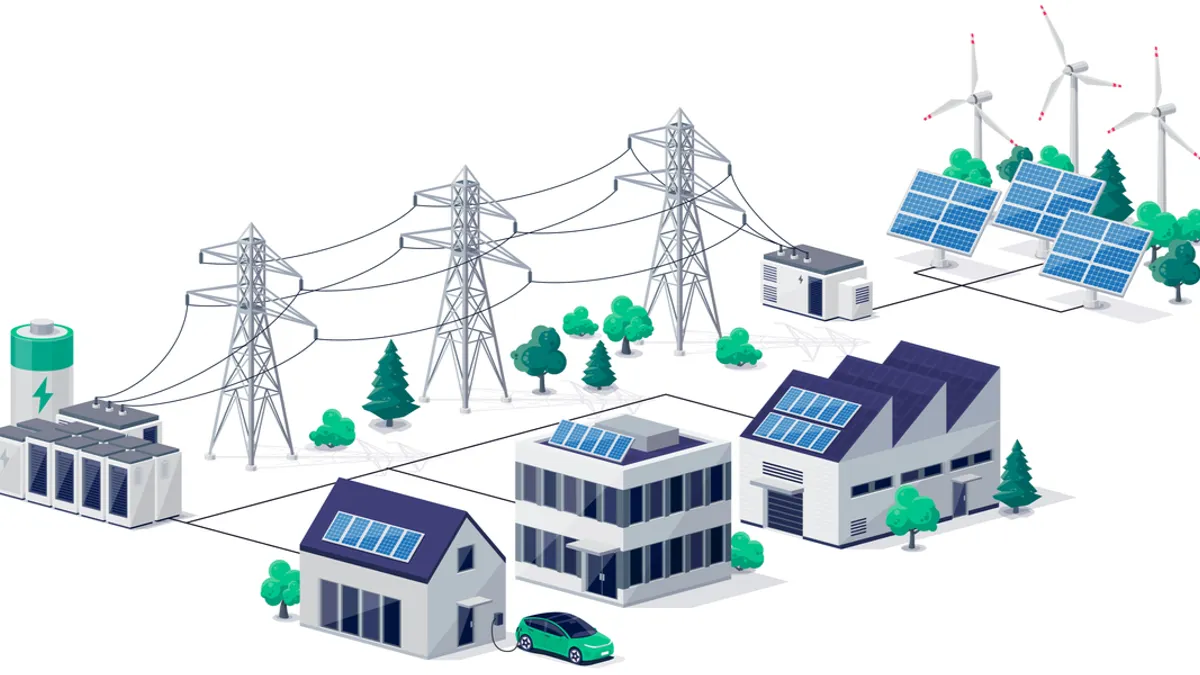
- Deploy grid-enhancing technologies to unlock capacity on existing wires. Advanced conductors, dynamic line ratings, and power flow controls can expand throughput on existing corridors faster than new transmission.
Across the country, leaders are making affordability promises. But promises don’t lower bills — policy does.
Governors can’t rate-freeze their way out of this problem. Utilities still have lawful pathways to recover costs, and deferring decisions can dig a deeper hole. States need a plan that changes the cost trajectory, not just the headlines. Regulators have a once-in-a-generation opportunity to align planning and ratemaking not just with capital outlay, but with outcomes that matter: affordability, speed-to-power and reliability. Avoiding rate shock is a choice.
Large power customers, especially data center developers, have a role here too. The social license for rapid load growth will partially depend on whether communities see benefits from these facilities — jobs, a larger tax base, stable power bills — or, instead, higher electric rates. Flexible interconnection, customer-procured capacity, clean power generation and fair tariffs are a pathway to faster power and more durable public support.
We are at a fork in the road. One path before us is a traditional peak-driven overbuild leading to years of higher bills. The other is centered on optimizing grid utilization, scaling smart flexibility fast and investing in poles and wires only where they truly unlock capacity.
If governors are serious about lowering power bills, there is only one credible path.