
Tariff refunds will be available for all levies instituted under the International Emergency Economic Powers Act if the Supreme Court rules such duties to be illegal, according to a document filed by the Department of Justice.
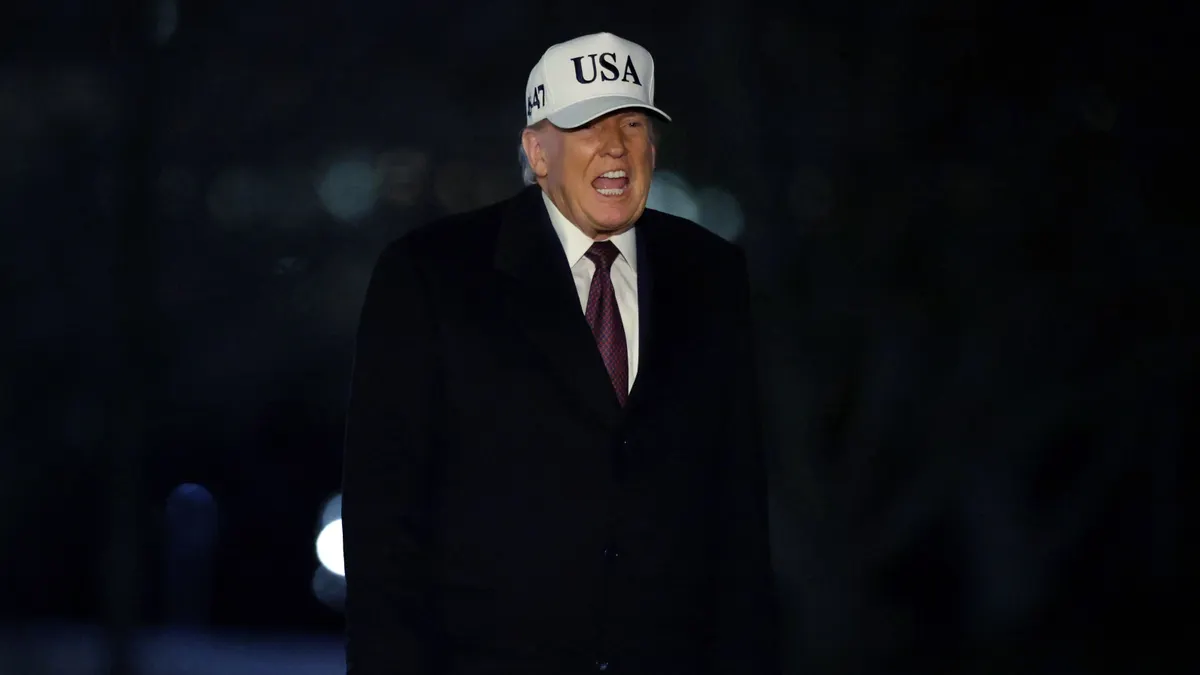
The high court is currently evaluating the legality of President Donald Trump’s use of IEEPA to impose a broad range of country-specific tariffs, many of which were first introduced in April 2025.
However, since the consolidated cases before the court were originally filed, the president has instituted other levies under IEEPA, including increases of 25% and 40% on imports from India and Brazil, respectively.
Last week, in a separate case, the U.S. Court of International Trade questioned whether the Trump administration would apply the Supreme Court’s eventual ruling to the additional duties on goods from India and Brazil.
The Department of Justice’s response in the Court of International Trade case indicates the administration will do just that.
In a written response, the DOJ said if the Supreme Court determines IEEPA tariffs to be illegal and orders the government to issue refunds, the administration would make reimbursements available for all levies instituted under the statute.
“In other words, although we reserve our right to challenge specific complaints, generally a properly raised IEEPA tariff challenge would be subject to the stipulation, regardless of whether the specific Executive Order challenged was at issue in V.O.S. or AGS,” federal attorneys wrote in the response, citing two suits against Trump’s tariffs currently under judicial review, including V.O.S. Selections, Inc. v. Trump. That case is one of the consolidated suits the Supreme Court is currently reviewing.
The attorneys said the administration does not intend to challenge the Supreme Court’s eventual ruling and was issuing the response to avoid preliminary injunctions.
“In particular, the Court asks whether we view the stipulation as applying to the challenged IEEPA tariffs imposed on Brazil and India that are not at issue in V.O.S. or AGS. The answer is yes,” the attorneys wrote.
The DOJ declined to comment for this story.