

As California moves toward its ambitious 2045 climate goals, the push for residential building electrification is gaining momentum. Moving away from natural gas and propane appliances is a significant part of this transition; however, switching from a gas stove to an electric or induction range almost always requires upgrading a home’s electrical service. The upgrade costs can be prohibitive for homeowners—especially those living in older homes, apartments, and rural areas.
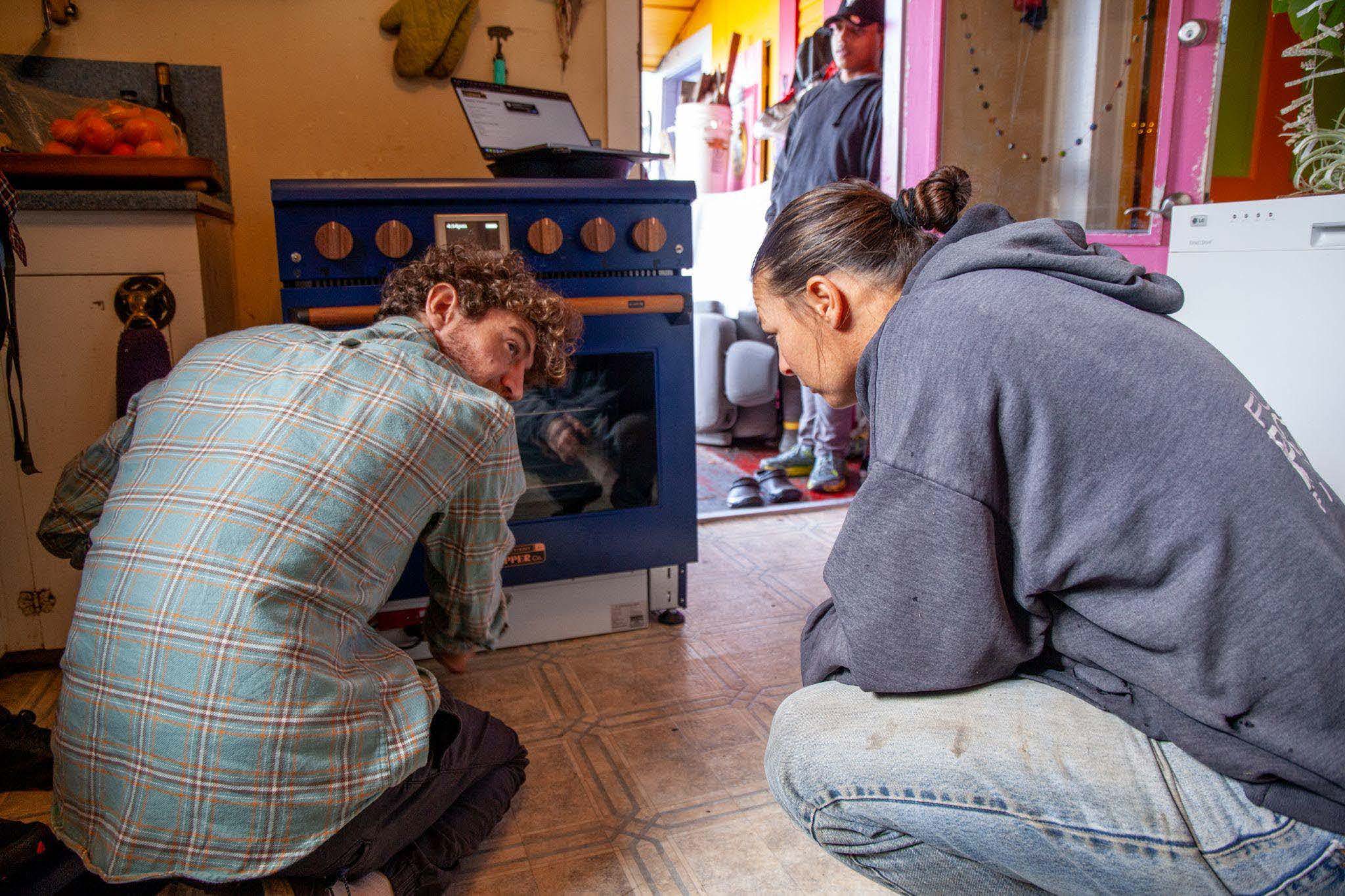
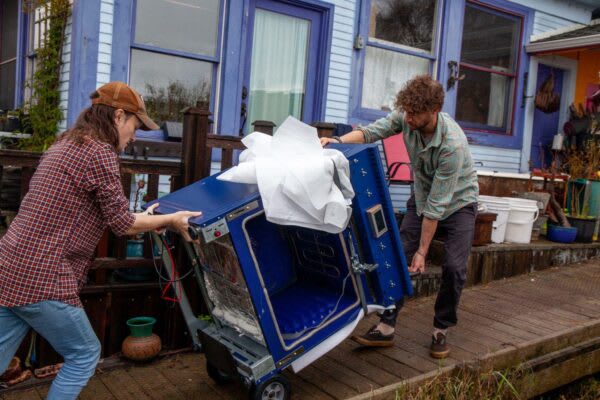
The 120V induction stove with integrated battery backup aims to solve this problem. As an emerging technology, this enhanced cooking appliance could make it much easier and more affordable for homeowners to electrify their kitchens. Funded by CalNEXT, a 2024 study by Redwood Energy explored the potential of induction stoves by installing 36 units in the homes of the Cher-Ae Heights Indian Community of the Trinidad Rancheria, a Native Sovereign Nation in Humboldt County, California. Their findings offer a promising look at the future of home cooking and electrification.
Electrification challenges
Traditional electric and induction stoves require a dedicated 240V circuit to run, which many homes with gas cooking do not have. Installing a new circuit with greater electrical load forces a full-service panel upgrade, and in some cases, an upgraded utility transformer for the entire home.
Unsurprisingly, these upgrades do not come cheap. Costs can range from a few thousand dollars to over $30,000 for more complex installations. Because of the high costs, many retrofit projects in single-family homes and apartment buildings end up keeping gas stoves, slowing down the transition to total home electrification. Additionally, most cooking occurs during peak demand (typically 4:00–9:00pm) when the cost of electricity is highest, resulting in higher electrical bills.
The modern kitchen: meet the 120V battery-integrated stove
An induction range with four burners and a convection oven, the “Study Stove” plugs into a standard 120V outlet—the same kind that powers the igniter and clock on most modern gas stoves. By using a regular outlet, this innovative solution eliminates the need for expensive new circuitry or service upgrades.
To supply the power needed for induction cooking without additional circuitry, the stove utilizes a built-in, 5-kilowatt-hour (kWh) battery, drawing a steady amount of power (about 1,200 watts) from the wall to keep the battery charged. When a user turns on multiple burners or the oven, the stove pulls the extra power needed from the battery. During one cooking event in the study, the Study Stove provided nearly 6,700 watts to the cooking elements while drawing only 1,260 watts from the wall — the battery supplied the rest.
Significant benefits for owners and occupants
The project team deployed 36 120V induction stoves in homes in Trinidad Rancheria, a community in a rural area prone to power outages. The study analyzed energy data from the stoves and collected feedback from residents to gain a better understanding of the stove’s real-world performance and user experience. The potential benefits are real and measurable:
Lower installation barriers: The most immediate advantage for homeowners is that they can avoid costly electrical work. Because the stove uses existing 120V outlets, electrification is attainable for a wider range of homes and residences, particularly in retrofits and multifamily buildings where upgrades can be prohibitively expensive. In scenarios requiring a service upgrade for a 240V stove, this new technology offers substantial cost savings.
Enhanced grid resilience: The built-in battery functions as a valuable backup power source, allowing residents to continue cooking meals during a grid outage. Based on average cooking habits, the study estimated that the stove’s battery could provide power for approximately two to eight days without grid power. This is especially useful in areas like Humboldt County, where power outages are frequent.
Energy cost savings: In addition to providing backup power, the battery can also help users manage energy costs. Future software updates will allow the stove to schedule its charging during off-peak hours, enabling users to save money on their electrical bills. The report estimated potential annual savings of approximately $54 to $71, depending on the specific time-of-use rate plan.
Enhanced user experience: New technology is only successful if people enjoy using it. Survey results from the study participants were overwhelmingly positive with an 82 percent satisfaction rate. Users found the stove easy and safe to operate, with many praising the precise temperature control of induction cooking.
Potential roadblocks
While initial results are promising, the research team also identified several areas for improvement. Some users were bothered by fan noise, an issue the manufacturer plans to address with software updates. The stove’s high upfront cost, around $6,000 before incentives, may also deter some homeowners, though this cost is typically lower than a full-service upgrade.
The study also highlighted the need for better education around induction cooking; many participants were new to induction cooking and had to familiarize themselves with different techniques, particularly when using stainless steel cookware. Providing non-stick, induction-ready cookware along with better educational materials could make the transition easier.
Setting the table for the all-electric kitchen
The 120V induction stove with battery backup is a significant step forward in making home electrification more accessible and practical for residents. By circumventing the electrical service upgrade, this technology has the potential to quicken the transition away from fossil fuels in homes.
For homeowners looking to go electric, the stove offers a simplified cooking solution that saves money and strengthens power resilience. For utility companies and policymakers, it provides a new avenue to help meet climate goals. As this technology becomes more widely available, it could play a key role in creating cleaner, more efficient, and more resilient homes for owners and occupants.
View the full CalNEXT report on 120V induction stoves with battery backup.
CalNEXT identifies, tests, and grows electric energy technologies and delivery methods that have the potential to make major impacts on achieving California’s climate goals. From 2022 to 2027, CalNEXT will provide support and resources for 170 projects. Our team of experts identify and resource ideas to advance the state’s priorities for decarbonization through electrification, utility grid priorities such as load flexibility, new measures for utility programs, and engaging hard-to-reach customers and disadvantaged communities. Project categories include research and development addressing lighting, plug loads and appliances, HVAC, process loads, whole buildings, water heating, and portfolio enhancements. Selected projects are tested and potentially incorporated into investor-owned utility programs.
CalNEXT is also dedicated to removing barriers so that all Californians have access to the benefits of clean and healthy environments. Through this initiative, we hope to engage members of the community to provide insight into how to support equity and inclusion in delivering these technologies.