

As utilities across North America grapple with rising demand and long transmission upgrade timelines, the question is no longer whether new capacity is needed, but how quickly it can be delivered.
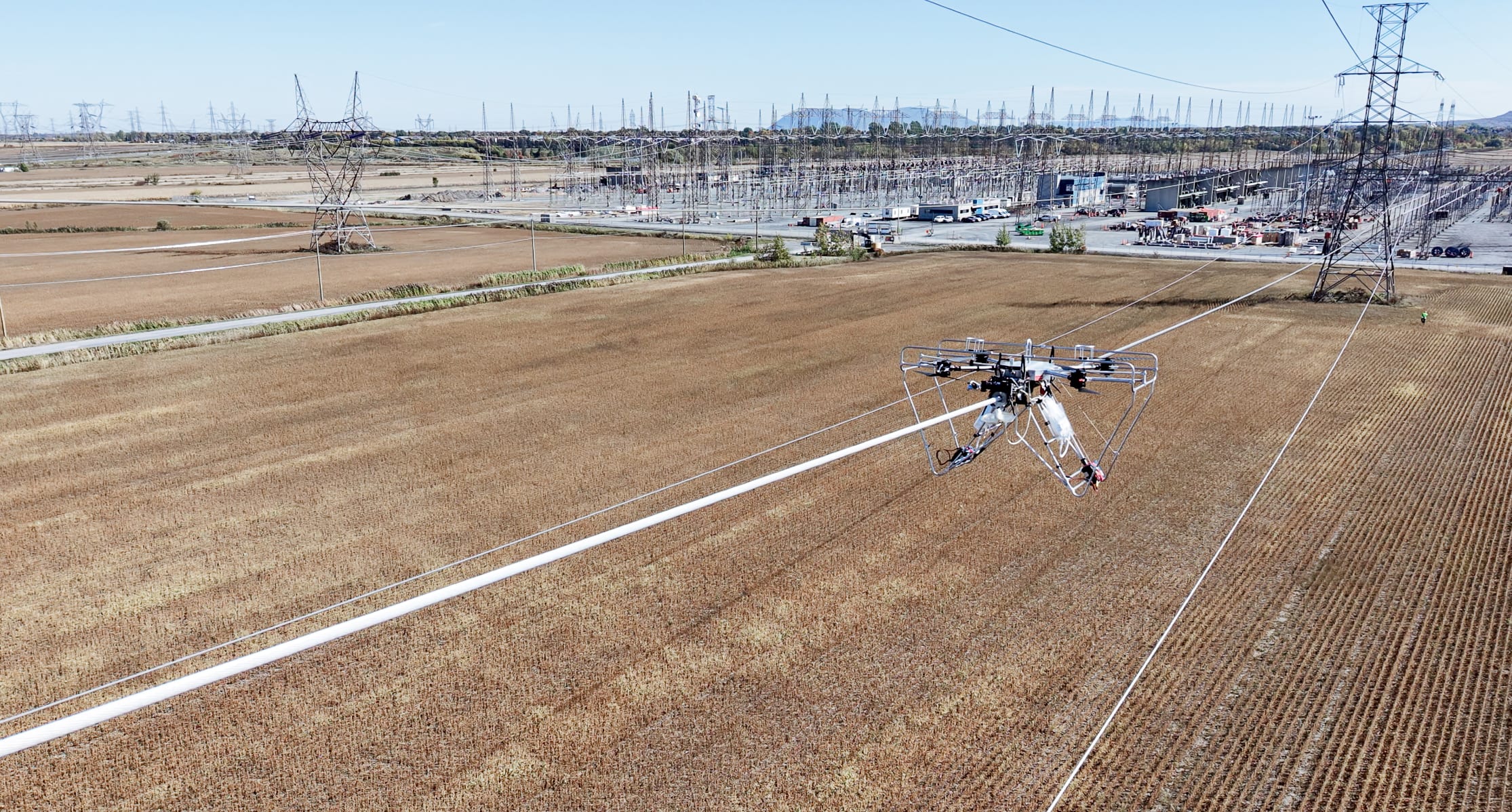
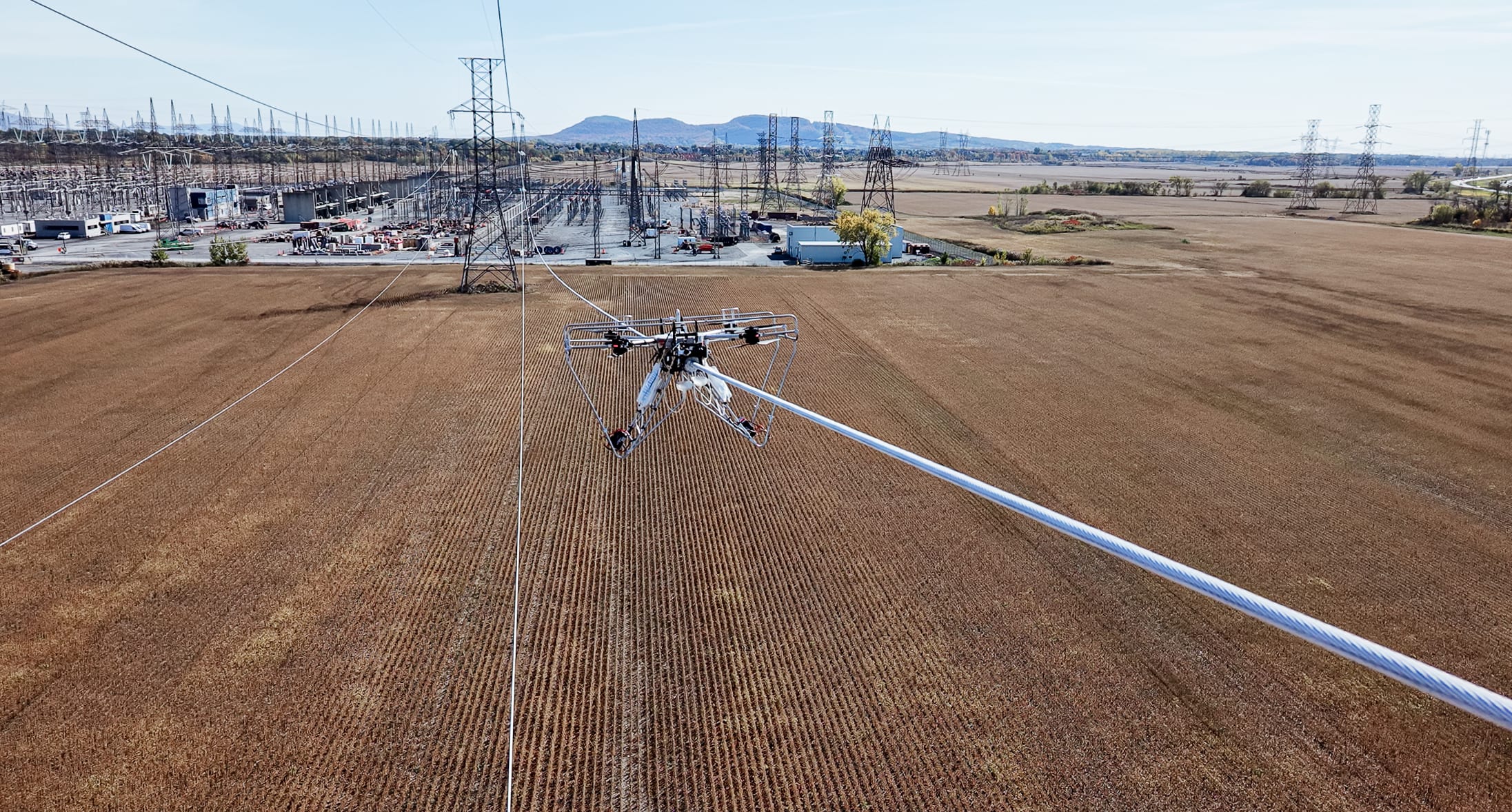
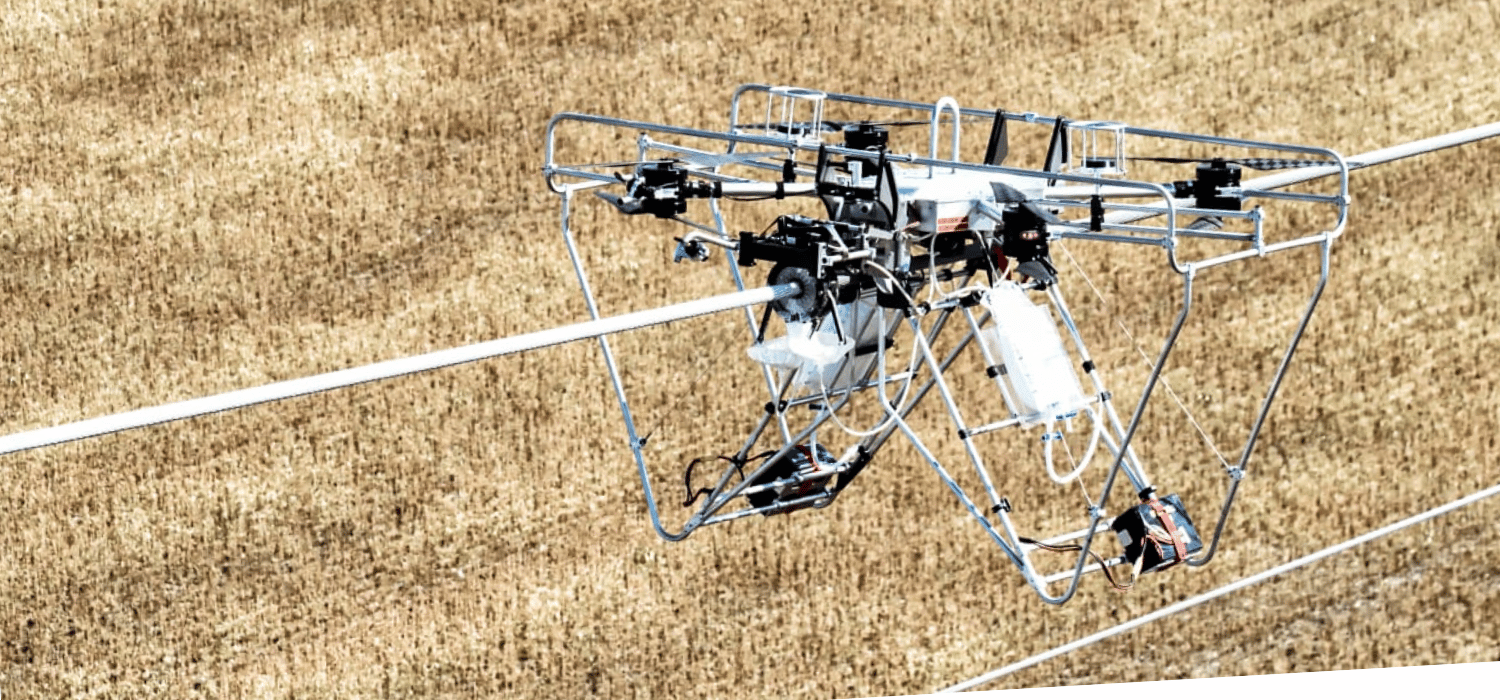
AssetCool, a UK-based deep tech company, recently completed a major field milestone in close collaboration with Hydro-Québec, demonstrating a drone-enabled power line robot capable of applying advanced capacity enhancing coatings directly to overhead transmission lines. Not only does this mark a crucial step toward upgrading grid capacity in months, rather than years, but the pilot also represents the transition of AssetCool’s aerial coating platform, CapacityAir-1, from development into early commercial phase.
AssetCool has extensively coated conductors globally via its Capacity-1 power line crawler, which requires manual installation. By using drones as an access and deployment layer for coating payloads, the system eliminates many of the access, labor, and timeline constraints that traditionally slow transmission upgrades, as well as paving the way to applying capacity enhancing coatings on live conductors.
The milestone leveraged decades of experience at Hydro-Québec, a global pioneer in live-line robotics and aerial deployment for transmission systems, with CapacityAir-1 foundationally built on their commercially available LineDrone platform. LineDrone is a live line capable drone developed by Hydro-Québec for deploying Non-Destructive Testing (NDT) sensors onto overhead lines for asset inspection and maintenance. Through its development and commercialisation partner, DroneVolt, the LineDrone has been flown and deployed onto conductors thousands of times. Beyond the drone platform, the utility brought deep expertise in both network modeling as well as practical design and deployment experience of robotic systems.
“AssetCool brought a unique expertise in chemistry and fluidic delivery, paired with a bold vision for robotic applications,” said Nicolas Pouliot, Research Lead & Scientific Coordinator of Advanced Intervention Methods at Hydro-Québec. “This perfectly complements Hydro-Québec’s pioneering capabilities in transmission line robotics and custom drone technology designed to operate on energized or de-energized conductors. Together, this combined skill set has delivered groundbreaking achievements resulting in a world-first demonstration.”
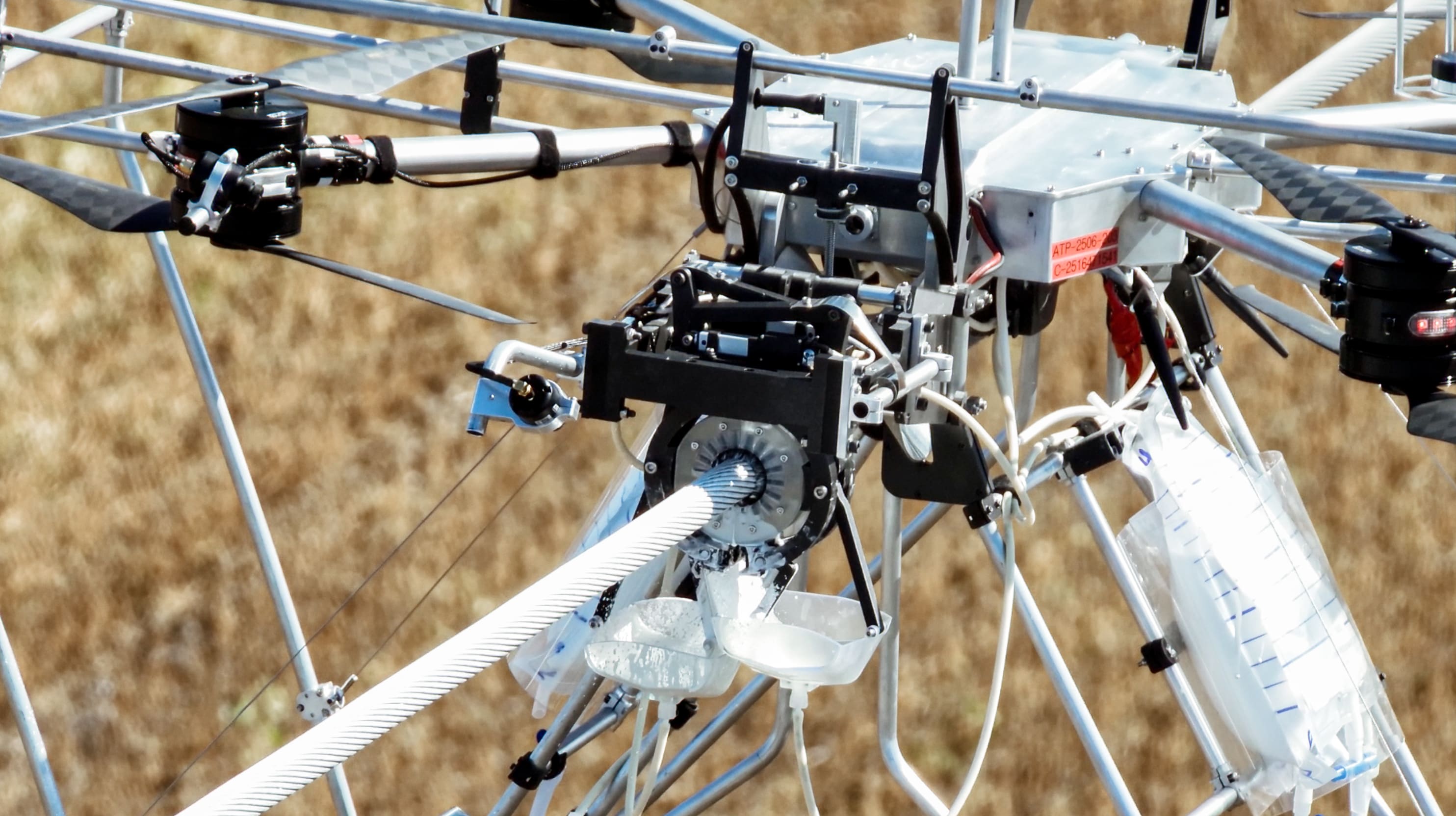
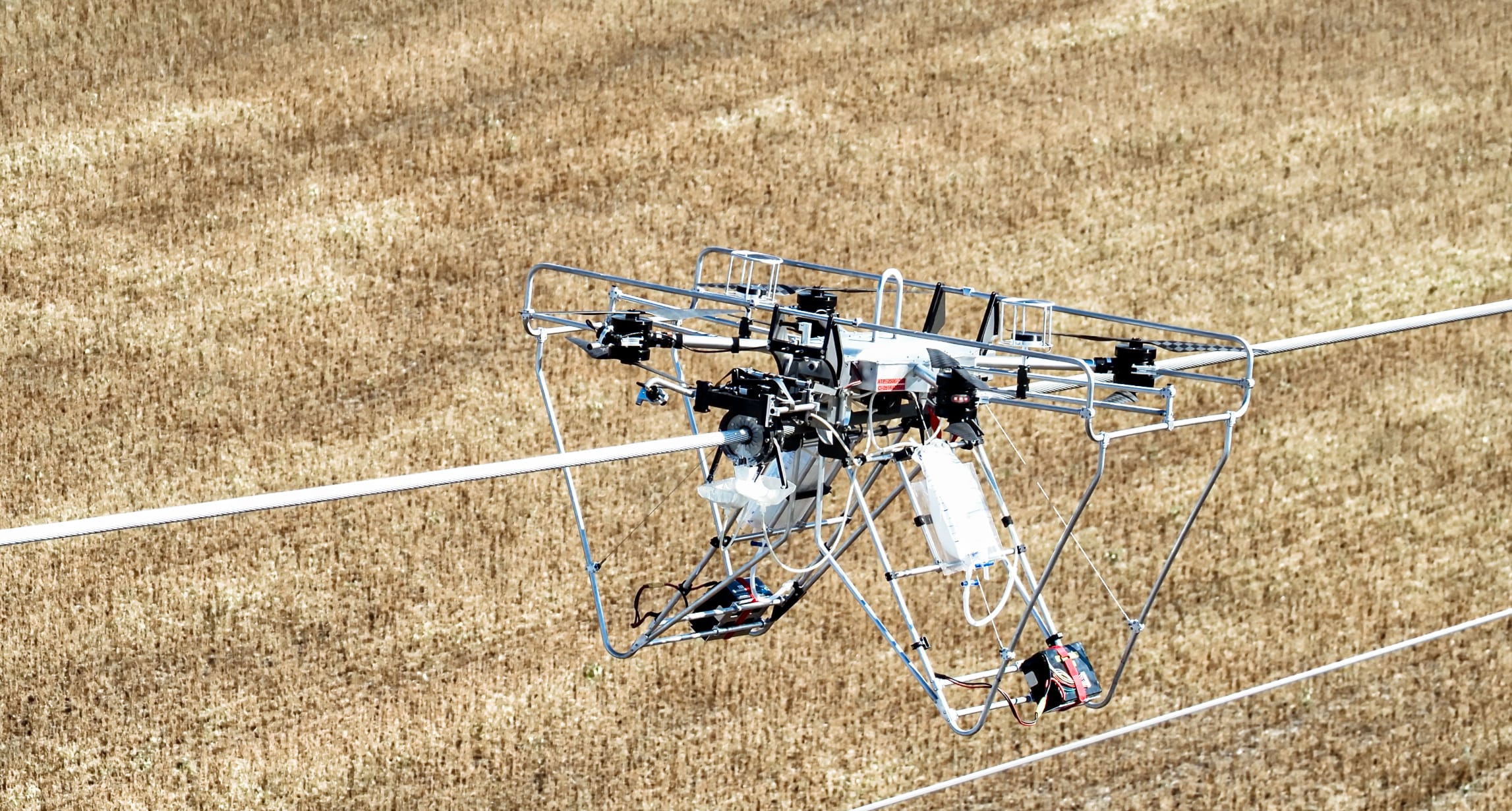
In an exceptionally short timeframe, joint engineering teams adapted the drone platform to carry the remotely deployable coating payload developed by AssetCool while meeting strict constraints around weight, flight dynamics, and environmental protection. After lab validation, the integrated system was then deployed in the field, successfully coating a transmission test line and demonstrating feasibility under real-world conditions.
“This milestone shows what’s possible when amazing engineers, advanced robotics and utility expertise come together,” said Niall Coogan, CEO of AssetCool. “Using drones to deploy coating robots allows us to physically upgrade transmission assets far faster than conventional approaches, while working with the infrastructure utilities already operate.”
The challenge: load growth and the limits of traditional transmission upgrades
Across North America, electricity demand is rising at an unprecedented pace. Data centers, electrification of transportation and industry, and renewed manufacturing growth are driving large, concentrated load additions that existing transmission infrastructure was not designed to accommodate.
Utilities are pursuing impressive capital programs around advanced conductors, reconductoring and new transmission builds to add capacity, but while they are an essential part of the energy transition over the medium to long term, these projects require years to plan, permit, and construct. High capital costs, right-of-way constraints, environmental reviews, and workforce availability all add friction. Even when funding is available, timelines frequently fail to align with near-term load commitments.
Dynamic line rating (DLR) has emerged as a valuable tool to extract additional capacity from existing lines by adjusting ratings based on ambient conditions such as wind and temperature. While DLR can offer impressive peak capacity uplifts, some utilities have had challenges in the variability of the uplift and concomitant operational complexity. For utilities serving large industrial customers or hyperscale data centers, firm, always-available capacity remains essential.
These converging pressures are pushing utilities to explore complementary approaches that can deliver predictable capacity gains on much shorter timelines.
Static Line Uprating (SLU): cooling overhead lines to unlock fixed capacity
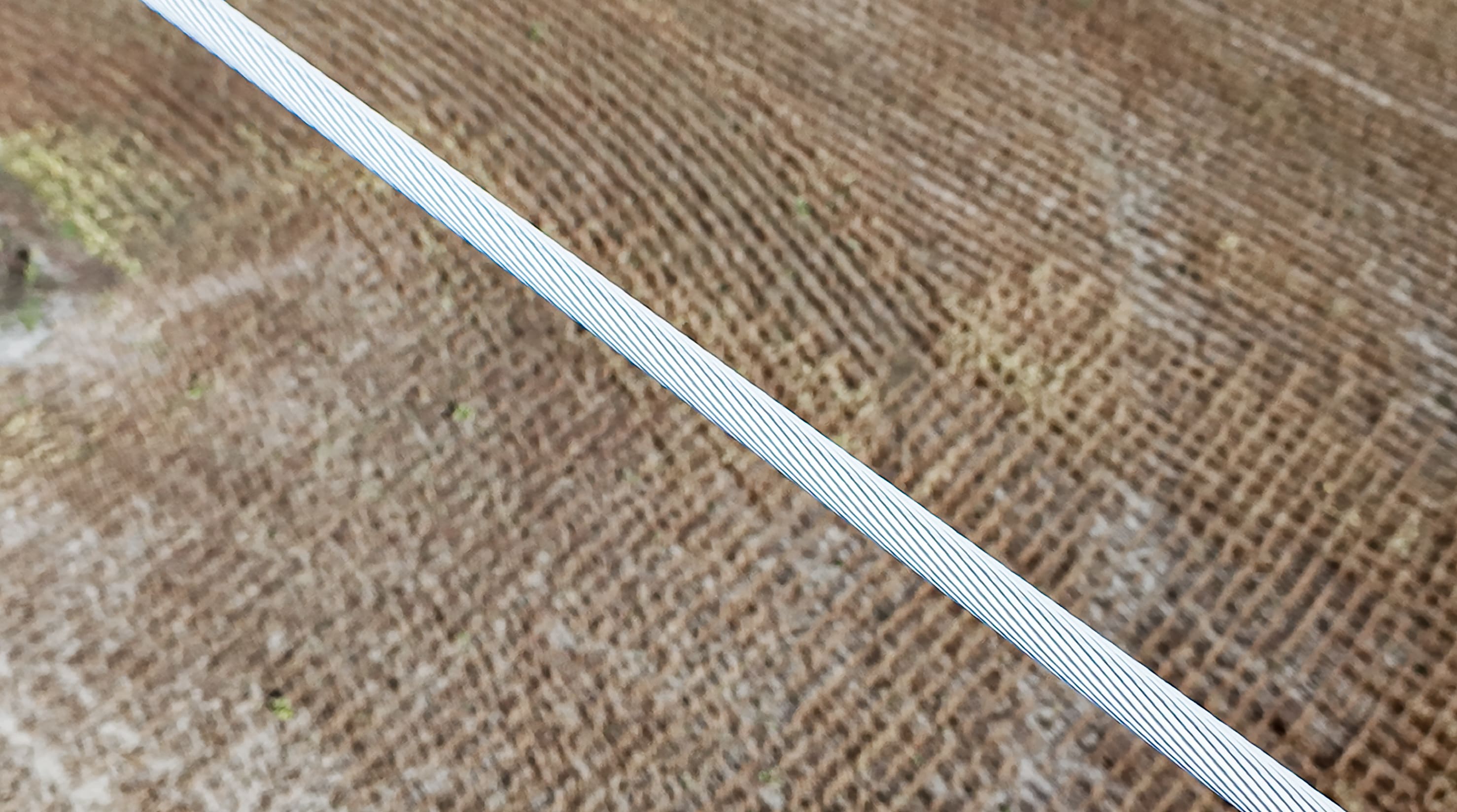
SLU focuses on permanently increasing the current-carrying capacity of existing conductors in a retrofittable way by improving their ability to simultaneously reflect solar radiation and dissipate heat. Because thermal limits govern sag and safe operation, reducing conductor temperature directly enables higher continuous ampacity. Given coated conductors operate at a lower temperature for a given current, utilities can transmit higher current carrying capacity within a fixed conductor size.
Once applied, the coating becomes a physical enhancement to the conductor, delivering a fixed, continuous increase in capacity rather than a weather-dependent one. This allows utility operators to operate with enhanced “Static Line Ratings”, in which the conductors are rated seasonally, for the “worst case” environment conditions (highest ambient temperatures, highest solar radiation levels and lowest wind speed).
For utilities, that distinction matters. SLU provides predictable performance that requires no modification from existing practice, that can be planned around and relied upon for firm load service. Depending on line configuration and baseline loading, the approach can unlock tens to hundreds of megawatts at the circuit level, without modifying towers, insulators, or rights-of-way.
Crucially, SLU can be deployed alongside dynamic line rating, reconductoring, and new builds. With respect to DLR, SLU is most effective in instances where DLR is not, when there is no wind cooling the circuit down. Thus, SLU “lifts the baseline” of DLR installations, mitigating the potential for negative ratings (relative to the base static rating) experienced by some installations. Further, advanced conductors can become even more performative or efficient, and the modifications can be made in the factory through one of AssetCool’s approved cable manufacturing partners.
“Rising ambient temperatures during summer lead to reduced transmission line capacity while energy demand simultaneously increases,” noted Mathieu Labbé, P.Eng. of Transmission Network Design at Hydro-Québec. “The ability to apply, via drone, an innovative coating such as AssetCool’s that reduces solar absorption on selected spans could represent a highly strategic addition to engineers’ toolkit, enabling optimized investments within capacity upgrade projects.”
The robotics layer: from line crawlers to aerial deployment
Applying coatings to transmission conductors at scale requires a fundamentally different deployment model. AssetCool’s technology stack combines line-mounted robotic application with aerial deployment, each addressing a different constraint facing utilities.
The company’s line-mounted platform, Capacity-1, attaches directly to the conductor and travels along the span while preparing the surface and applying the coating in a controlled, uniform layer. This configuration is particularly suitable for higher order bundle conductors (twin, triplex, quad bundle) and carrying heavier or more payloads such as inspection and sensing equipment.
CapacityAir-1 is simultaneously a drone and a line crawler, thus introducing a new access layer with minimised line operator input. This approach reduces reliance on bucket trucks, tower climbs, and extensive ground access, significantly shortening setup time and expanding where upgrades can be deployed.
This aerial deployment model was advanced through close collaboration with Hydro-Québec. Initial deployment focused on integration and testing, bringing together AssetCool’s Dynamic Coating Application Module (DCAM-V1) with Hydro-Québec’s DV-5 Line Drone platform.
“The work with Hydro-Québec is unique,” said Oliver Higbee, Head of Application Engineering at AssetCool. “It’s not just a pilot — it’s a co-development of technology. They are the forefathers of robotics on overhead lines, which is incredibly important for the strategic development of our products and our ability to scale faster and more effectively.”
Looking ahead, AssetCool is advancing a broader platform of robotic and aerial grid-upgrade technologies, including increased autonomy at the robot and fleet level, passive mission-level data capture, and pathways toward future live-line applications. The long-term goal is to develop the systems to get thousands of robots to overhead lines, giving utilities a practical toolkit for upgrading transmission assets quickly, predictably, and at scale.
The partnership with Hydro-Québec will involve a continued escalation of deployments and further technical validation, working towards SLU being part of their standardised operating procedures for addressing emergent network constraints.
A timely addition to the grid modernization toolkit
Transmission constraints are rapidly becoming one of the defining challenges of North America’s energy transition. While reconductoring and new lines remain essential, they cannot alone meet near-term demand growth.
The successful drone-based deployment of AssetCool’s coating technology with Hydro-Québec demonstrates a new class of solution, one that physically upgrades existing infrastructure using robotics and aerial systems. For utilities seeking faster, lower-disruption ways to unlock grid capacity, static line uprating delivered by drones is emerging as a compelling addition to the transmission upgrade toolkit.
“It was only fitting for us to join forces with AssetCool in developing an efficient and reliable drone-based overhead line coating method,” said Isabelle Chartier, Managing Director of Asset Research & Innovation at Hydro-Quebec. “This first trial has demonstrated the feasibility of such a method on a deenergized, single conductor configuration testing line. We are very much looking forward to the next steps of this collaboration.”
If you have any questions or would like to contact the AssetCool team to learn more, please reach out at https://www.assetcool.com/contact/
AssetCool is a UK deep-tech company delivering robotic grid upgrades that provide the fastest speed-to-power available today. Using advanced robotics and proprietary photonic coatings, AssetCool physically increases the continuous capacity of transmission lines by up to 30 percent, adding data-centre-scale capacity to existing circuits and preparing new lines for higher performance before installation. The Capacity-1 robotic platform applies modular coating technologies that boost ampacity, reduce losses, prevent corrosion, and cut corona noise. Deployment takes months, not years, and requires no conductor replacement. Backed by world-class investors, AssetCool is building the leading robotics and materials platform for improving the performance, reliability, and capacity of the modern grid.
Headquarted in Montreal and founded in 1944, Hydro-Québec is a state-owned energy company and a world leading utility in clean and renewable energy, as well as in R&D
With Contributions by:
Niall Coogan is the CEO and Co-Founder of AssetCool, deploying photonic coating and robotic systems that increase overhead transmission capacity by up to 30%, adding data centre scale capacity additions in months. Niall has a Masters in Chemistry and a PhD from the Power Networks Centre for Doctoral Training, both from the University of Manchester. Niall has spent nearly a decade taking grid-scale deeptech from lab validation through field trials, manufacturing integration, and live utility deployments.
Maxime Godin is Senior Delegate, Business Development – Innovation Partnerships at Hydro-Québec’s research institute (IREQ), where he builds collaborative frameworks to further R&D projects in advanced intervention methods and oversees Hydro-Québec’s participation in the Free Electrons Program.