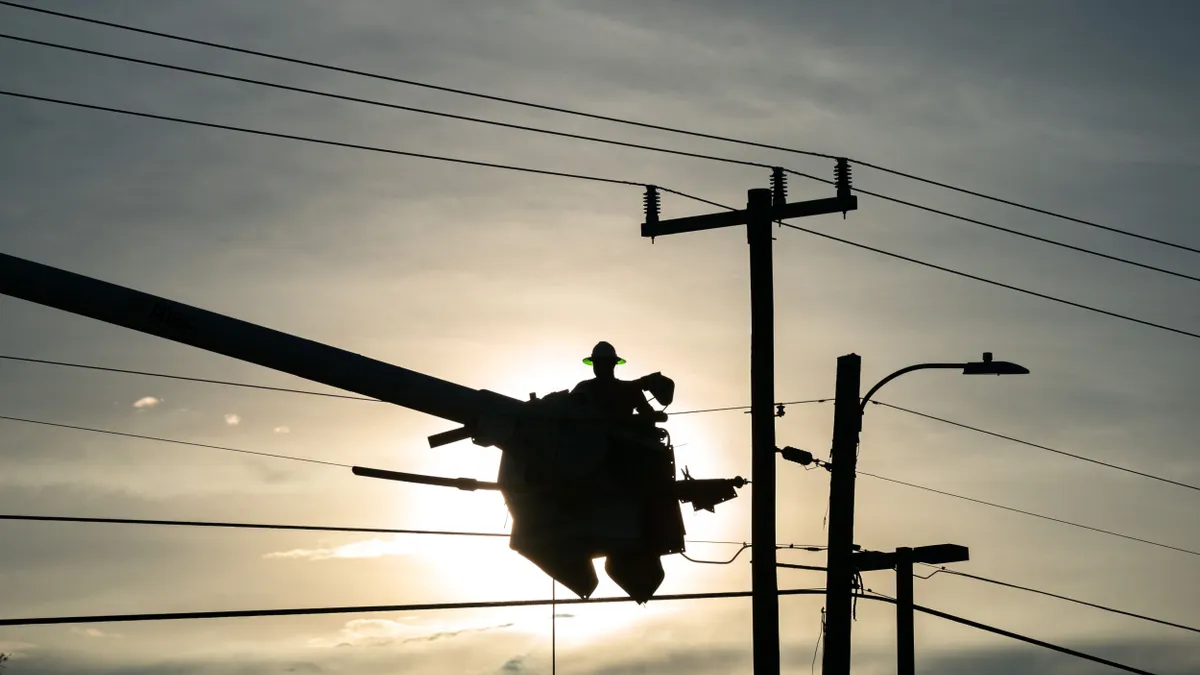

This winter’s extreme weather is again exposing the billion-dollar bottlenecks in America’s grid. Grid congestion — the physical transmission constraints that force a shift from lower-cost generation to expensive, out-of-merit local units — drove over $12 billion in total market costs in 2024.
That’s the fourth consecutive year that congestion costs have been over $10 billion. And the root causes are only escalating. Surging demand from AI data centers, rapid buildout of new electricity generation in already-constrained grid regions, and accelerating electrification are straining an aging system that just wasn’t designed for these dynamic loads.
Traditional greenfield transmission expansion can’t keep pace. As the clock ticks on decades-long permitting timelines, the consequences are adding up across the country. Billions in congestion rent, roughly 2,300 gigawatts of interconnection queue backlogs, and heightened reliability risks during extreme weather are now the norm.
Unresolved congestion also forces operators to plan for additional capacity only where transmission can deliver it, a dynamic that’s most visible in PJM’s 2025/26 forward capacity auction, which cleared at $14.7 billion, up from a previous $2.2 billion.
Reconductoring with advanced conductors provides the nation a critical bypass, allowing utilities to double or even triple the capacity of existing corridors within 18–36 months. That speed is especially meaningful in markets where congestion is most acute.
Five markets where congestion demands immediate action
While every grid operator faces some level of congestion, five markets stand out for the scale of their challenge: combining massive projected load growth with already-strained infrastructure that’s driving extraordinary costs.
- ERCOT faces a perfect storm: 53 GW of forecast load growth through 2030 — a staggering ~62% increase over ERCOT's current peak demand record (85 GW). To put that further into perspective, 53 GW represents roughly half the nation's industrial demand growth. All that fast-tracked growth is colliding with $1.9B in existing congestion costs. As Texas adds another 7 GW of heavy industrial load, the grid is being squeezed from both sides.
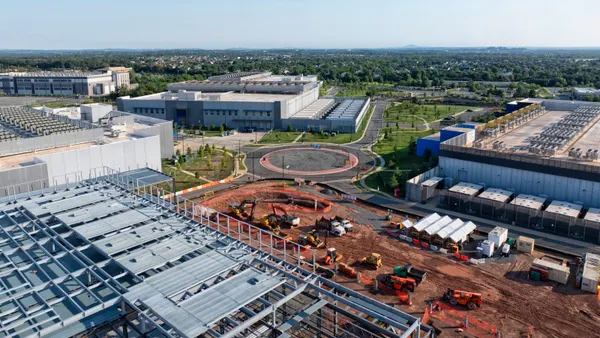
- PJM is grappling with 30 GW of projected growth driven primarily by data center expansion in Northern Virginia, with additional activity spreading to Ohio and Pennsylvania. The region's $1.75B in 2024 congestion costs reflect a transmission system struggling to keep pace with the explosive growth of digital infrastructure in its eastern territories.
- SPP confronts 23 GW of growth dispersed across oil and gas regions in North Dakota, New Mexico, and Oklahoma, plus surging data center development in Oklahoma and Missouri. Despite this geographic spread, the grid recorded $1.8B in congestion costs in 2024, signaling that even distributed growth can overwhelm transmission capacity.
- MISO is experiencing 16 GW of load growth from a dual surge: expanding data center activity and robust manufacturing growth across its footprint. The region's $1.8B in 2024 congestion costs — nearly matching SPP despite lower overall growth — highlight how constrained transmission corridors amplify cost impacts.
- CAISO projects more modest 7 GW growth driven by transportation and building electrification, yet recorded $734M in 2024 congestion costs. This ratio underscores how California's geography and existing transmission constraints can generate significant costs even without explosive load growth. Here, every new megawatt is hitting an already-strained system.
Across these regions, transmission capacity expansion is urgently needed to relieve bottlenecks and accommodate demand growth, without pushing retail electricity bills even higher.
How advanced conductors can help beat congestion
Advanced conductor technology, such as aluminum encapsulated carbon core, or AECC, is a ready-to-deploy solution to grid congestion. It delivers:
- Immediate capacity gains where constraints are worst. According to RMI research, 95% of expected load growth can be served by just upgrading the grid with existing technologies like advanced conductors. AECC delivers 2–3x the capacity of conventional wires on existing structures, unlocking 80+ GW of incremental capacity — nearly 30% of the 270 GW the grid needs by 2030.
- Lower costs through targeted upgrades. Utilities can boost line capacity by replacing only the conductor — roughly 5% of the project’s total cost — avoiding expensive tower and foundation work. With AECC technology, reconductoring achieves 30–40% total project savings.
- Rapid deployment to address urgent bottlenecks. AECC reconductoring projects deploy in 1–3 years, dramatically faster than new line construction or conventional upgrades.
- Enhanced resilience and wildfire mitigation. Advanced conductors offer safety advantages in wildfire-prone regions. Minimal thermal sag and heat-stable aluminum properties allow conductors to survive wildfire events without permanent deformation, reducing maintenance costs and improving durability.
Advanced conductors: America’s fastest path to congestion relief
The congestion crisis won't wait for decade-long permitting processes. While traditional solutions require years of planning and billions in new construction, advanced conductors upgrade the grid we already have.
Advanced reconductoring delivers the capacity to power the next generation of American innovation — starting now.