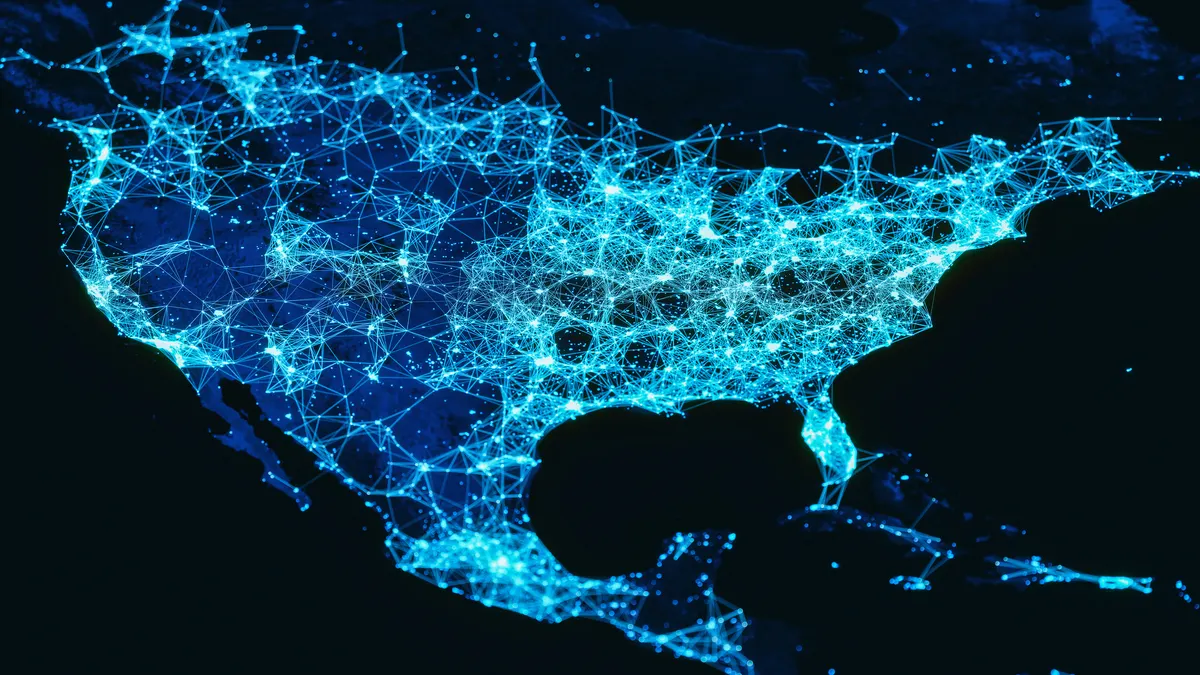

For a decade and a half, the U.S. Energy Information Administration’s (EIA) forecast of electricity consumption was predictable — and predictably flat. Indeed, between 2005 and 2020 load growth averaged about 0.1%, pushed slightly upward by population and economic growth while also held down by improved efficiency.
The rest of the world has also seen relatively modest growth in electricity demand. According to the International Energy Agency (IEA), global electricity demand grew by an average of 2.6% between 2015 and 2023.
Today, however, we have entered the era of load growth, which is witnessing a generational shift on how energy is generated, transmitted and consumed. The demand as it used to be, in terms of predictability and density, has transformed itself into patterns that are complex to predict and extremely high density, thanks to greater demand from electric transportation, manufacturing and, of course, the boom in electricity-thirsty data centers. The U.S. Department of Energy has forecasted that data centers could consume as much as 580 TWh annually in 2028, equal to about 123 GW and representing up to 12% of total US electricity consumption. Across the globe, electricity demand is forecasted to rise by 3.3% in 2025 and 3.7% in 2026 – with China and India growing significantly faster.
Reliable supplies of increasing amounts of electricity are an economic and societal imperative, which is why utilities are making historic investments in grid infrastructure and assets. According to the International Energy Agency’s 2025 World Energy Investment report, capital investment in the energy sector is set to rise by $3.3 trillion, a 2% increase from 2024. $2.2 trillion of that investment includes funds earmarked for grid optimization.
The German utility E.ON announced plans to invest 34 billion Euros on grid infrastructure between 2024 and 2028. The Indian government says the country needs to invest over $500 billion USD by 2032 to provide the power the growing country requires. The ASEAN Infrastructure Fund has committed over $500 million and disbursed more than $460 million to 15 projects across six ASEAN countries. The fund provides loans to finance infrastructure investment projects such as renewable energy plants and transmission and power grid development.
But the challenge remains: Not all investments are created equal in terms of ensuring the reliability of a grid buffeted by rapidly growing demand, extreme weather, a proliferation of distributed energy resources (DERs), and aging equipment. Utilities, regulators, grid operators, and developers all need to direct their investments efficiently and effectively, simultaneously meeting demand while also improving reliability and containing costs.
The integrated system planning imperative
Put simply, utility planners are faced with a challenging task. Making their task even more daunting is the reality that the tools and processes planners have long relied on were built for a very different power system than we have now. Transmission, distribution and generation planners have traditionally worked to manage and orchestrate a centralized generation with unidirectional flows of electricity. Planning departments have traditionally been structured vertically, creating divides between functions that solve for economics, physics and system adequacy.
When load growth was modest and electricity flowed in one direction from large power plants to consumers, that approach worked well. But in today’s high load growth environment, where a larger share of renewable generation and distributed energy resources (DERs) are being integrated and extreme weather threatens system reliability, a more holistic approach to planning is critical. When different planning teams use their own complicated models with various tools and data, working together becomes difficult and time-consuming. Today's grid planning needs to bring these different approaches together to make the process faster, more accurate, more adaptable, and more collaborative.
Integrated system planning (ISP) acknowledges the pressures of load growth and the complexity and interdependencies of the quickly evolving power system and provides a pathway for the collaboration and coordination needed in planning today. It serves as the backbone for maintaining system adequacy by implementing comprehensive planning for the future grid and delivering a path for a reliable, sustainable and affordable power system.
The value of ISP:
- Comprehensive analysis for making faster planning decisions that drive investment signals, operational efficiency, and stakeholder collaboration.
- Maximizing the efficiency of investments that drive prioritization while accounting for rapidly changing demand and interconnection requests.
- Improving system reliability by fully anticipating how renewables and DERs affect the whole power system.
- Accelerating planning cycles to better meet the needs of customers who require electricity as fast as possible.
- Improving regulatory outcomes by providing transparency around the need for capital investments.
Powering ISP with PlanOS
ISP requires more than a desire for traditionally siloed planning operations to work together. It demands actual tools to enable seamless, efficient, and valuable collaboration.
GE Vernova’s PlanOS was built to provide a platform that unifies planning data and models capacity expansion, resource adequacy, production cost, and power flow analysis. Instead of running these vital planning studies separately and hoping to reconcile results later, PlanOS integrates them in real time. The result: insights from one planning domain immediately inform others, improving speed and reducing the potential for errors.
A unified data model is the foundation of the PlanOS platform, ensuring all planners work from the same assumptions. Updates flow across the system, eliminating the time-consuming and error-prone process of manually reconciling disparate spreadsheets and models.
PlanOS also enables scenario-based planning, giving utilities the ability to explore multiple potential futures and stress-test investments under different load growth, policy, and technology conditions. Collaboration features like version control and distributed access enable diverse teams to work together seamlessly without losing the specialized tools they need.
The electric grids are facing unprecedented pressures — soaring demand, a shifting generation mix, intensifying climate impacts, and aging infrastructure. While investments are necessary, addressing these challenges isn’t just about spending more. It also requires smart spending. Leveraging PlanOS to enable truly integrated system planning offers utilities the framework to direct investments where they best support grid reliability, resilience, and cost-effectiveness.