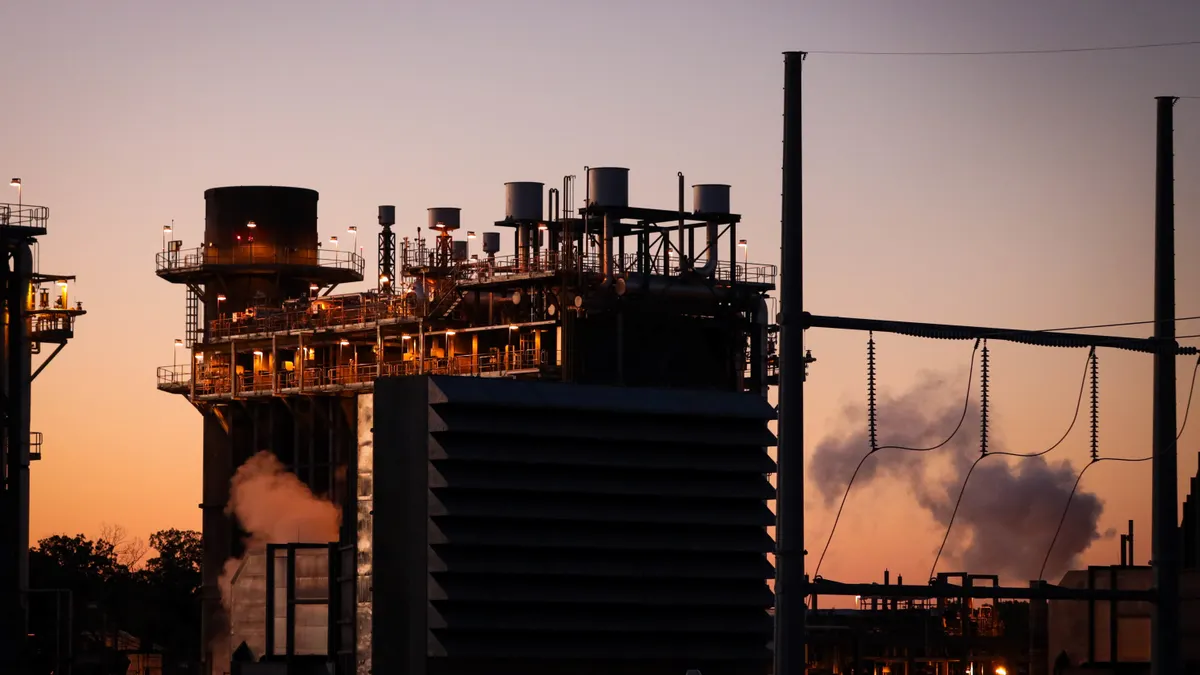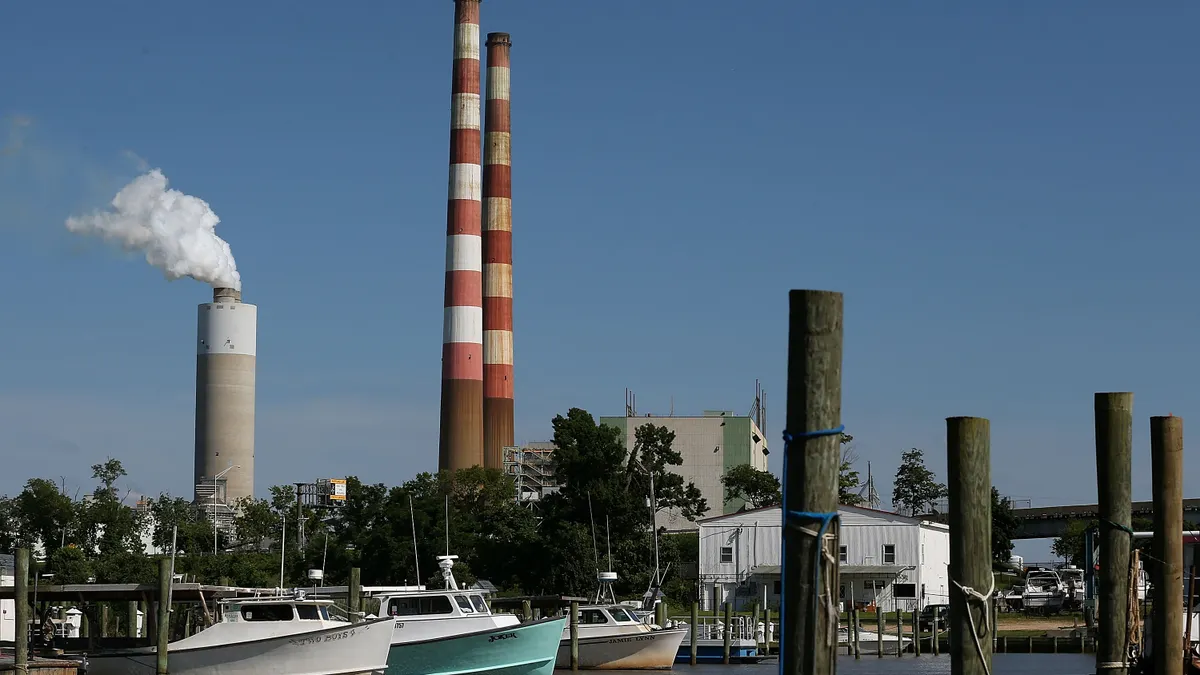
The PJM Interconnection’s market monitor on Wednesday urged federal regulators to reject an application from GenOn to sell a 216-MW power plant in Maryland to TeraWulf over concerns the data center developer would remove the resource from PJM’s market.
Taking the four oil-fired Morgantown generating units out of the PJM market would run counter to “principles” issued by the National Energy Dominance Council and the PJM governors that call for new data centers to provide new generation, Monitoring Analytics, the market monitor, said in a filing with the Federal Energy Regulatory Commission.
The proposed deal between TeraWulf and GenOn would also shift risks and costs to PJM customers and would be inconsistent with the public interest, according to Monitoring Analytics.
The Trump administration and others have been pressing for data center companies to pay for their own power supply and energy infrastructure needs. President Donald Trump on Wednesday issued a “ratepayer pledge” — signed by Amazon, Google, Meta, Microsoft, OpenAI, Oracle and xAI — that states that the companies will acquire new generation to meet their data center needs.
“Where possible, these companies will also add more capacity that serves the broader public by increasing supply,” the pledge states.
In its filing at FERC, Monitoring Analytics said the Morgantown power plant is in a constrained zone in PJM that needs existing generation to be retained and new generation to be built.
FERC should reject the proposed deal and require GenOn to refile its application to clarify that the Morgantown units would continue supplying the PJM market, according to the market monitor.
“TeraWulf should be required to commit to not removing the Morgantown Units from the PJM market to serve data center load,” Monitoring Analytics said.
TeraWulf, however, plans to be a net generator for Maryland, according to company officials.
TeraWulf intends to build its project in two phases, each with about 500 MW of gas-fired generation, 250 MW of battery storage and 500 MW of data center load, Paul Prager, TeraWulf chairman and CEO, said during a Feb. 26 earnings call.
“The site is being engineered to operate as a net generator to the state,” Prager said. “We are not just consuming capacity. We are adding it in constrained markets.”
TeraWulf intends to use the planned battery storage at the Morgantown site to shave peak load in a benefit to the PJM grid, Nazar Khan, TeraWulf chief technology officer, said.
Potentially, the project’s first phase could come online in late 2028, according to Prager.
The Morgantown power plant site includes four generating units totaling about 1,260 MW that were shuttered in 2022.
TeraWulf posted a $661.4 million loss in 2025, up from a $72.4 million loss the year before while its revenue increased to $168.5 million from $140.1 million in the same period, according to its annual report filed with the U.S. Securities and Exchange Commission.
Since 2022, TeraWulf has mainly funded its operations by selling bitcoin and issuing debt and equity, the company said.
Besides the Morgantown project, TeraWulf has data center projects in Kentucky, New York and Texas, according to a Feb. 26 investor presentation.
Other parties protesting the Morgantown deal at FERC include Public Citizen and area residents.
FERC should direct TeraWulf to describe its plans for the Morgantown site, including how it intends to remediate coal-related pollution there, according to Public Citizen.