Fred Bailey is managing partner at Gideon Arktos and former operations and integration chief at the Cybersecurity and Infrastructure Security Agency. Frank Willey is an assistant director in the Atlantic Council’s Global Energy Center.
A clear consensus is emerging across the political spectrum: The velocity of hyperscale infrastructure deployment to power artificial intelligence, cloud computing and other digital services is outstripping the adaptive capacity of our energy systems.
This imbalance is not merely a logistical bottleneck; it is a structural misalignment generating economic and environmental pressures that threaten the sustainability of U.S. technological leadership.
The battle for America’s digital future will be decided in the trenches of the local planning commission and the state utility board. The goal is not to stop growth, but to ensure that growth is democratically durable, cost-effective and technically feasible.
To preserve the social license to operate, energy and technology stakeholders — from hyperscalers and utilities to federal regulators — must be proactive. They must pivot toward integrated regional planning, launch a rigorous defense of the "beneficiary pays" principle in rate design, and transition from performative public relations to a model of radical economic reciprocity.
The infrastructure lag
Much of the backlash against data centers is a rational response to the strain caused by the facilities’ rapid growth.
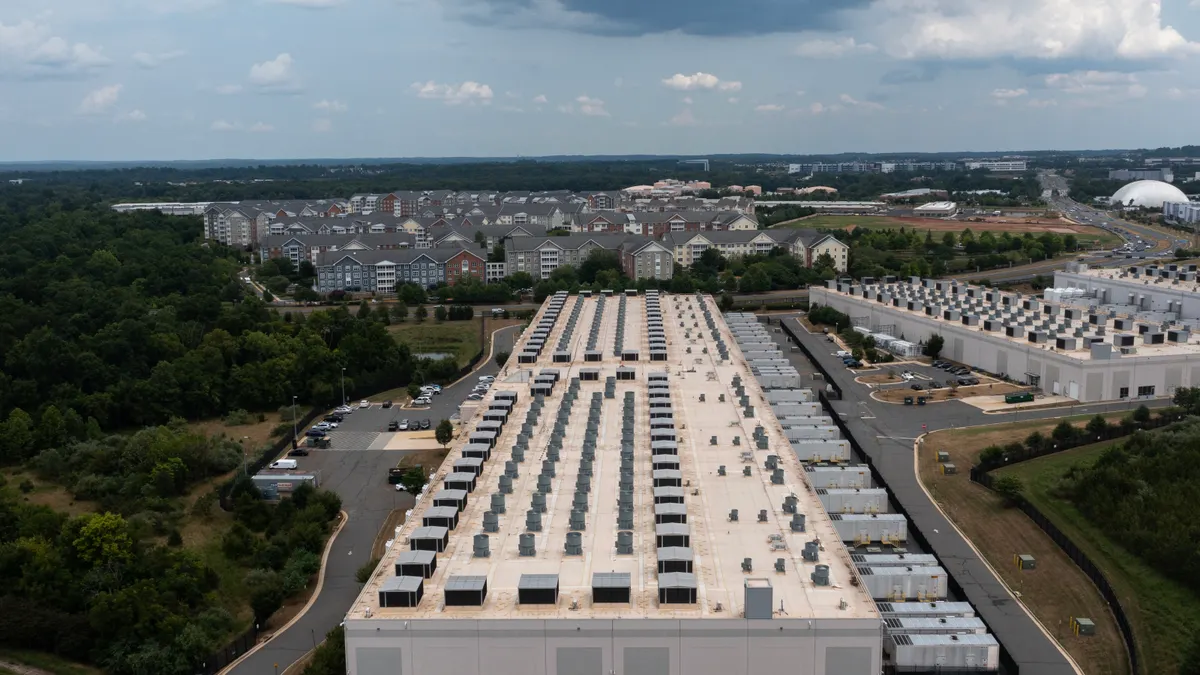
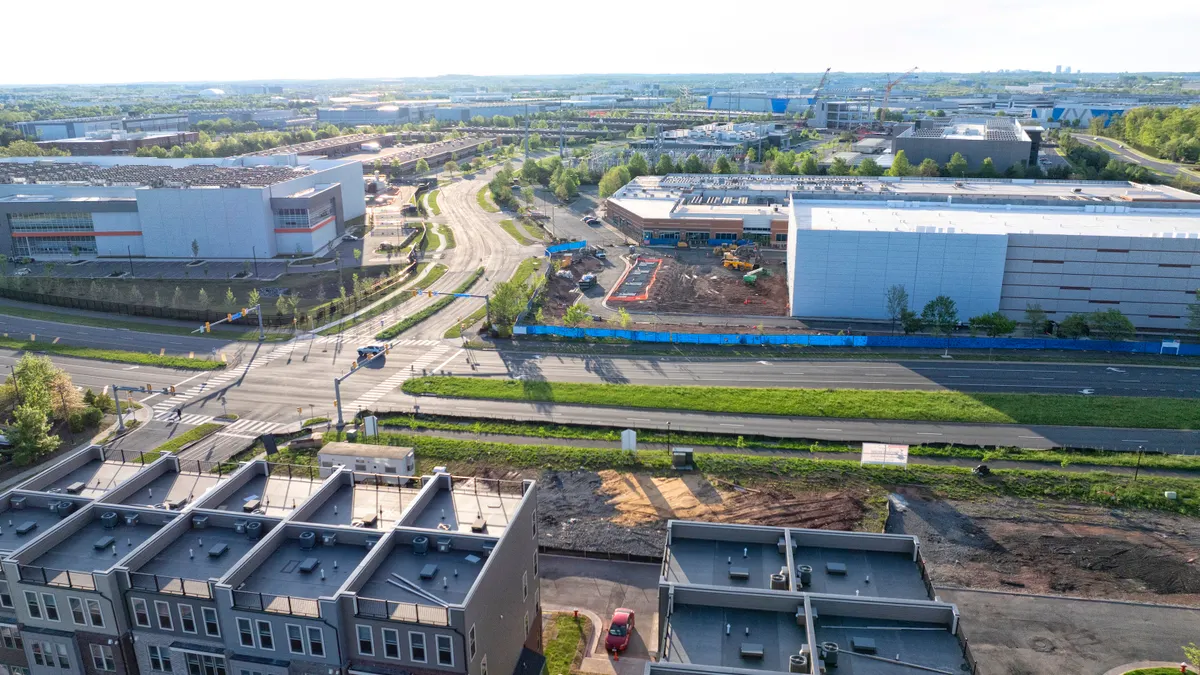
In counties across the United States, the clustering of hyperscale facilities creates immense local stress on energy grids, water tables and physical infrastructure. This stress translates into higher costs for these resources, leading residents to increasingly view these projects as extractive enterprises that socialize reliability risks while privatizing economic gains.
The limitations of the U.S. grid exacerbate this sentiment.
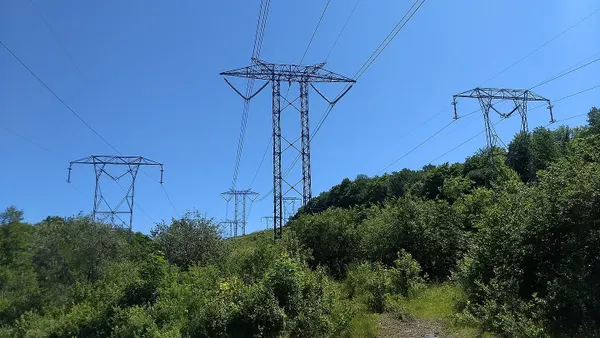
Legacy transmission architecture was never designed to accommodate massive, fast-growing load clusters that behave like heavy industrial plants but require the deployment speed of software. Lead times for generator interconnection now average four to seven years. Meanwhile, large digital campuses, frequently demanding 100 to 300 MW of new capacity, routinely trigger system-impact studies that identify hundreds of millions of dollars in required upgrades.
When utilities serve campuses before upgrades are finished, they often draw down the safety buffers required to maintain reliability during extreme weather or equipment failure. The lower standard to which utilities plan and invest in infrastructure represents an invisible transfer of risk to local ratepayers. The perception that hyperscale demand is accelerating grid stress, while residents shoulder the reliability burden, has transformed a technical coordination problem into potent political liability.
Fiscally, public frustration is rooted in ambiguous cost allocation. Electricity prices are surging across the country, with costs rising 6.7% over the past year and likely to increase further due to escalating fuel prices as a result of the Iran war.
In regions hosting data centers, this trend is even more pronounced. Absent reform, the narrative that residential ratepayers are subsidizing the "gold-plating" of the grid for tech giants will continue to gain traction.
To ensure that the costs of new projects are allocated fairly, electricity system authorities must aggressively reassert the "beneficiary pays" principle, whereby the customers that benefit from the infrastructure pay accordingly.
While utilities have historically welcomed large load customers to spread fixed costs and lower rates, the level of hyperscale demand often necessitates capital expenditures so significant that they threaten to drive rates up, not down. Regulatory frameworks must evolve to ensure that the entity triggering the need for substantial upgrades bears the lion’s share of that investment.
However, a strictly punitive approach misses an opportunity for market optimization. Data centers are not merely passive drains on the system; they are potentially sophisticated grid assets. Through demand response, on-site energy storage and frequency regulation, these facilities can provide ancillary services like load-balancing to stabilize a grid that increasingly incorporates intermittent renewables. Utilities and regulators must design rates that penalize grid stress while rewarding flexibility.
The environmental footprint of digital growth is becoming a primary catalyst for organized resistance. Data centers are resource-intensive, consuming massive volumes of electricity and cooling water.
In water-constrained cities like Corpus Christi, Texas, and The Dalles, Oregon, competition for limited resources is no longer theoretical. In College Station, Texas, the rejection of a 600-MW campus was driven not by fear of new technology, but rather by a cold-eyed assessment of minimal job creation versus substantial noise, grid strain and resource depletion. Similarly, the judicial invalidation of the 1,700-acre Digital Gateway project in Virginia underscored that historical and environmental concerns can, and will, halt billions in capital if perceived local benefits are negligible.
The grid’s inability to absorb these demands without emergency infrastructure builds or accelerated equipment wear is a failure of foresight and inefficient permitting. The U.S. Department of Energy has noted that emerging load clusters require efficient, predictable interconnection pathways. Without them, "planning friction" results, wherein utilities, residents and developers are locked in a cycle of litigation and mutual distrust.
3 steps toward social and systemic integration
Integrated AI infrastructure planning is needed.
The United States needs regionally coordinated planning that aligns hyperscale growth with generation and transmission development.
Strategic planning among federal, state and local government entities alongside grid operators, utilities and hyperscalers should prioritize "high-compatibility zones" — geographies with existing redundant grid capacity or recycled water infrastructure. Steering development toward these areas through expedited permitting and targeted incentives can minimize unanticipated burdens on fragile ecosystems and overextended utilities.
There is also a need for market and rate reform.
Utilities must modernize rate designs to protect captive ratepayers from "regulatory lag" associated with massive infrastructure builds. This includes independent analysis of "interconnection-ready" zones and contracts structured to mitigate stranded-asset risks if digital demand fails to materialize.
Performance-based regulation can also help reduce risks to utilities. Transparency must become standard for electricity usage and billing, enabling communities to monitor consumption and measure how digital growth impacts — or ideally, supports — their local economy. Dynamic pricing schemes can allow consumers to respond to price signals to lower bills.
Grid operators and regulators must design markets that ensure reliability and fair allocation of upgrade costs as digital demand grows. Operationalizing the “Ratepayer Protection Pledge,” championed by the Trump administration and signed by several hyperscalers, will require tangible reforms throughout the electricity system.
Grid operators must update compensation mechanisms for grid reliability, like capacity auctions and reserve margin payments. Utilities and operators should also advise hyperscalers on “behind-the-meter” generation and storage opportunities to mitigate grid imbalances that can exacerbate outages and increase costs. Utilities could introduce tiered reliability payments whereby high-priority critical infrastructure like hospitals and data centers voluntarily pay more for reliability services than residential customers based on avoided cost of an outage.
And, there must be radical reciprocity and community engagement for effective development.
To secure a durable social license, developers must transcend the "decide-announce-defend" paradigm. Effective engagement begins with radical transparency regarding water usage, energy consumption and tax revenue projections long before a project is greenlit, and economic reciprocity via explicit agreement on community benefits.
Meaningful reciprocity requires benefit-sharing agreements that translate industrial-scale success into human-scale outcomes.
This means more than just one-time charitable donations; it involves long-term investment in the host community. If a data center requires a substation upgrade, that upgrade should be engineered to improve the reliability of the local distribution network for all residents.
Furthermore, the industry must address its "job-to-acreage" deficit by establishing workforce development pipelines. By funding specialized electrical and mechanical apprenticeships, hyperscalers can create pathways into high-skilled labor for the local population, turning a facility into a source of generational wealth rather than just a massive opaque structure on the horizon.
By institutionalizing long-term planning, enforcing fair cost-sharing and committing to community reciprocity, digital infrastructure can transform from a source of friction into a foundational civic asset.
The American digital buildout must be one where neighbors of a 500-MW data center feel as much of a stake in its success as the engineers operating it. Only then can we build the physical foundation of the AI era on a bedrock of public trust.