Dive Brief:
-
California-based clean energy company SolarMax said last week it will deploy a combined 400 MW/1 GWh of battery energy storage capacity at three sites, one in Texas and two in Puerto Rico.
-
In Puerto Rico, SolarMax Technologies’ 80MW/320MWh Naguabo BESS in Ceiba and 20MW/80MWh Yabucoa BESS in Humacao would each provide four hours of power at maximum discharge, according to a regulatory filing posted earlier this month. The Texas deployment, near Corpus Christi on the state’s Gulf coast, would be a two-hour, 300 MW/600 MWh installation.
-
SolarMax said the engineering, procurement and construction contracts would provide hundreds of millions of dollars over multiple years. In November, it told investors that large commercial contracts would help offset declining revenues in its residential solar business.
Dive Insight:
SolarMax Technologies sees opportunity in a growing U.S. market for utility-scale energy storage, CEO David Hsu said in a statement accompanying the project announcements. Its announcements this month follow news in July that it would build a 430-MWh battery storage installation in Texas.
“Demand for large-scale energy storage solutions continues to grow,” Hsu said. “As we enter into contracts for projects of increasing size and complexity, we are … scaling SolarMax into a meaningful participant in a multi-billion-dollar market.”
In a November regulatory filing, SolarMax framed its pursuit of larger construction contracts as a response to recent changes in state and federal clean energy policy.
“We are seeking to offset our decline in residential solar sales in California for the year ended December 31, 2024 … and the anticipated continued decline as a result of expiration of the federal residential solar tax credit on December 31, 2025 by marketing commercial sales of larger systems to commercial users both in California and in other states,” the filing said.
In 2024, California’s NEM 3.0 net metering policy significantly reduced payments for grid exports from distributed solar systems, leading to a sharp drop in solar-only installations that was partially offset by a surge in battery attachments. Leading installers like Sunrun say most of the solar systems they install now are paired with batteries.
The two Puerto Rico projects will support clean energy deployment and improve grid reliability across the island, the company said.
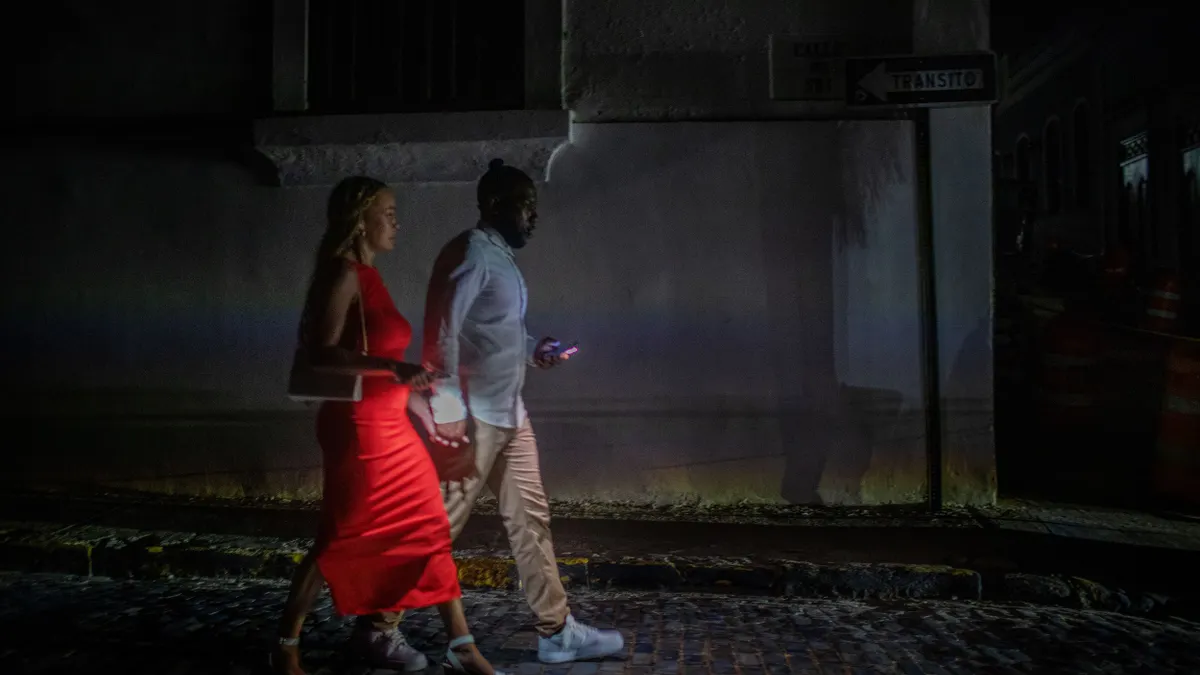
A 2017 Congressional report flagged long-running reliability issues in Puerto Rico “due largely to underinvestment and the perceived poor maintenance practices of the Puerto Rico Electric Power Authority,” or PREPA, the vertically integrated utility owned by the island’s government. That year, Hurricane Maria decimated Puerto Rico’s distribution grid, causing billions of dollars in damage and casting PREPA into bankruptcy. LUMA Energy took over the island’s transmission and distribution assets in 2021.
In the hurricane’s aftermath, Puerto Rico saw a boom in distributed solar and battery deployments that now support one of the Western Hemisphere’s most sophisticated and heavily utilized virtual power plants.
Javier Rúa-Jovet, chief policy officer of the Solar and Energy Storage Association of Puerto Rico, said in an interview this week that his organization has “200,000 clients” with a combined 1.3 GW of distributed solar and more than a gigawatt of distributed batteries.
“The value of resiliency is huge in Puerto Rico” given ongoing grid reliability issues, Rúa-Jovet said. Residents began pairing solar with batteries to “[save] their own lives,” but the combined capacity is now a vital grid asset, he added.
Puerto Rico still has relatively little utility-scale solar and storage. Renewables accounted for about 5% of the island’s power generation in 2023, according to the U.S. Energy Information Administration. Few large-scale projects have come online since, according to Rúa-Jovet.
Puerto Rico could use more clean power, and storage in particular, Rúa-Jovet said.
“Storage is good for the grid, period … it’s a good sign that some things are moving and contracts are happening,” he said, citing reliability-boosting benefits like resource adequacy during periods of high demand and voltage regulation.
In the waning days of the Biden administration, the Department of Energy’s Loan Programs Office greenlighted $1.2 billion in financial support for at least nine utility-scale solar and battery projects in Puerto Rico.
With 202 MW of solar and 455 MW/1820 MWh of storage, LPO said the projects would support PREPA’s goal to deploy 1,500 MW of battery storage and 3,750 MW of solar while adding “reliability and stability to PREPA’s system that aging centralized plants are struggling to provide.”
SolarMax’s public communications about its own Puerto Rico projects do not say when they might be operational.
Representatives for LUMA and SolarMax did not respond to requests for comment.