Arun Muthukrishnan is senior manager of development at Arevon Energy.
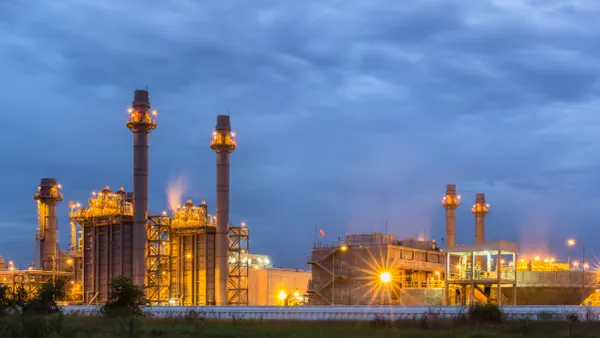
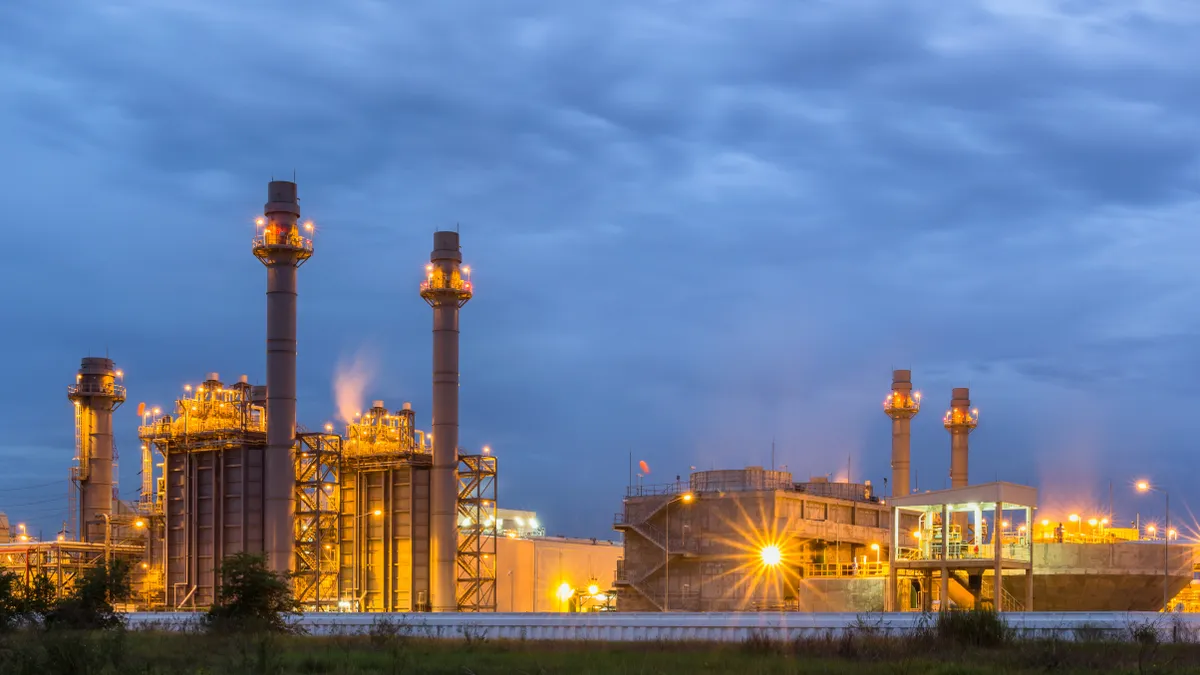
In the energy industry, we’ve spent decades leaning on a single, reliable "get out of jail free" card: the natural gas peaker plant.
The logic was simple and effective for its time. When demand spikes or a baseload plant fails, you fire up the peakers. But as we navigate 2026, that single-tool strategy is no longer a safety net; it’s becoming a liability.
For those of us in development, the conversation isn't just about "green vs. gray." It’s about the physics of the grid and the cold, hard math of the power market. A grid relying solely on gas peakers is a grid operating with one hand tied behind its back. If we want a system that is actually resilient, we have to recognize that standalone energy storage is no longer an optional upgrade; it is a foundational requirement.
To understand why gas alone fails, you have to look at the mechanics of grid stability. Most outages don’t start as a multihour energy shortage; they start as a frequency crisis. When an unexpected generator trips or a transmission fault occurs, the grid’s frequency begins to decay. If that frequency isn't stabilized immediately, it triggers a cascade of automated protection trips.
Gas turbines, while powerful, are mechanical systems with inherent physical inertia. Even the most advanced "fast-start" aero-derivative plants require several minutes to sync and ramp. In grid operations, 10 minutes is an eternity.
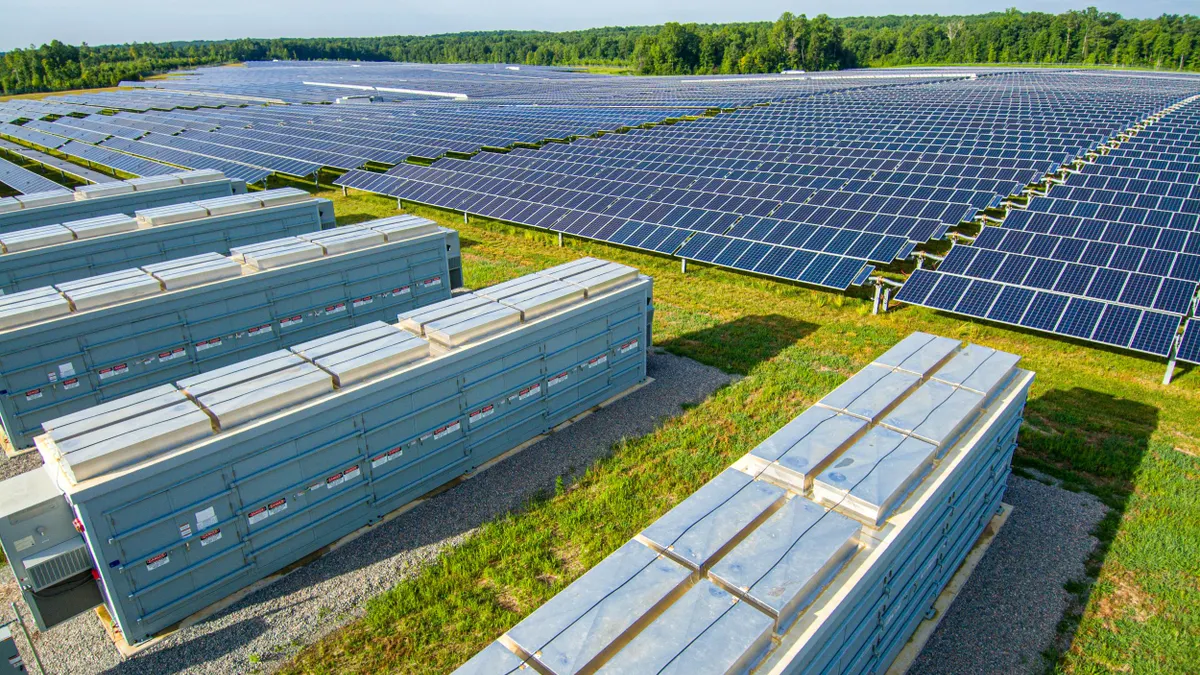
This is where standalone battery energy storage systems change the logic. Batteries operate at the speed of power electronics. They provide fast frequency response, an instant, sub-second injection of power that catches the grid before it falls. By the time a gas peaker has finished its start-up sequence, a battery has already stabilized the system. If you only have gas, you’re trying to stop a bullet with a shield that takes 10 minutes to lift.
There is also a massive operational cost to using gas for every minor fluctuation. Gas peakers are built for endurance, but they are notoriously inefficient when forced to perform "twitchy" work.
When a grid operator fires up a peaker for a 15-minute "spiky" peak, the heat rate (a measure of efficiency) is abysmal during the ramp. Furthermore, these starts are incredibly taxing on the turbine’s hot-gas-path components. By forcing gas plants to do high-frequency balancing, we are burning excess fuel and racking up maintenance costs.
Standalone storage creates a "bridge then backstop" strategy. The batteries handle the rapid, high-frequency shocks. This allows gas assets to stay offline until they are truly needed for sustained, multi-hour endurance. This doesn't just improve reliability; it makes our existing gas fleet more efficient by reducing unnecessary starts and letting them run at their optimal heat rate.
Solving the ‘system strength’ crisis
As we move toward a grid dominated by renewables and storage, we face a challenge known as a loss of system strength. Traditional gas plants provide fault current and physical inertia through their massive spinning rotors, which act as natural shock absorbers. Most current solar and wind inverters are "grid-following" — they "listen" to the grid’s pulse and follow along. But when too many traditional plants retire, the grid loses its heartbeat.
This is where advanced standalone storage comes in. Newer projects are being equipped with grid-forming inverters. Unlike their predecessors, grid-forming inverters act as a voltage source. They don't just follow the grid; they help form it by providing synthetic inertia. By electronically mimicking the physical response of a spinning turbine, a standalone BESS can instantaneously stabilize voltage and frequency in weak parts of the grid where there isn't enough local generation to keep the voltage firm. We aren't just replacing the energy of gas plants; we are replacing the essential reliability services that keep the entire network from collapsing.
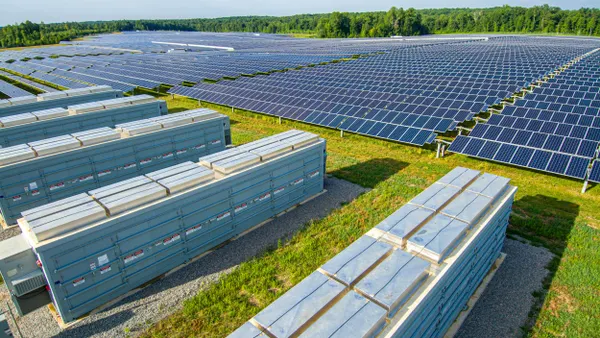
Why do we need standalone storage specifically? Because standalone projects can be sited in load pockets, in congested urban areas or near weak substations where they capture unique revenue streams that hybrid (solar + storage) plants cannot. The viability of these projects depends on a sophisticated revenue stack:
- Ancillary services (frequency control). In markets like the Electric Reliability Council of Texas or California ISO, storage provides regulation up/down. Because a battery can switch from charging to discharging in milliseconds, it follows grid signals with surgical precision, a task that causes massive wear for a gas turbine.
- Energy arbitrage. Standalone storage plays the spread between the lowest-priced hours, like peak solar production, and the highest-priced hours. Unlike a gas plant, which only makes money by burning fuel, a battery makes money by moving energy across time, helping flatten the duck curve.
- Capacity markets and resource adequacy. Grid operators pay these projects just to be available. Because a standalone BESS can be located closer to urban centers, it often has a higher Effective Load Carrying Capability than a distant gas plant that might be blocked by transmission congestion during a crisis.
Reliability is no longer just about having enough fuel in a tank; it’s about response time, flexibility and system strength. Gas peakers are the marathon runners of the grid: they handle the hours. But batteries are the sprinters, handling the seconds and the stability.
In 2026, running a grid without massive investment in standalone storage isn't just an outdated strategy, it's a fundamental operational error. We need the digital reliability of storage to protect the mechanical reliability of our gas fleet. Until we build a portfolio that uses both resources for what they are actually good at, our grid will remain fundamentally fragile.