Xcel Energy on Friday told Minnesota regulators that it would make modifications to its Capacity*Connect distributed battery proposal in response to stakeholder feedback, but it stood by company ownership of storage assets to “benefit and protect customers.”
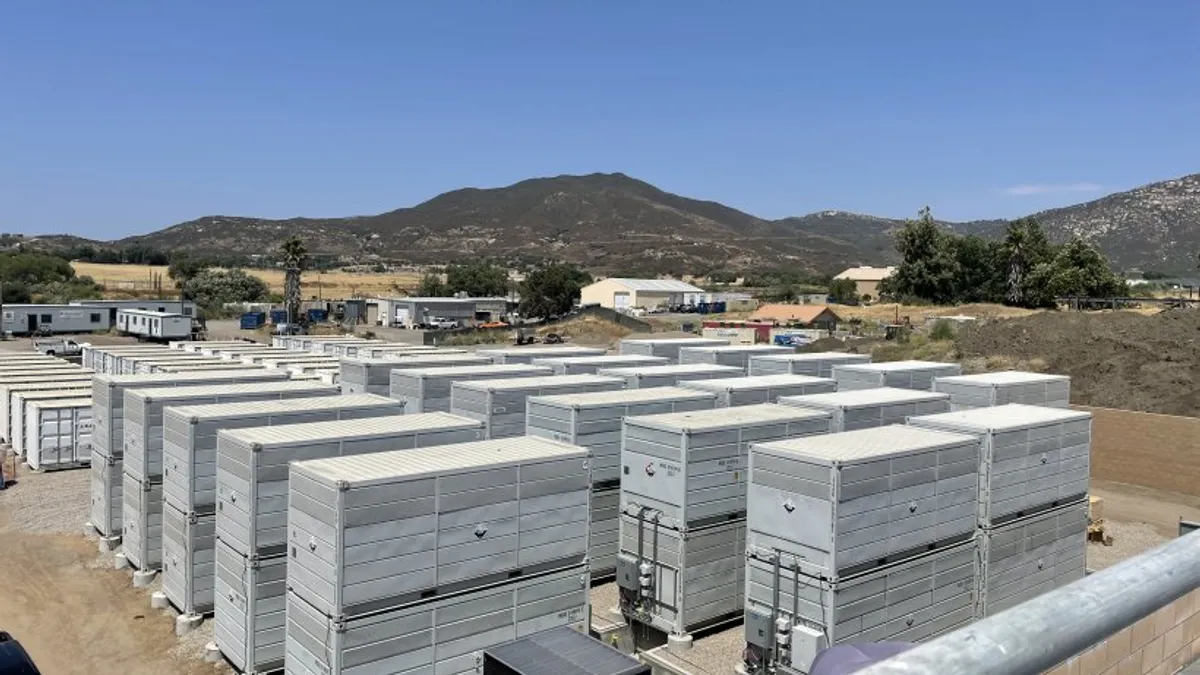
Xcel filed the “first-of-its-kind proposal” in October with the Minnesota Public Utilities Commission. The utility is asking for authorization to work with deployment services company Sparkfund to position front-of-meter batteries ranging from 1 MW-3 MW at “strategic locations” on its grid by 2028.
Local businesses, commercial or industrial sites or nonprofit organizations would receive compensation to host the batteries, but Xcel would own the assets. The program has a proposed budget ranging from $152 million to $430 million based on a procurement ranging from 50 MW to 200 MW. Xcel said small-scale battery systems are typically capable of a four-hour discharge.
Several parties filed comments with the PUC that were supportive of distributed storage but concerned about the structure of Xcel’s proposal.
A group of solar stakeholders — the Coalition for Community Solar Access, the Minnesota Solar Energy Industries Association and the Solar Energy Industries Association — took issue with Xcel’s exclusive ownership of the batteries.
The C*C proposal “raises serious concerns about how we procure these resources and whether the process delivers the best value for customers and the system,” the solar joint filing said. “The proposal is costly, shifts undue risk to ratepayers, restricts competitive market participation ... omits required analyses of alternatives, and could restrict the continued growth of Minnesota’s distributed energy resource ecosystem.”
Utility ownership of front-of-meter battery energy storage systems should be permitted “only when Xcel demonstrates, through solicitation of proposals, that competitive alternatives cannot meet the identified system needs at lower cost or lower risk to ratepayers,” the groups said.
Another group, consisting of Cooperative Energy Futures, the Environmental Law and Policy Center, Institute for Local Self-Reliance, Solar United Neighbors and Vote Solar, was critical of Xcel’s focus on the C*C program to produce bulk power system benefits.
As proposed, the program “fails to advance distribution value and develop meaningful insights for how to co-optimize distribution and bulk-system benefits,” the groups said. The utility has said it does aspire to those goals in a later phase of the program, they noted — but “the company does not expect to begin to address them until 2031.”
Xcel responded that its proposal “effectively balances the need for incremental progress and innovation while seeking to benefit and protect all customers.”
It said third parties and customers have “ample opportunity” to “access” the distribution system through the company’s other competitive procurements, including through the approximately 1 GW of community solar gardens already on the company’s system.
“There are nearly fifteen other current programs, opportunities, and incentives available for third-party DER on
Xcel Energy’s distribution system,” the utility said. Company ownership of C*C assets “ensures safe, reliable operation of our distribution system as we build the people, processes, and tools needed to manage BESS on our distribution system and interact with [Midcontinent ISO] markets.”
Participating in MISO markets “provides the most value to customers,” Xcel said.
“Prioritizing other use cases focused on energy arbitrage, distribution-only value, and/or distributed generation interconnection, as suggested by some parties, are not consistent with the [distributed capacity procurement] concept, nor do they provide sufficient customer benefit,” the utility said.
But Xcel said it would make other changes to its proposal in response to stakeholder comments.
The utility committed to additional reporting, including metrics related to equity and environmental justice, and to refining Xcel’s marginal distribution cost analysis in its 2027 integrated distribution plan to estimate potential distribution system benefits of such a program.
The Minnesota Department of Commerce recommended regulators approve the program but limit it to an initial "learning phase."
Xcel told regulators the total aggregate capacity target of 50 MW-200 MW “is the appropriate size of the learning phase,” but it would reduce it, if directed.
“However, we note that reducing the size ... will not be a linear reduction in terms of cost,” it said. “The cost-benefit analysis and the estimated budget reflect economies of scale and efficiencies that may not translate to a smaller pilot.”