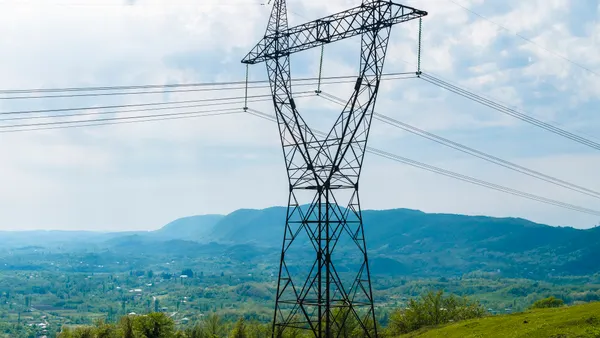

For more than a century, transmission lines have been treated as largely passive infrastructure. Once built, they were assumed to perform as designed so long as inspections were periodic, clearances were maintained and operators stayed within conservative thermal limits. That assumption no longer holds.
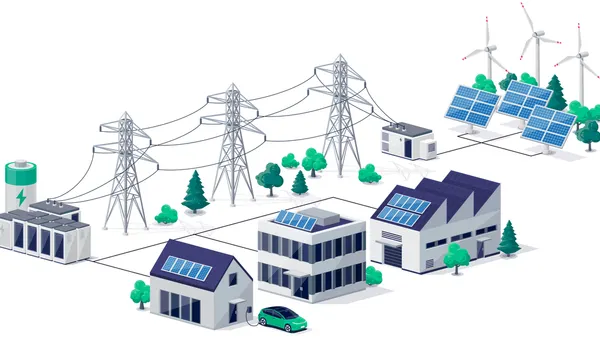
Today’s grid operates under conditions that its original designers never imagined. Electrification is accelerating across transportation, buildings and industry. Renewable generation and power flows are increasingly variable and multi-directional. At the same time, climate-driven stressors - heat waves, extreme wind, ice events, and wildfire - are pushing overhead lines closer to their physical and operational limits. And yet, in many cases, the grid is still operating with at best limited, indirect visibility into what is actually happening along these critical transmission corridors.
That lack of visibility is no longer just an operational inconvenience. It is a strategic risk.
The hidden cost of blind spots on the grid
When there is a lack of clear, real-time insight into line conditions, operators are forced to rely on assumptions and inference. Static line ratings are based on conservative weather models, not actual conductor temperatures. Point sensors and weather stations extrapolate conditions over long distances, often missing localized hotspots, cooling effects or mechanical stress. Inspections - whether ground-based, aerial or drone-enabled - offer snapshots in time, not continuous awareness.
These blind spots carry real consequences. Significant transmission capacity may go unused during periods when lines could safely carry more energy, creating false congestion, worsening curtailment and preventing businesses and homeowners from accessing the power they need. Early warning signs of mechanical degradation, excessive vibration or abnormal loading can go undetected until failures occur. In wildfire-prone regions, the inability to observe localized thermal or clearance issues in real time increases operational risk and puts local communities in danger.
The industry has responded with incremental improvements - line-mounted monitors, satellite imagery, advanced forecasting - but the core challenge remains. Most monitoring solutions still observe the grid from the outside, measuring proxies rather than directly observing the conductor itself.
As grid complexity grows, a more sophisticated solution is needed.
From passive infrastructure to self-reporting assets
What if transmission lines could report on their own condition continuously, across their entire length, under real operating conditions?
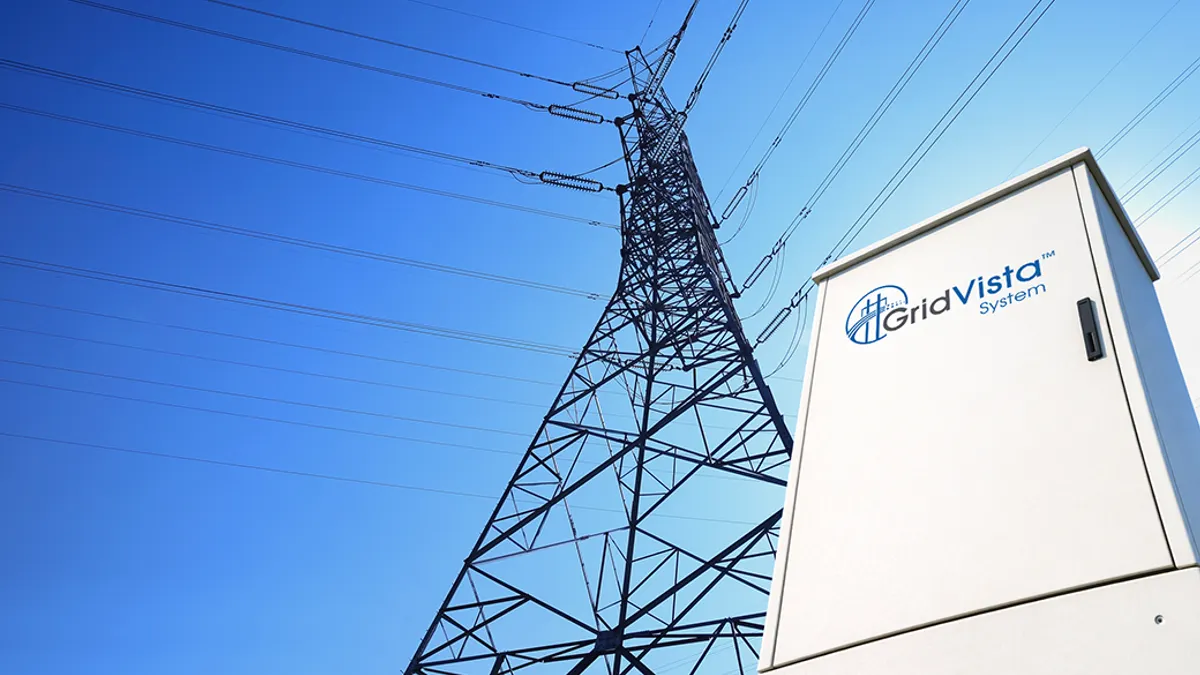
That is the shift represented by CTC Global’s latest innovation: the GridVista™ System.
Rather than adding more external sensors or layered analytics, the GridVista™ System embeds intelligence directly into the conductor, transforming the line itself into a continuous sensing instrument.
By integrating fiber sensing inside the composite core of an ACCC® Conductor, the GridVista™ System captures continuous, distributed measurements of temperature, mechanical strain, sag, vibration and dynamic events – meter by meter, span by span, across the entire line. These data streams feed a secure, cloud-native analytics platform that applies advanced analytics to line data, translating raw measurements into operational insights. These insights are further enhanced by a suite of AI-powered tools from CTC Global’s partners, Google Cloud and Tapestry, to improve grid capacity, reliability and safety.
For operators, this enables direct ambient-adjusted ratings based on what the conductor is actually experiencing, not what it is assumed to be experiencing. For asset managers, it supports condition-based maintenance grounded in measured exposure rather than inspection intervals. And for planners, it reveals how existing infrastructure truly performs under evolving load and climate conditions and allows them to build flexibility and intelligence into new lines. This embedded approach fundamentally changes what utilities can know – and how confidently they can act.
Implications for reliability, capacity and risk
The implications of full-line visibility extend well beyond monitoring:
- Capacity Optimization: Continuous awareness of line conditions enables safer and more confident use of existing capacity. During peak demand or contingency conditions, operators can distinguish between theoretical limits and real constraints, helping to relieve congestion without compromising safety.
- Event Detection: In wildfire-prone regions, real-time insight into conductor temperature, sag behavior and abnormal events adds a critical layer of situational awareness. Early identification of localized anomalies can detect faults that can cause wildfires, support faster response, improve forensic understanding and strengthen overall risk mitigation strategies.
- Streamline Operations: Precise data supports day-ahead scheduling and outage optimization, while also providing a clearer picture of mechanical stress from wind, temperature and ice over time. Maintenance becomes predictive rather than reactive, reducing O&M costs and allowing investment to flow to where it will deliver the most value.
Most importantly, these capabilities shift away from defensive operation and toward informed optimization - extracting more value, reliability and resilience from infrastructure that already exists.
Seeing the grid as it is - and as it can be
Building new transmission will remain essential, and so will extracting more performance, resilience and safety from the infrastructure already in service. In an era where reliability, capacity and public safety are increasingly interconnected, seeing clearly is no longer optional - it is foundational. By turning transmission lines into self-reporting assets, the GridVista™ System provides utilities the clear visibility needed to optimize, adapt and plan for a future defined by uncertainty.
About the author: CTC Global is the world leader in Advanced Conductors, with over 1,400 installations in more than 65 countries. Its technologies are helping utilities modernize transmission systems and improve grid reliability and resilience worldwide.