
Energy demand is rising, assets are aging, and hiring constraints are slowing critical infrastructure work 1. With retirements outpacing new entrants, less tenured crews are stepping into complex field roles, and every hour on the job now carries greater operational and financial weight.
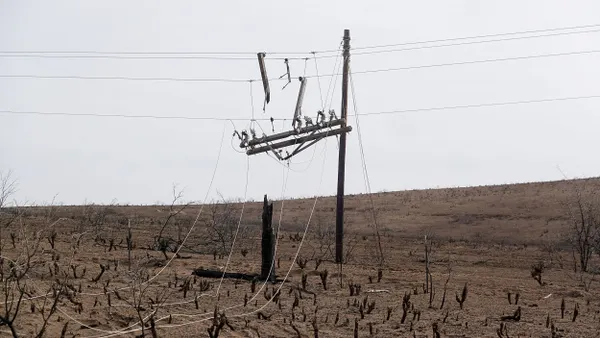
Extreme weather drives most major outages 2, pushing more work into high-stakes conditions. More events now threaten to push field capacity to its limits, raising new reliability concerns.
Utilities can’t hire their way out of this capacity gap, so they must extract new gains in field productivity from their existing teams. That starts with removing friction from frontline work and giving newer crews the guidance and confidence to execute reliably.
The strategic question is simple: How do we help our existing workforce operate with greater speed, accuracy, and confidence?
Reducing Friction Is the Fastest Path to Capacity
Time is lost in small, repeatable moments. Field crews lose time navigating tools never designed for modern field conditions. They lose time when:
- Manually entering data into systems that don’t match the flow of real work.
- Critical context is missing - asset context, as-operated network models, and real-time weather and wildfire conditions.
- Judgment calls rely on institutional memory, which is walking out the door through retirement.
Individually, these moments are minor. Aggregated across thousands of tasks? They equate to hours of lost capacity that utilities don’t have the margin to absorb. In an environment where regulators and the public scrutinize every outage response and every capital dollar must be justified, slower execution compounds risk.
Utilities need to unlock all the usable minutes from every qualified field worker they already employ.
The Strategic Pivot: Simplify. Guide. Orchestrate.
Violent storms, extended wildfire seasons, and widespread flooding complicate routing, access, and safety, and increase the number of decisions crews must make. Utilities need sharper situational awareness and faster cycles from assessment to action.
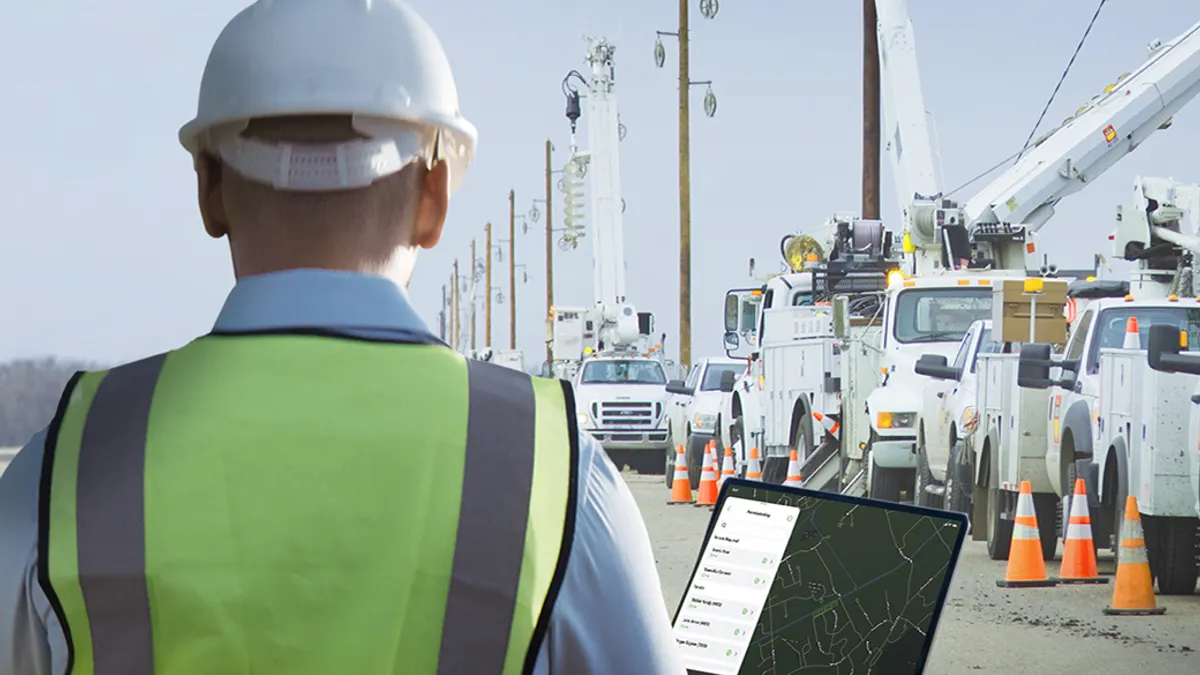
The path forward is a field-centric operating model that connects work, asset context, and real-time conditions in a single digital workspace, closing the gap between planning and what truly happens at job sites.
That model encompasses three practical shifts:
1. Simplify
Field systems should lighten crews’ cognitive load. Crews need fewer jumps between applications, screens, and manual data entry steps, which interrupt momentum and safety.
When data moves with the worker, and the next action is clear, new hires perform with more confidence, while experienced staff can stay focused on the work that requires their judgment and expertise.
2. Guide
Field teams operate faster and safer when the job context is unambiguous. Clear visibility into asset conditions, environmental hazards, and access constraints allow workers to understand what to expect before they arrive.
Guidance shortens the time from assessment to action, reduces rework, and gives less‑tenured workers support to make sound decisions in uncertain conditions.
3. Orchestrate
Coordinated operations require the right information reaching the right roles at the right time. Responsible, well‑governed AI can surface relevant details, reinforce established practices, and make institutional knowledge more accessible to newer workforces. This strengthens human judgement, keeps teams aligned, and reduces low‑value administrative tasks that erode field capacity.
A Strategic Reframing for the Decade Ahead
Grid modernization has dominated the industry conversation for years. Utilities that focus their modernization efforts on frontline usability and situational awareness will see a lift in execution and resilience. On the flip side, those that plan to use headcount growth as their primary capacity strategy will face growing exposure as experienced workers retire faster than they are replaced.
The industry is entering a period where operational execution has become a differentiator. Leaders who embrace that shift will be better positioned to deliver the reliability, safety, and accountability their stakeholders expect.
A New Foundation for Modern Utility Operations
The industry is moving faster than incremental process improvements can absorb. Utilities need digital platforms that support safe, decisive action amid rising field complexity.
Solutions built for this purpose will become the backbone of modern utility operations. Hitachi Energy’s Service Suite X is one example, designed to bring planning, optimization, execution, and situational awareness into a single operational workspace. It gives field leaders clearer visibility and creates a scalable foundation that can evolve as grid demands grow.
This shift doesn’t eliminate the need for recruitment or training. Rather, it acknowledges that utilities can no longer depend on an abundance of experience in the field. Modern operations require solutions that strengthen judgment, ease administrative burden, and help a leaner, newer workforce deliver while under greater pressure than any prior generation.
References
[1] IEA workforce shortage ratio (2.4 retiring workers for every one entrant): International Energy Agency, World Energy Employment 2025, December 5, 2025. https://www.iea.org/news/energy-employment-has-surged-but-growing-skills-shortages-threaten-future-momentum
[2] Climate Central, Weather-related Power Outages Rising, April 24, 2024