Jeannie Salo is chief public policy officer at Schneider Electric.
President Donald Trump and his cabinet are serious about rapidly advancing artificial intelligence in America.
But the race for AI is a race for electrons. If the U.S. wants to make it on the podium, public and private sectors must come together to implement a Formula 1-style strategy for powering AI with speed, precision and teamwork.
The clock is ticking. Long-term, AI is set to drive as much as 50% of U.S. electricity demand growth between now and 2050, fueled by technological innovation and a usage boom. Short-term, our speed is hampered by infrastructure bottlenecks, long interconnection queues, as well as matrixed and outdated federal permitting roadblocks, all of which slow down our ability to address the growing electricity supply and demand gap.
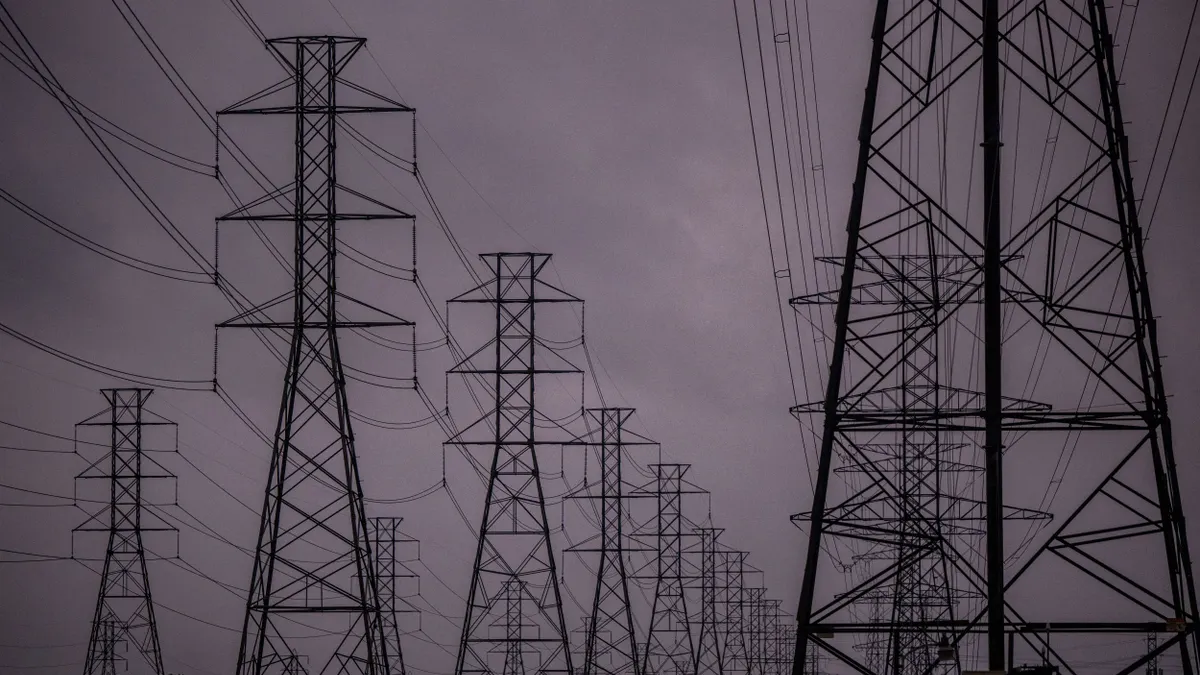
The greatest hazard of all is our aging and analogue racetrack — the U.S. electric grid. It simply isn’t keeping pace technologically with what’s available today, let alone with the innovations of tomorrow.
By 2028, we’ll be at a critical inflection point. If the country does not act, energy supply won't keep pace with demand. Schneider Electric’s internal forecasts alone showcase that by 2033, we could be looking at a 175-GW capacity shortfall or worse. Put simply, this shortfall approximates nearly one quarter of our country’s current power demand and is equivalent to the power used by 130 million homes. This is a dizzying (but not insurmountable) delta.

Source: Schneider Electric
Many think the solution is to prioritize more supply. While important, that alone will not solve the ensuing shortfall. The time it takes for large new generation sources like solar farms, natural gas or a new nuclear facility to be built and then deliver electricity to our homes and businesses could take a decade or longer.
Bottom line? We need a Formula 1-style strategy for teamwork that is well supplied, highly organized and can work quickly and precisely to win the race. Plus, we need to execute precision “pit stops” along the way to optimize and maintain our 20th century grid, so it can immediately support growing 21st-century technological demands.
The White House acknowledged those realities in its AI Action Plan, released this summer, by explicitly calling out the infrastructure needed to achieve our AI goals. Going further, the Department of Energy issued a “Speed to Power” request for information this fall, seeking ideas and projects that can develop the energy grid at a speed that matches the pace of AI innovation.
Leaders in energy tech are prepared to suit up and line the track with new technology and gear in hand to optimize electrons immediately and accelerate our speed to power AI.
As one of the leading grid solutions companies, in addition to our partnership with AI chip manufacturer NVIDIA, Schneider Electric has unique insight into how to blend the AI innovation revolution with the realities of our current electricity system. This year alone, we announced a $700 million planned investment in the U.S. to boost manufacturing, much of which will help produce equipment that can help supplement the modernization of the grid and power AI data centers efficiently.
But private sector investment needs to be matched with federal action. In the spirit of precise Formula 1 teamwork, here's how we advance AI:
- Speed: By 2026, the federal government should use every lever to close the gap between demand and supply. First, that starts with building more AI-ready data centers on federal lands to stabilize the grid with on-site generation, storage and flexible demand. The administration has taken preliminary steps to that effect, but we need to accelerate. Now is the time to shift into overdrive.
- Precision: Second, the White House should put the pedal to the metal on its efforts to drive a closer consortium of utilities, regulators and agencies that can reform utility incentives that value vital, urgent digital upgrades like advanced metering and distributed energy resource management systems that make grid management smarter and more efficient.
- Teamwork: Third, Congress and the executive branch must work together to pass durable permitting reform. There’s already a broad bipartisan understanding that the time it takes to build energy infrastructure in this country is not aligned with the urgency required of 21st-century technologies. That said, interconnection delays can and should also be addressed now by the administration in the meantime. DOE and the Federal Energy Regulatory Commission should fast-track projects that pair new load with resilience measures — microgrids, storage and on-site generation. Facilities (public or private) that can give back to the grid in emergencies should move to the front of the line. This standard would turn the queue into a driver of reliability.
- Planning: Fourth, the White House and Congress should act together to accelerate a plan for investing in critical domestic electrical and grid supply chains while optimizing new trade deals and executive orders to speed up reliable access and affordability of the materials we need to compete.
The next few years are decisive for the short-term and long-term energy and AI future. However, the biggest question in the AI race remains: Are we doing enough today to power it in the future?
By revving up the U.S. government’s engines and collectively working as a team to accelerate the energy technology industry’s speed to power, we can collectively answer that question with an emphatic, “yes.”