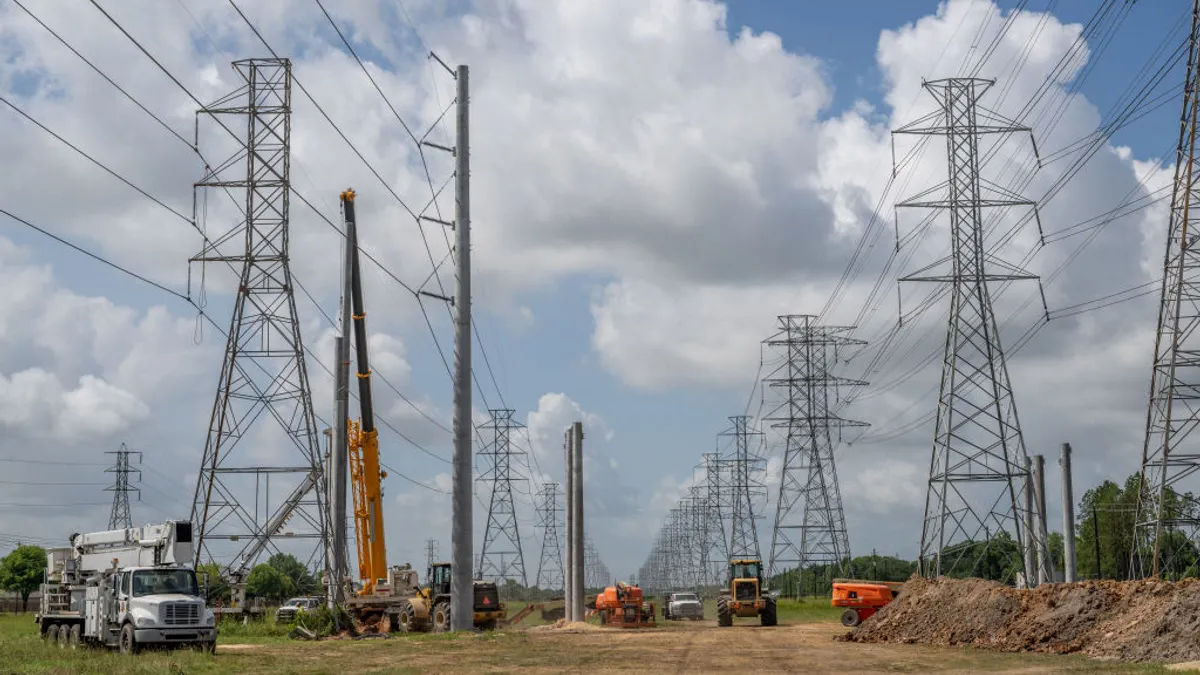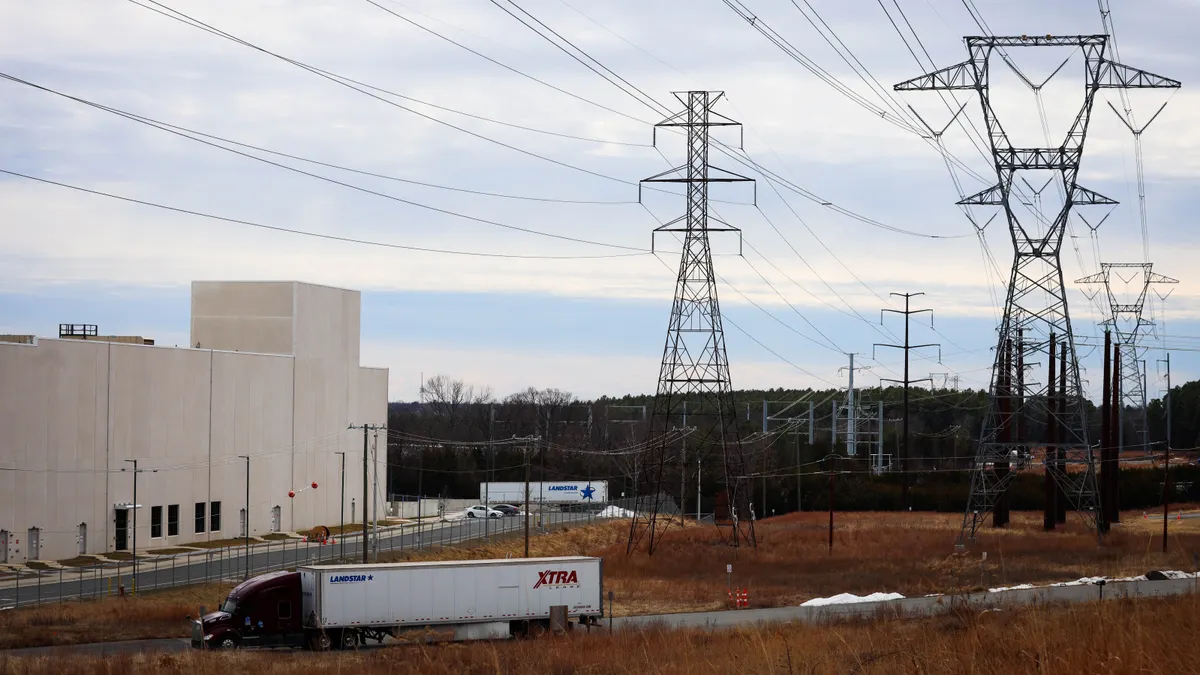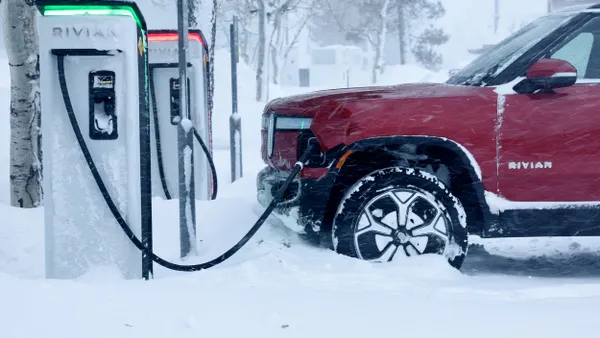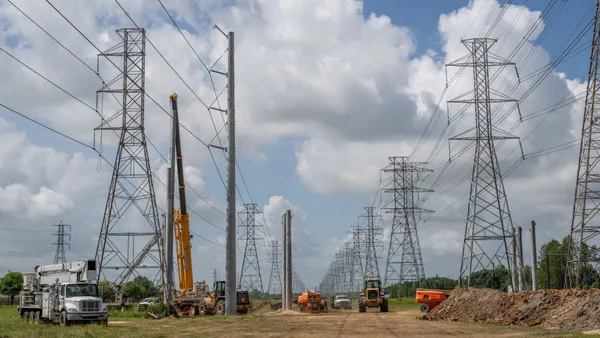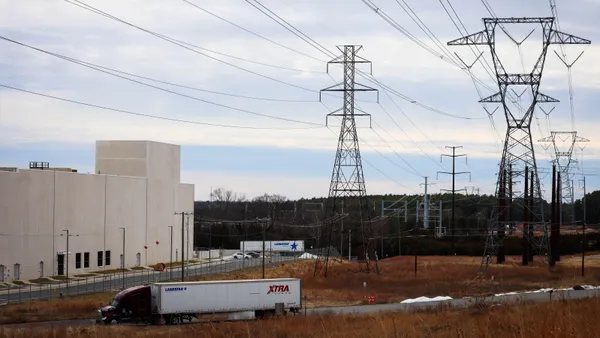


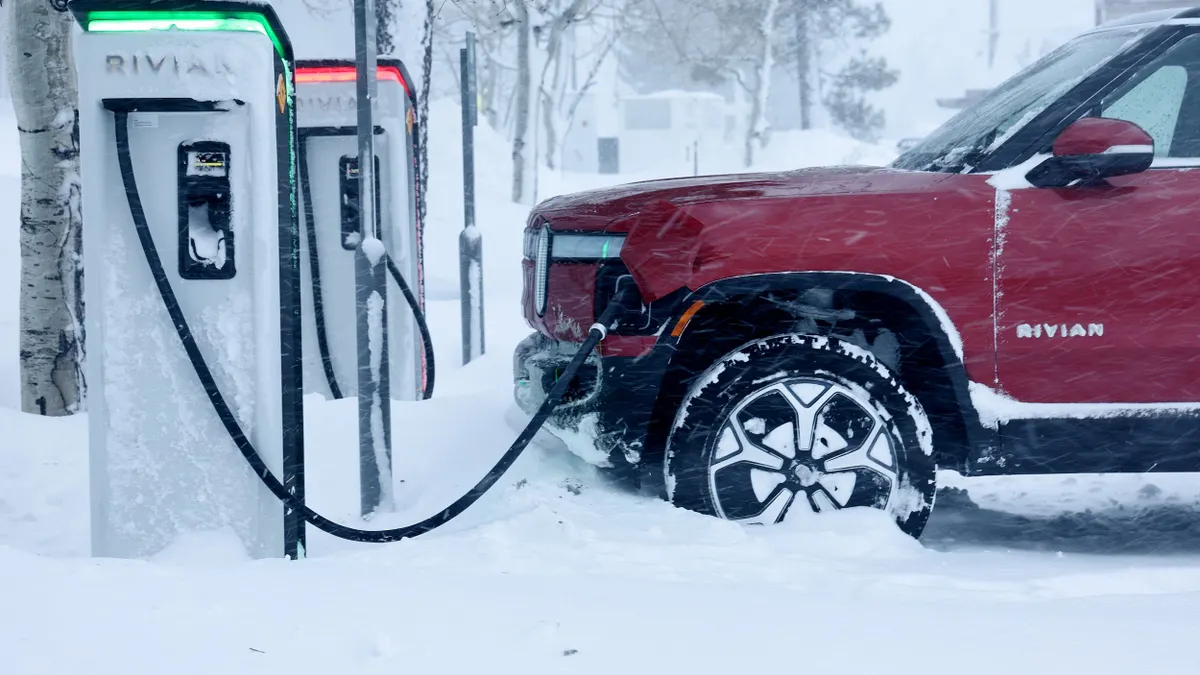
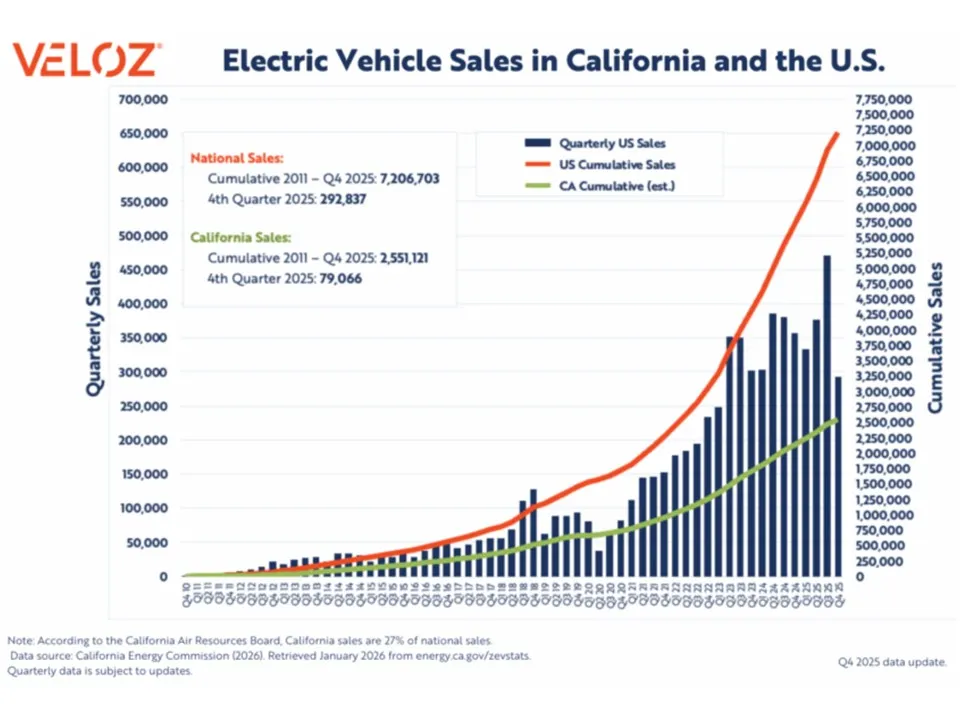
The 7.2 million electric vehicles in the United States are simultaneously driving the need for grid upgrades and providing utilities with a powerful tool to defer those expenses.
U.S. utilities are working with third-party software providers and automakers to develop and scale managed charging programs that can spread out the EV charging load and avoid creating peaks that stress local systems, helping to defer infrastructure upgrades that drive up rates.
Manufacturers including General Motors, Ford and Rivian also have seen value in these programs and are partnering with distributed resource service providers like EnergyHub, WeaveGrid and Chargescape to improve customer experience and access to these programs.
Despite federal policy changes in 2025 that withdrew support for EVs, sales have so far remained more or less consistent. The battery electric vehicle share of U.S. car sales in March was estimated to be 5.2%, sustaining the 5% share that segment has averaged since November 2025, S&P Global reported. Even before the U.S.-Israeli war against Iran spiked gas prices, EV load was expected to grow significantly in the coming years.
Managed charging — commonly referred to as V1G to indicate the one-way flow of energy from the grid to the vehicle — is already being used to shift load from peak demand hours. But exploiting its full potential for reliability and cost savings will require standardized data-sharing protocols that have so far proven elusive for the industry, stakeholders told Utility Dive.
“There is still work to do,” said Zach Woogen, executive director of the Vehicle-Grid Integration Council. But by “growing partnerships” among automakers, utilities and aggregators, utilities can learn how to use managed charging “to make their systems more reliable and address the affordability crisis,” he said.
Seth Frader-Thompson, president of EnergyHub, a leading aggregator that partners with GM, Rivian, Toyota and Tesla on managed charging programs, offered a similar perspective.
“Grid-aware managed charging ensures EVs can serve as a resource to manage the load growth we are seeing across the country,” he said.
From passive to active managed charging
“The technology of managed charging, or smart charging, is quite mature, and there are no technological hurdles,” said Dave McCreadie, director of EV-grid services at Ford. “Communications between utilities, automakers, aggregators and their vehicles has been demonstrated over and over across many utility programs and has worked well.”
In addition to avoiding demand peaks through managed charging, EVs can be integrated into the grid as bidirectional assets that not only store power for driving but also provide backup power to homes (which is called V2H, vehicle to home) and export energy to the distribution system (V2G, vehicle to grid) or any other external system (V2X, vehicle to everything). But the first step is moving from passive to active managed charging, industry sources said.
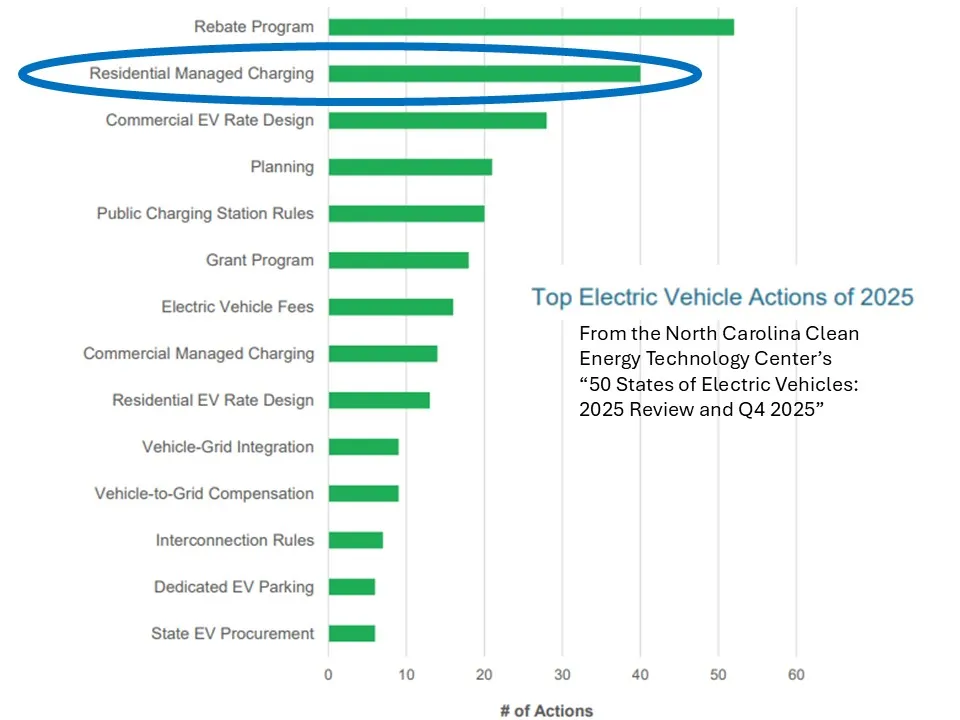
In 2025, legislative or regulatory efforts in 32 states and Puerto Rico addressed improving residential access to managed charging, according to the North Carolina Clean Energy Technology Center’s annual state electric vehicle policy review.
Many utilities already offer “passive” managed charging programs that use time-of-use rates to encourage customers to charge during off-peak hours, but the utilities still rely on customers to manage their own charging schedules.
As the technology has matured, utilities are increasingly turning to “active” managed charging, whereby the customer largely turns over charging capabilities to the utility or service provider, which can adjust the load in real time based on system conditions. Regulators approved nine new active managed charging programs last year, according to the state EV policy North Carolina Clean Energy Technology Center’s review.
“Utilities see the millions of EVs in their territories as flexible load that they can tap into just when data center demand is placing strain on their systems."

Joseph Vallone
CEO of Chargescape, which aggregates Ford, BMW, Honda, Nissan, Tesla, Stellantis and Rivian vehicles for over a dozen power utilities.
Experts say active managed charging can avoid some of the unintended consequences that have plagued passive programs. For example, in California, passive managed charging has led to a secondary peak right after midnight, when the rate drops.
Divesh Gupta is the director of clean energy solutions for Baltimore Gas and Electric, which was one of the first investor-owned utilities to offer EV-only time-of-use rates and, later, an active V1G program.
Active managed charging “significantly changed the load curve created by the EV-only time-of-use rates,” Gupta said. The results were so compelling that in 2023, regulators approved expanding the program from 6,900 participants to 30,000.
He said planning for the future requires active management to avoid secondary and local peaks and to ensure substation transformers are not overloaded.
Analyses by state regulators and others appear to support the use of managed charging — especially active managed charging — for controlling costs.
The California Public Advocates Office reported in 2025 that EV charging management had a “significant” impact on costs for all three investor-owned utilities in the state, and “mass shifting of peak EV load away from the peak could save between $5 billion and $18 billion in distribution costs by 2040.”
The Massachusetts Department of Energy Resources called EV load management a “no-regrets strategy for reducing peak load” while emphasizing the need for active managed charging and V2X to “maximize benefits and minimize grid impacts.”
“Without active managed charging, off-peak price signals can cause large numbers of EVs to begin charging at the same time, potentially overloading local distribution infrastructure,” it said.
A report the Brattle Group prepared for the New York State Energy Research and Development Authority came to similar conclusions about the value of active V1G programs.
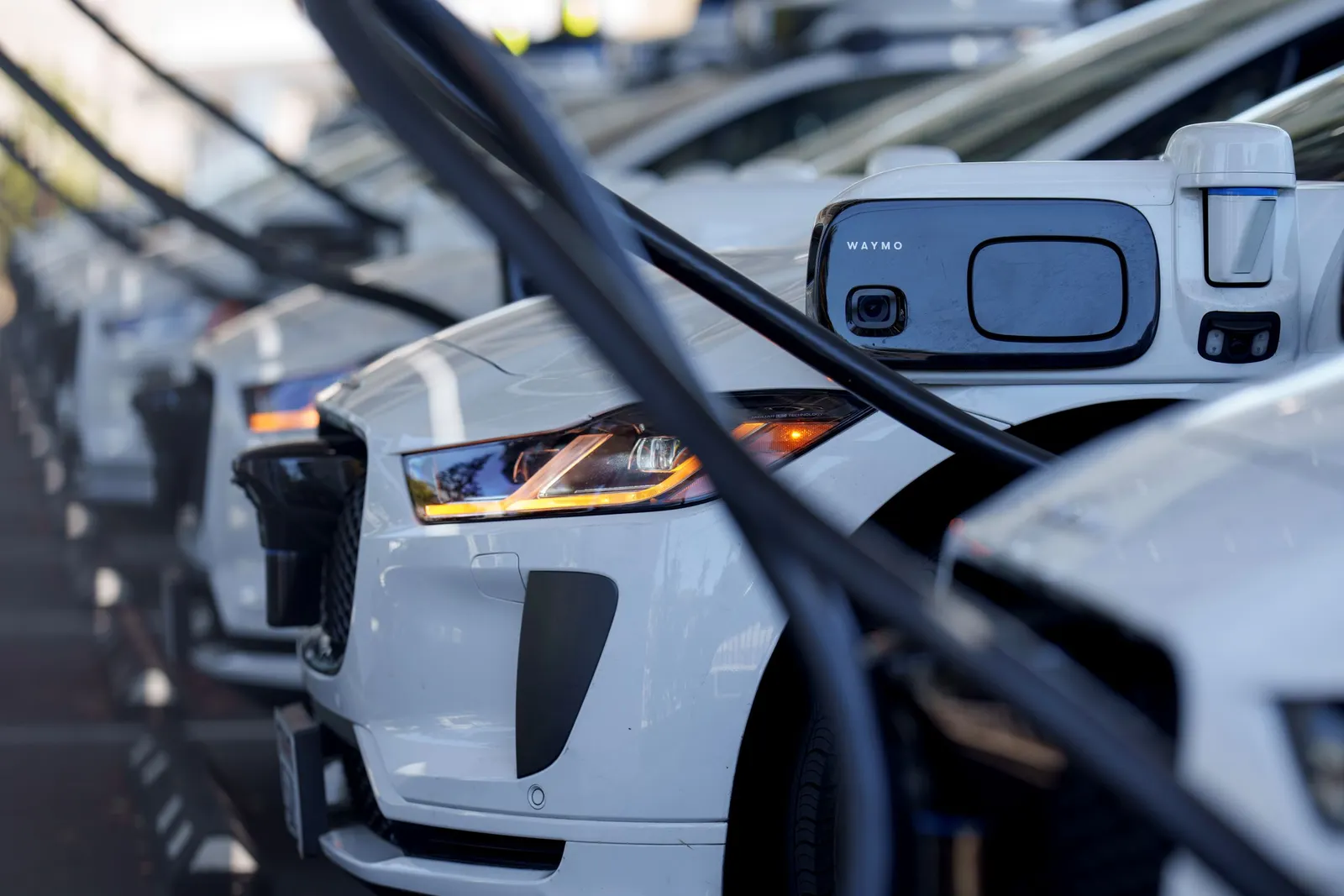
“Utilities see the millions of EVs in their territories as flexible load that they can tap into just when data center demand is placing strain on their systems,” said Joseph Vallone, CEO of Chargescape, which aggregates Ford, BMW, Honda, Nissan, Tesla, Stellantis and Rivian vehicles for over a dozen power utilities across the U.S.
McCreadie said Ford is not backing away from EVs because of changes in federal policy. It plans to bring a set of affordable electric vehicles to market starting in 2027, he said.
‘Little agreement’ on how to share customer data
While stakeholders agree on the benefits of active managed charging, scaling programs that include so many players remains a challenge.
Utilities and EV automakers must agree on interoperability standards and communications protocols to enable sharing data securely, said Dan Bowermaster, senior area manager for electric transportation with the Electric Power Research Institute.
But automakers, charger manufacturers, aggregators and utilities all “see the customer as theirs,” so “there is little agreement on how to share the customer’s data,” he said.
WeaveGrid, the service provider that partnered with BGE on its managed charging program, deploys software that interacts directly with vehicle telematics, utility telemetry, data communications and system controls to help manage system peaks, said Mathias Bell, the company’s vice president of market development and partnerships.
“It also uses advanced scheduling and controls to optimize EV charging at distribution system locations,” he said. The goal is to improve system utilization to put downward pressure on customer rates, Bell said.
EnergyHub is focused on partnering directly with automakers, said Jeff Huron, the company’s director of business development.
“There is no better channel than the automakers’ customer apps and telematics for engaging customers where they are and interacting with their vehicles on a daily basis,” he said.
“Most automakers are planning to use their telematics and other technologies to make those fast-response capabilities more widely available in the next couple of years.”
Jeff Huron
Director of Business Development, EnergyHub
Right now, automakers are still learning how to balance automating charging preferences for customers and communicating necessary information to them, said Ford’s McCreadie.
Companies will always protect any part of the customer experience unique to their brands, but the basic communication structures and formats do not need to be differentiated, he said.
“Once the signal is in the automaker cloud, the automaker can choose how to communicate with their vehicle and their charger,” he said.
Ford wants “customer-friendly” active V1G programs “in every U.S. utility service territory that fairly rewards EV drivers,” MacCreadie said. “To enable that, we need common technology and communications standards by 2030,” and “ways to smoothly, quickly, simply enroll customers in those programs,” he added.
Greater cooperation among utilities, aggregators and vehicle manufacturers appears to be yielding results in some areas.
Aseem Kapur, chief revenue officer for GM Energy, said best practices on enrollment processes and incentives are emerging from General Motors’ partnerships exploring active V1G with National Grid, Eversource, Duke Energy and EnergyHub.
GM is committed to “standardized data streams” and “interoperable system designs” that can lower costs and support EV adoption, Kapur said.
“Now is the time to work across aggregated partnerships” because “if it is easy and simple for the customer, it will drive toward improvements on a unit cost basis and mass adoption,” he added.
Scaling and flexing
Active V1G programs “are no longer science experiments,” and utilities and regulators are preparing to scale up programs in order to provide much larger benefits, said Woogen from the Vehicle-Grid Integration Council.
Despite federal policy changes, stakeholders remain focused on advancing policy at the state level, Woogen said. Identifying best practices for interconnection rules, rate designs and funding of up-front incentives and other customer compensation initiatives is critical to expanding utility programs and enrolling more customers, he added.
Some utilities are also changing up the messaging after encountering resistance from customers to the idea of handing over control of their vehicle’s charging.
Pacific Gas & Electric, for example, calls active V1G “‘optimized charging,’ so that customers understand the utility is optimizing their electric vehicle load rather than managing it,” said Joel Ulloa, the utility’s manager of vehicle grid integration.
With more than 6,000 customers enrolled and a proposed expansion to 50,000 customers, “PG&E is committed to scaling,” he added.
The utility released Part 2 of its Electrification Impact Study in January, which concludes that much of the cost for EV charging loads will be at the distribution system level, Ulloa said.
Active V1G “can meet the new electrification load and defer or reduce the distribution system upgrade costs that will otherwise be needed,” he said.
While reduced federal EV policy support is not “favorable,” he said, optimized charging “can help clarify what tools will support market growth,” and standardized control and communications protocols can make customer-sited hardware needed to fully scale and leverage active V1G flexibility less expensive and easier to interconnect.
Perhaps the greatest value of active V1G to utilities is the flexibility it delivers to system operators, which is improving over time.
The next one to two years will validate the ability to target specific device classes to meet specific utility needs, said EnergyHub’s Huron. This “will allow dynamic load shaping based on distribution network values and what's happening in real time,” he said.
“Faster response requires fast, crisp, clean customer experiences, and the system’s ability to adjust as customers change their participation during event windows,” Huron said. “Most automakers are planning to use their telematics and other technologies to make those fast-response capabilities more widely available in the next couple of years.”
There is “significant flexibility in the EV charging load,” said Gisela Glandt, vice president of business development with virtual power plant manager Uplight. Active V1G programs “are growing, and the value proposition has not reached its full potential,” she added.
A lack of interoperability and siloed utility programs limit the potential, Glandt said. Active V1G needs to be part of a utility’s demand-side portfolio of resources, or what Uplight calls the “demand stack,” so it can flex as needed to meet multiple system needs, she said.