Hannah Bascom is chief commercial officer at Uplight.
Both the U.S. grid and consumers are buckling under pressure as climate-driven extreme weather intensifies, load growth skyrockets and electricity bills climb. Twice in July, electricity demand across the Lower 48 states surpassed the previous summer peak, per the U.S. Energy Information Administration. While most regions maintained reliability under normal conditions, the continued climb in peak demand signals mounting challenges for grid resiliency as temperatures rise year after year.
And similarly, the increase in consumer rates over the past several years has now become a top election issue — and a meaningful quality of life limiter, as one in three customers are unable to pay their electricity bills. We are at a breaking point and the status quo, as is planned by utilities currently, is no longer an option.
For decades, the solution to extreme weather and load growth has been straightforward: build more. More generation. More transmission. More wires. Because, while peak demand has increased, load growth has been flat for decades, this strategy worked. But "build more" is showing its limits. Building new infrastructure is costly and slow — taking years to bring capacity online — and cannot address the near-term resilience risks from AI-driven demand growth over the next three years.
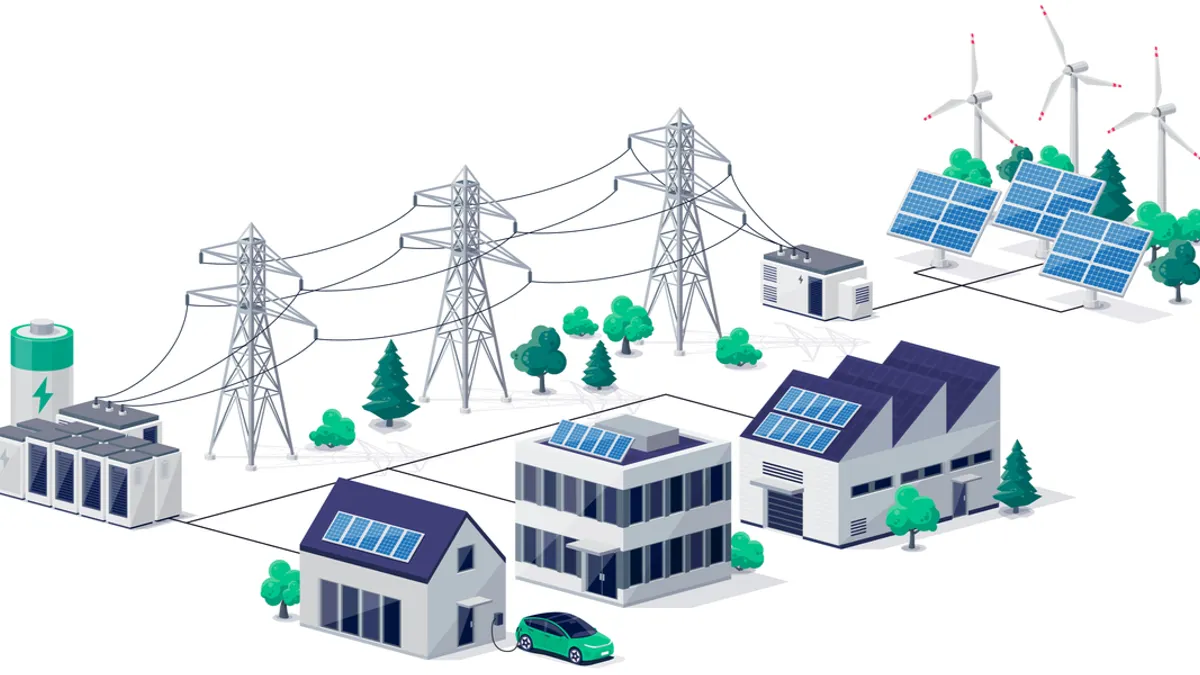
The fastest, most affordable path to resilience doesn't require pouring concrete or stringing wires. It lies in maximizing distributed energy resources (DERs) already in homes and businesses — smart thermostats, batteries, EV chargers, heat pumps, water heaters — and incentivizing more installations. Used strategically, these resources deliver grid flexibility at a fraction of the cost and time of new infrastructure. That's the untapped path to resilience hiding in plain sight — one that actually helps customers with affordability.
Using demand-side resources like supply resources
Utilities orchestrate supply-side resources in layers — baseload for everyday needs, mid-merit for daily patterns, and peaking capacity for extreme hours. Why not use the same approach for demand-side resources? Coordinated as a "demand stack," these resources create scalable resilience that delivers reliability faster and cheaper than new construction. Yet most programs today operate in isolation — energy efficiency, time-varying rates and demand management are designed and funded separately, capturing only a fraction of their flexibility potential.
An integrated demand-side management strategy prevents fragmentation while improving affordability and grid resiliency. By coordinating efficiency, time-varying rates, and demand programs as a unified stack — similar to a diversified generation fleet — utilities capture combined benefits. Efficiency reduces daily consumption like baseload power, rates reshape mid-curve usage, and demand management programs act as peaking resources during system stress. This demand stack delivers system-level flexibility affordably and reliably, avoiding the cost and delays of new supply infrastructure.
Redefining resilience
To make this strategy work, we need millions of energy customers and their distributed energy resources to participate. The challenge is that the majority of customers don’t know grid flexibility programs exist: although 80% of energy customers would like advice from their utility on relevant programs and services, only 6.5% on average enroll in demand response programs. There is a massive opportunity to better engage and activate these customers as part of the demand stack.
Two strategies are essential for closing the gap: diversifying program offerings and personalizing customer engagement. These approaches move beyond conventional opt-in frameworks to incorporate opt-out designs that open up more choices for customers, substantially expand participation and impact, and do so without downside for customers.
Two highly effective opt-out programs include device-controlled and behavioral demand response (BDR) programs. Wider reaching, device-enabled opt-out programs activate only during critical moments — triggering events just a few times per season during severe grid stress or making tiny, targeted adjustments to DERs precisely when the grid needs them most. Most importantly, these programs offer customers an accessible, low-commitment entry point for participation and engagement.
Opt-out, device-native programs ensure broader access to grid flexibility programs while maintaining customer choice, create flexibility with customer segments beyond early energy technology adopters, and act as an entry point to more traditional, opt-in demand response programs where customers can take advantage of available incentives.
On the other hand, opt-out BDR programs offer universal accessibility without requiring any devices — customers simply receive notifications to reduce usage during peak events and earn incentives for their participation. This low-barrier approach is particularly valuable for reaching underserved communities, including low-to-moderate income customers and multi-family housing residents who may lack access to smart devices, while still delivering meaningful load reduction at scale.
These different flavors of opt-out device-enabled and behavioral programs provide a way for energy providers to increase flexibility capacity right now via their customers — also while serving as a distributed safety valve, relieving pressure on the system during emergencies, preserving customer comfort and control, and preserving affordability.
This is resilience redefined. We are not just building new supply resources (though that certainly has its place), but optimizing our existing resources in a new way to unlock intelligent, dynamic, predictable grid flexibility that can meet increasingly unpredictable conditions. By rethinking how we use what’s already available, we can build a path to reliability that is more affordable, more equitable and more sustainable.
The path forward
The U.S. grid is clearly at a crossroads. If we stick with only the “build more” playbook, we risk overspending, overbuilding, and still arriving at the finish line too late. If we embrace demand-side flexibility as a critical part of a redefined vision of resilience, we can build a grid that adapts quickly and cost-effectively today and in the future.
That means:
- Designing coordinated demand-side programs that work together, rather than in isolation.
- Expanding participation through opt-out, behavioral and device-native enrollment.
- Treating households, business and their DERs as frontline grid resources.
- Reshaping the demand curve with a flexible demand stack to deliver on today’s grid needs.
Resilience is about coordination and optimization, not just construction. By stacking demand-side programs and resources into a unified strategy, supported by grid-edge technologies like DERMS, utilities can deliver the safe, affordable, reliable power with tools already in our homes and businesses.