Dive Brief:
- The U.S. Environmental Protection Agency on Thursday proposed adding “flexibilities” to the rules that govern the management and cleanup of coal ash, the waste that remains when utilities burn coal to generate power. There are approximately 775 coal ash surface impoundments and landfills across the country, according to the agency.
- Environmental advocates say the changes could allow utilities to leave submerged coal ash in place, a practice which threatens drinking water.
- Coal ash contains mercury, cadmium, chromium and arsenic, which are linked to cancer and other health problems, according to the EPA. EPA’s proposal is “another handout to the coal power industry at the expense of our health, water, and wallets,” Lisa Evans, senior counsel at Earthjustice, said in a statement.
Dive Insight:
EPA set the first federal coal ash rule in 2015 under President Barack Obama and expanded those protections in 2024 with President Joe Biden in office. But industry groups have been lobbying President Donald Trump to loosen the rules and Thursday’s proposal is the result, Evans said.
“Ultimately, if this rule is finalized, human health will suffer and taxpayers will be left with the cost of cleaning up their rivers and drinking water,” she said.
The Trump administration has championed the coal industry for the past year, including taking steps to keep aging plants online. The latest proposal would ease rules around secondary uses for coal ash, including in cement, and allow for “site-specific considerations in permitting,” it said.
EPA Administrator Lee Zeldin said the “commonsense changes” to the coal combustion residuals, or CCR, regulations “reflect EPA’s commitment to restoring American energy dominance.”
The agency said the proposal would “set protective and uniform standards for CCR storage piles,” but also proposes rescinding CCR management unit regulations “because the requirements are infeasible and impractical, and in turn, reducing burden on energy production, to combat higher energy costs for consumers.”
America’s Power, which represents the nation’s coal fleet, told Utility Dive it was still assessing the possible rule changes but “we welcome the proposal to restructure the CCR program. EPA is seeking to provide much needed compliance flexibility which we support.”
Dani Marx, a spokesperson for the Edison Electric Institute, which represents investor-owned utilities, told Utility Dive the group and its members “look forward to continuing our work with EPA on smart reforms that support a reliable and affordable grid, and providing feedback as the agency works through the regulatory process.”
Many utilities previously disposed of coal ash by dumping it in unlined ponds, landfills and mines. In 2022, environmental groups published research showing more than 90% of U.S. coal-fired power plants were leaking toxic metals into groundwater in violation of federal law.
EPA in 2023 designated cleanup as an enforcement priority in order to “protect communities from cancer-causing coal ash.”
“Letting coal-burning utilities set the agenda has been a disaster for communities across the South, resulting in coal ash spills and hundreds of families forced to live on bottled water for years,” Nick Torrey, senior attorney at the Southern Environmental Law Center, said in a statement.
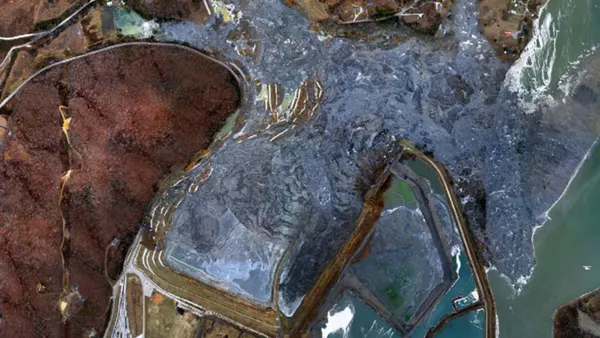
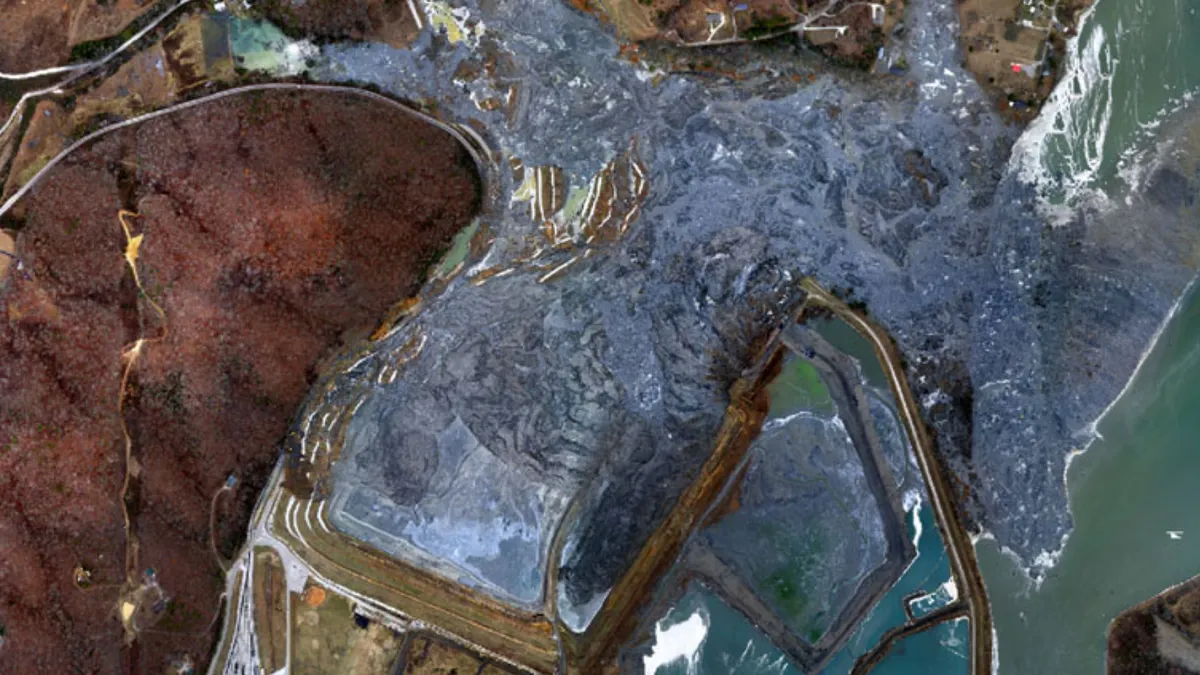
In 2008, Tennessee Valley Authority spilled a billion gallons of the toxic waste into surrounding waterways at its Kingston plant. Duke Energy spilled 39,000 tons of the waste into North Carolina’s Dan River in 2014.
EPA’s rule proposes “a new compliance pathway” that allows for “site-specific considerations” when permitting CCR units complying with groundwater monitoring, corrective action and other closure requirements.
“Specifically, these provisions would allow a permit authority to make site-specific determinations regarding the appropriate point of compliance for the groundwater monitoring system, site-specific cleanup levels during corrective action ... and appropriateness of certain closure requirements while still requiring the owner or operator to ensure the unit poses no reasonable probability of adverse effects on human health and the environment,” the proposed rule states.
“Coal ash pollution has already cut too many American lives short,” Sierra Club Senior Attorney Bridget Lee said in a statement. “Our government should be strengthening safeguards against this toxic threat. ... Today’s proposal doesn’t even try to hide the fact that it’s an explicit handout to Big Coal.”