Sneha Vasudevan is project manager technical lead at Uplight.
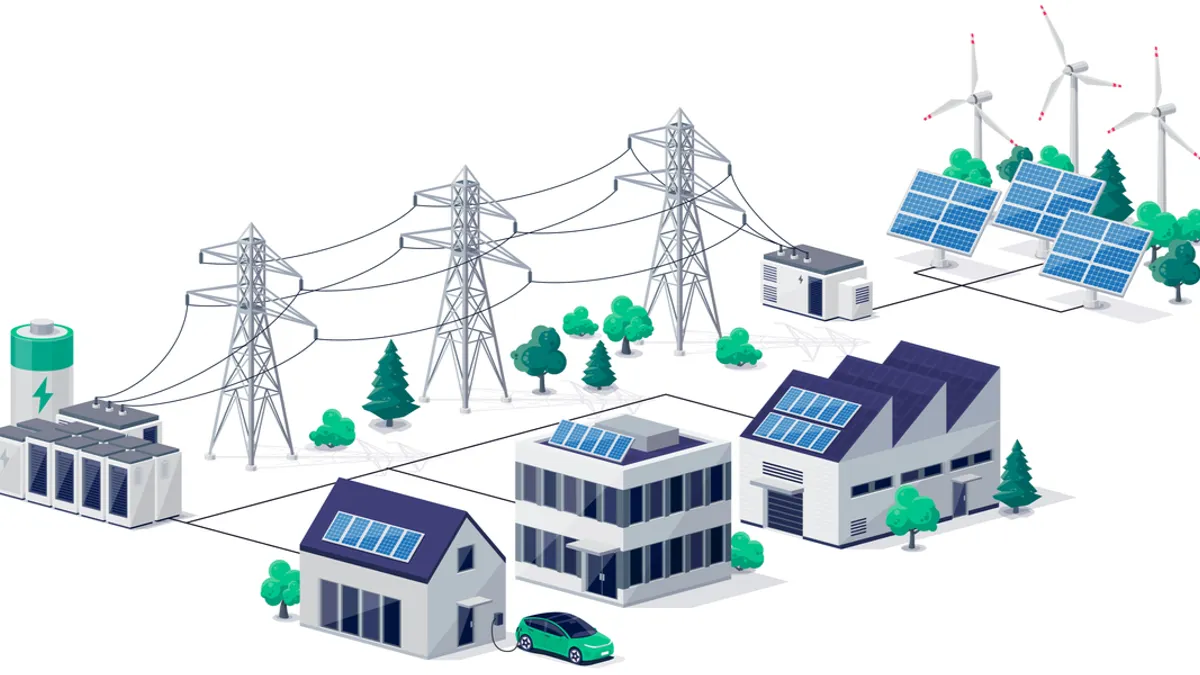
Residential battery storage paired with demand response programs is emerging as a key strategy for utilities to manage peak demand and maintain reliability during extreme weather events. U.S. residential battery installations surged by more than 130% year-over-year in 2025, adding approximately 608 MW of new capacity in the second quarter alone. Major utilities are expanding these programs to defer costly grid upgrades and strengthen resilience.
In California, the state’s Distributed Solar and Storage Grid Services program demonstrated the growing scale of battery integrations. During a July 2025 test event, aggregated residential batteries delivered over 500 MW to the grid, visibly reducing CAISO’s net load by an average of 539 MW. This event underscores that residential storage has reached meaningful operational scale and can provide measurable, dispatchable grid support in California and in other markets.
On paper, the value proposition seems perfect: utilities gain flexible capacity without new generation, customers earn incentives while retaining backup power and technology providers expand their platforms.
Yet despite proven technology and a strong value proposition, enrollment remains uneven and market participation lags behind the potential. This isn't a technology deployment problem — it's a market development challenge. Utilities, battery manufacturers, technology providers and customers all operate under different incentive structures, each optimizing for their own business model rather than the shared outcome of scale. Scaling will require unified action, including streamlined interconnection, interoperable standards and risk-sharing business models that align all stakeholders around a shared value. Understanding the objectives and challenges for each is essential to making that alignment work.
The battery stakeholder alignment problem
Utilities face pressure to deliver reliable distributed capacity while keeping program costs regulator-friendly. Yet, their ability to scale is often constrained by rate structures and incentive frameworks that fail to motivate customer or vendor participation. Even when incentives are well-calibrated, lengthy and inconsistent interconnection processes delay outcomes and erode customer confidence. California’s Rule 21 reforms and Hawaiian Electric Quick Connect program’s customer interconnection tool and scorecard demonstrate how clear standards and transparent interconnection processes accelerate adoption. These provide installers with predictability and customers with real-time visibility, building customer confidence and shortening the path to participation.
However, for smaller or municipal utilities with limited staff and fragmented oversight, these challenges are particularly acute. The U.S. Department of Energy’s Distributed Energy Resource Interconnection Roadmap warns that under-resourced utilities are particularly vulnerable to interconnection backlogs as DER adoption expands.
On the OEM side, participation hinges on clear, predictable financial returns. OEMs face significant upfront costs, including software development, testing, certification, customer support and ongoing maintenance, that are hard to justify without strong revenue streams or growing customer enrollments. Manufacturers naturally prioritize mature markets like California, leaving smaller or emerging programs struggling to attract partners. eDERMS providers face similar fragmentation: each utility defines metrics, incentives and reporting differently, forcing costly customization. OEMs compound the issue with unique telemetry frameworks and enrollment procedures, making integration expensive and slow. Without standardized data exchange or reusable interfaces, these costs limit scalability and make it difficult to achieve consistent returns across markets.
Even when programs make economic sense, end customer enrollment decisions depend on more than just incentives. Program complexity, awareness, trust and opt-out flexibility all influence participation. Tesla’s experience with the ConnectedSolutions program shows that stability, transparency and installer education drive results. When programs lack this level of clarity, low enrollment discourages OEM investment –– perpetuating a cycle of underperformance.
Addressing these misaligned incentives requires coordinated action across all stakeholders as discussed in these four steps.
Leverage customer data
Utilities can leverage comprehensive analyses of customer-owned assets and interconnected systems to inform vendor selection and program design. By using data to assess which OEMs have the greatest market presence within their service territory, utilities can identify partnerships that will yield the most significant impact from the outset. Establishing a structured OEM evaluation framework — one that weighs product functionality, customer experience, regional presence and the total cost of integration — helps utilities align partnership decisions with customer composition and long-term program goals.
OEM functionality and flexibility are also critical considerations. Features that give customers control over their systems can directly influence event participation and overall program performance. For instance, FranklinWH’s Storm Hedge, Enphase’s Storm Guard and Tesla’s Storm Watch each allow batteries to pre-charge or hold capacity during severe weather events. Educating customers on how these modes interact with performance-based programs helps align operational reliability with incentive outcomes.
Leveraging this data by providing customers with interactive tools — such as calculators that estimate potential savings or ROI based on battery make, model and incentive structure — can further improve transparency and decision-making. Rather than prioritizing market share alone, utilities should adopt a balanced, data-driven approach that considers OEM functionality, flexibility and long-term supportability. This strategy enables programs to evolve with customer needs, manage integration costs effectively and maintain reliability as distributed energy portfolios expand.
Breaking down the integration barrier
Custom integrations have long slowed the growth of demand response programs. Universal APIs and software development kits are changing that by enabling standardized, reusable connections between utilities, DERMS providers and OEMs. This approach reduces integration time and cost, accelerates deployment and supports expansion across multiple service territories, laying the groundwork for an interoperable, scalable demand response ecosystem.
Simplify the customer experience
Customers engage when the message is simple and consistent. Most homeowners aren’t energy experts. When utilities market grid benefits and OEMs promote resilience or backup power, customers are left unclear about what they’re buying into. Even strong incentives won’t drive enrollment without a clear, consistent value story.
Arizona Public Service boosted participation in its Residential Battery Pilot by aligning messaging with OEM partners, including co-branded outreach, shared FAQs and integrated incentives within the installers' sales cycles. The result — higher enrollment and consistent performance — reinforces research from Lawrence Berkeley National Lab and ACEEE, proving that coordinated marketing and simple enrollment pathways are key to scaling residential DER participation.
Share the financial risk
Today, each stakeholder bears costs independently, betting on enrollment that may never materialize. Risk-sharing models — where utilities guarantee minimum payments to OEMs and technology providers in exchange for marketing and integration commitments — can shift this dynamic. Vermont's Bring Your Own Device pilot used this model to enroll over 3,000 customers, delivering more than 20 MW of flexible capacity and producing roughly $3 million in peak demand savings.
How to really scale battery programs
It’s time to stop treating battery demand response as a technology deployment problem and start treating it as a market development opportunity. The grid can’t wait for incremental progress. Scaling will require unified action — streamlined interconnection, interoperable standards and risk-sharing business models that align utilities, OEMs and customers around shared value.
Everyone gains from higher enrollment, but no single stakeholder can make that happen alone. The technology is proven. Now it’s time to align the business models to make it work at scale.