President Donald Trump announced Monday his intention to sign an executive order aimed at setting a single national regulatory framework for artificial intelligence, as state leaders introduce their own proposals in response to constituent fears over privacy, energy costs, water usage and other issues.
“I will be doing a ONE RULE Executive Order this week,” Trump wrote on social media. “You can’t expect a company to get 50 Approvals every time they want to do something.”
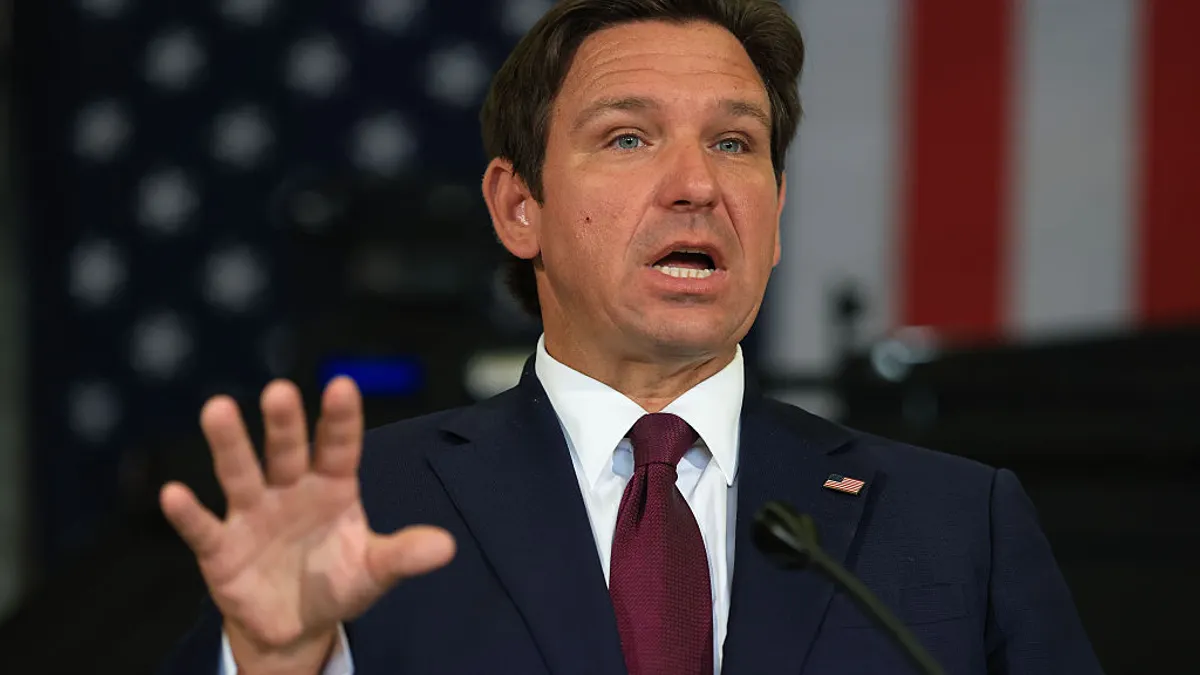
The president’s post did not include details, but it comes just days after Florida Gov. Ron DeSantis, also a Republican, unveiled a proposal for state legislation to limit the impact of AI, including a measure to “prohibit utilities from charging Florida residents more to support hyperscale data center development.”
At a press conference Thursday, DeSantis said Florida needs an “Artificial Intelligence Bill of Rights.” The governor said his administration plans to “work with the legislature” to advance the proposal, and that it will be “very far-reaching with consumer protections.”
DeSantis seemed to challenge the idea of the federal government superseding states on AI regulation.
“We're going to protect local control to ensure and codify that local governments have the right to reject the construction of a hyperscale data center,” he said.
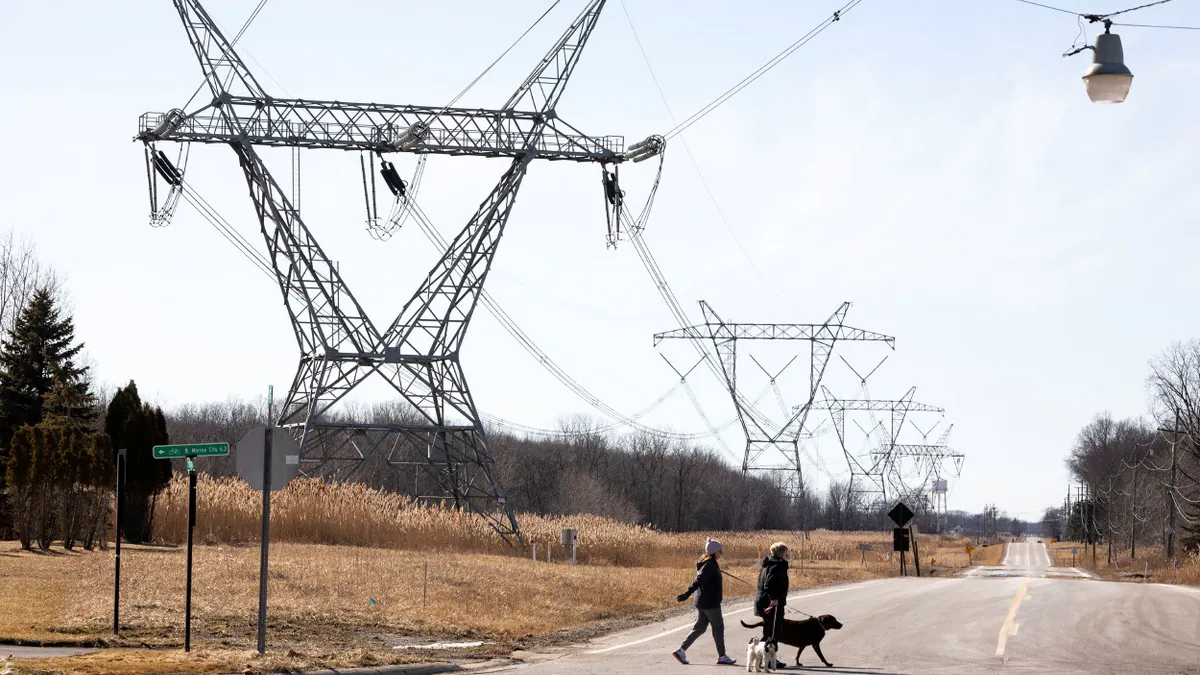
Grid operators, utilities, hyperscalers, regulators and advocates are locked in an intense debate over the impact of data centers on rising electricity costs. The market monitor for the PJM Interconnection, the largest grid in the country, has said data centers are the primary reason for surging capacity auction prices in that market. But a recent influential report from the Lawrence Berkeley National Laboratory found that generally, load growth helped depress electricity prices.
DeSantis said that a “lot of people have seen their bills go up because we have a limited grid.”
“You do not have enough grid capacity in the United States to do what they're trying to do,” he added. “That’s just a fact.”
The governor also said he is pro-nuclear but criticized the idea of building nuclear plants in order to meet increased demand, arguing that traditional nuclear plants can take as much as a decade to come online and that small modular reactors “just [aren’t] economical – that’s why people aren’t doing it.” There are no operating SMRs in the U.S. and only a few worldwide.
“There's a finite amount of grid,” DeSantis said. “You can try to expand it, but that's more of a private sector issue, but you're not going to be able to get what's needed for this, the way it's going.”
The issue of AI and its impacts on the electric grid and other infrastructure has emerged as a divisive one on the right.
The center-right American Enterprise Institute released a piece Monday by senior fellow Mark Jamison criticizing DeSantis’ proposal for following in the footsteps of “California, New York, Illinois, and Colorado — blue states racing to tighten control” over AI.
“DeSantis is right that data centers should pay for the electricity and water they consume,” Jamison said, but added, “Florida’s Public Service Commission is already examining prices for power, and water utilities and cities are collaborating with data-center operators on water solutions.”
The Florida PSC voted last month to approve a Florida Power and Light rate schedule which will increase rates steadily over the next four years, impacting around 12 million Floridians, Fortune reported.