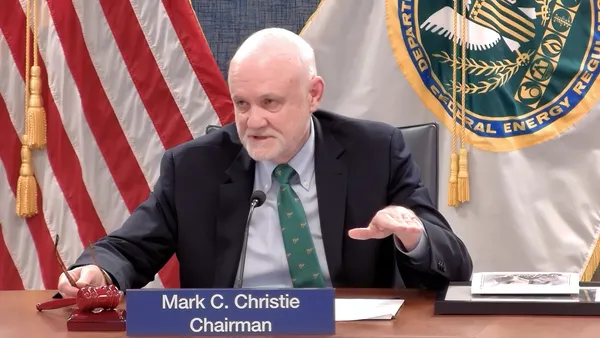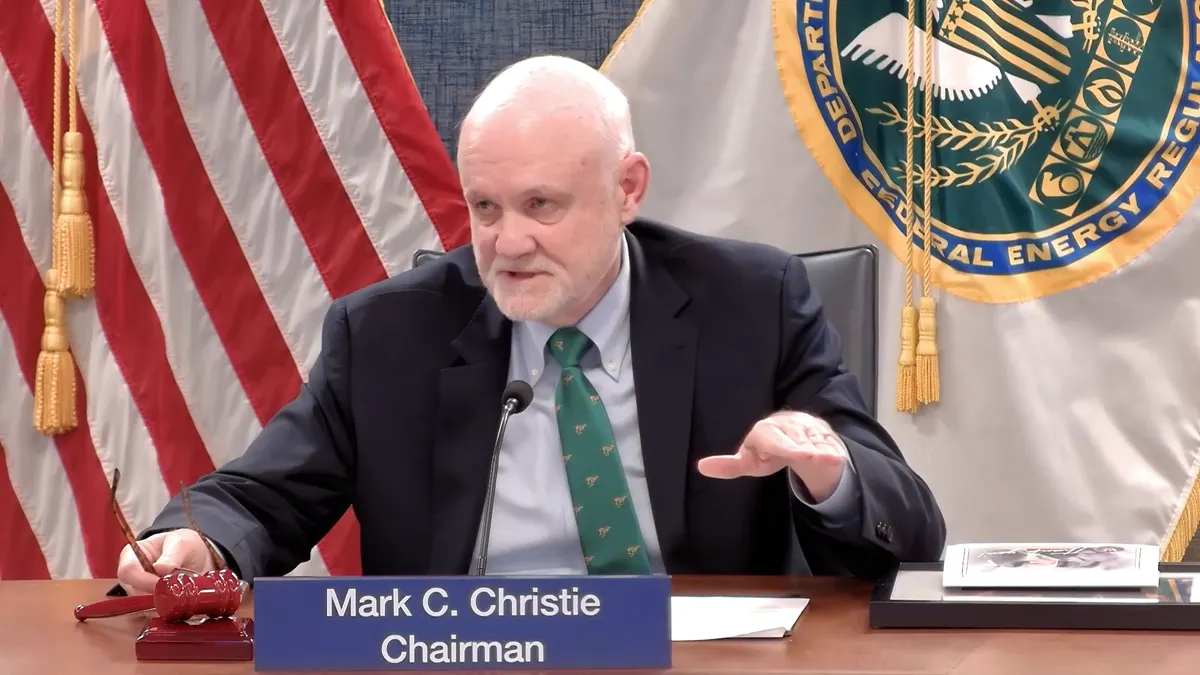
Mark Christie is on the faculty at William & Mary Law School, where he teaches energy law and is the founding director of the Center for Energy Law and Policy. He is a former Federal Energy Regulatory Commission chairman.
With all the publicity surrounding the Federal Energy Regulatory Commission’s proposed regulation that would preempt the states and insert FERC into retail customer interconnection for the first time, it is important to recognize that states are already working on solutions to the challenges posed by large-load customers. And the states are focused on solutions that protect reliability and avoid cost-shifting to residential consumers, consistent with the White House Ratepayer Protection Pledge.
In October, the Department of Energy directed FERC to consider rules for interconnecting data centers and other large loads to the transmission system.
However, in just one example of state action, the Virginia State Corporation Commission is reviewing Dominion Energy's large-load interconnection processes, which present issues having potentially massive impacts on reliability and consumers costs. Virginia's Dominion zone is, of course, the "Data Center Alley" of the entire world. Thus it is noteworthy that the Virginia commission has long been leading on these issues, has already conducted two technical conferences on large-load issues, including interconnection, and recently ordered Dominion to establish a new large-load customer rate class.
Dominion's initial filing in the interconnection proceeding offers the following staggering facts:
Dominion currently has 70 GW of new demand in its queue. Yes, you read that right: 70 GW of new load coming just in Dominion's zone, almost all from large-load customers. Yet Dominion's all-time peak load is only 24.6 GW, so the new load waiting in its queue is almost triple its all-time peak load.
And Dominion is getting an additional 10 interconnection requests a month from large-load customers. So new demand is going up daily.
Yet both Dominion and PJM Interconnection are dangerously short of capacity right now, so the threats to reliability in Virginia and PJM more broadly are literally frightening to anyone paying attention. Plus the potential implications for retail consumer costs are huge if these related costs are shifted to residential customers. “Data Center Alley” needs to add more lanes, but somebody has to pay.
Fortunately, the VSCC's three outstanding commissioners and staff are already on it. They can and will figure out how to meet this historic challenge and, in so doing, provide invaluable information for other states — and FERC — to consider.
Importantly, at this critical point, Virginia does not need FERC getting in the way by preempting Virginia and all the other states currently developing solutions that work in their own states, many of whom have already enacted large-load tariffs and "take or pay" provisions. FERC has never even tried to regulate retail load interconnections and should leave it to the states, who have done it for decades, know what they are doing from experience and are perfectly capable of meeting these challenges.
FERC could be helpful by acting as a convener for sharing information, or distributing voluntary "best practices," as long as states are left free to choose the solutions that work for them, because not all states have the same challenges or need the same solutions. But if FERC preempts the states and imposes mandates, like absurdly short interconnection deadlines for large-load customers whose individual loads exceed that of a medium-sized city, that could be disastrous for both reliability and retail customer costs.