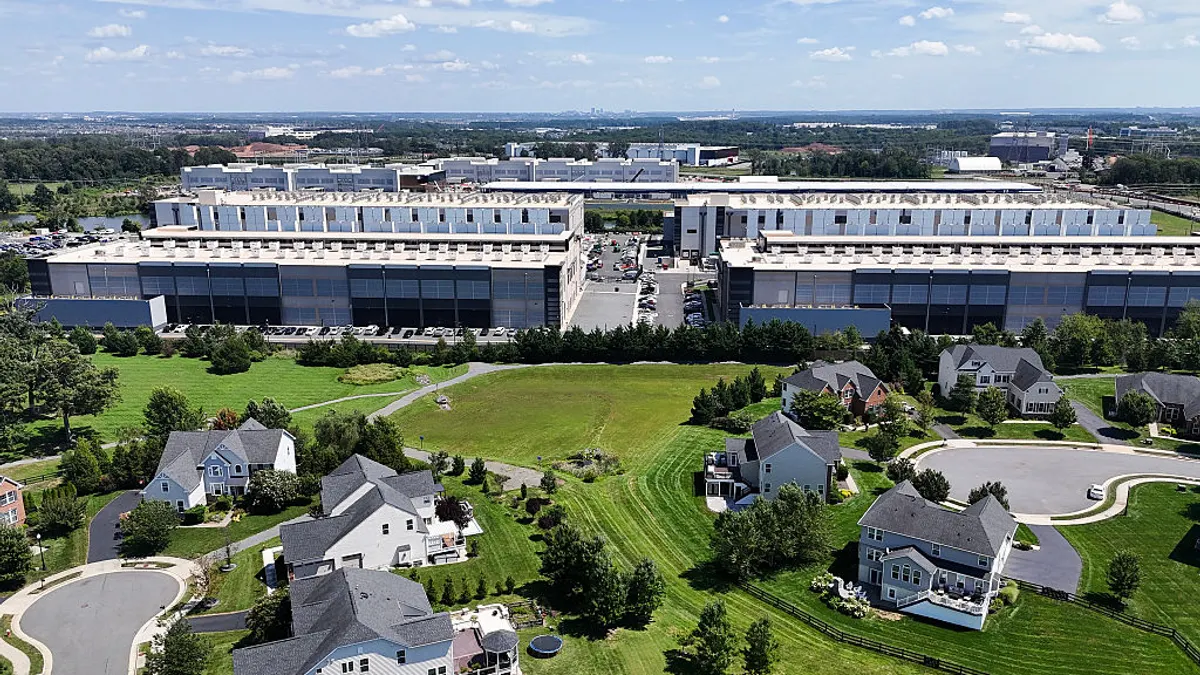
State policymakers are increasingly looking to large load tariffs as a way to shield ratepayers from the surge in interconnection requests from artificial intelligence data centers, with 77 such tariffs pending or in place across 36 states, according to the Smart Electric Power Alliance, which recently updated its Database of Emerging Large Load Tariffs.
In 2025, state regulators approved 29 large load tariffs, compared to 14 between 2018 and 2024, SEPA said. The database, which is jointly maintained with the North Carolina Clean Energy Technology Center, has added 12 entries and 3 additional states since its last update in November.
Experts say it’s too soon to know whether the tariffs are working as intended, and broader reforms to utility planning and power markets are likely needed. “We’ve seen the tariffs that set the initial agreements and the kind of frameworks, and they have these really important safeguards, but in a lot of states, we haven’t yet gotten to that process of cost allocation, which is complicated,” Louisa Eberle, a senior associate with the nonprofit Regulatory Assistance Project, told Utility Dive. “There are several reasons why rates might still go up for other customers if cost allocation isn’t done effectively.”
The growth of large load tariffs comes amid rising retail power costs that are increasing pressure on elected officials, regulators, utilities and tech companies to justify an estimated trillion-dollar grid buildout to meet demand growth projections from data centers and, to a lesser extent, manufacturing and electrification.
“I think the properties of that growth at a regional level are what drives the increased look at how we could build upon the longtime commercial and industrial tariff structures and principles to shore up guardrails for this new growth era that we’re in,” Ann Collier, SEPA’s director of grid strategy, said in an interview. “The growth is coming at a much faster pace than we have seen in decades, and it’s much denser.”
In particular, the definition of “large load” has evolved as the size of projects have grown. A few years ago, utilities defined “large loads” using a threshold of five, 10 or 25 MW, Collier said, but more recently-approved tariffs are defining large loads at 50 MW and above.
Other common features of these tariffs include asking loads to pay more of the upfront costs for engineering studies or power delivery infrastructure, minimum contract terms, minimum load guarantees, defined load ramp schedules, exit fees and financial security in case a project falls through. Some have also introduced incentives, such as reduced load guarantees or faster interconnection, for customers that bring their own capacity or agree to flex their power demand during times of grid stress.
Collier said while utilities are still originating many of their own large load proposals, she’s noticed that states are taking a more active role in regulating large loads, either through regulatory bodies or legislation. Oregon, Minnesota, Indiana, Texas and Virginia are among the states that have passed laws governing how large load customers are treated by utilities. State regulators in Pennsylvania are developing a model large load tariff that could be applied to all utilities there.
Collier said “time will tell” if the tariffs and other rules for large loads are effective, and the needs of each territory are different. But some early evidence appears to show that the tariffs can weed out speculative requests from the large load pipeline.
AEP Ohio cut its large load forecast by more than 50%, from 30 GW to 13 GW, after regulators approved a new large load tariff last year, though manufacturers in the state say data center demand is still inflated.
“AEP has designed its large‑load tariffs, both those already approved and those pending across our jurisdictions, to ensure that large‑load customers pay their fair share of the costs to serve them,” Scott Blake, a spokesperson for AEP, said in a statement to Utility Dive.
“Our approach is focused on protecting existing customers from bearing the costs of grid upgrades or infrastructure improvements needed to accommodate these large new loads,” he added. “Each of our state jurisdictions has unique regulatory frameworks, but across all of them, our priority is ensuring fairness, transparency, cost causation, and long‑term system reliability as demand from large‑load customers continues to grow.”
Eberle said utilities should prepare for more scrutiny of their requests as regulators contend with a growing affordability crisis.
“In some of these cases, the utilities are really asking regulators to approve things that, you know, they’re big resource commitments,” she said. “If a utility can also come in and say, ‘We’ve looked at grid enhancing technologies; we’ve looked at energy efficiency; we’ve looked at demand response; we’ve looked at all of these measures that can make this cost effective, and we’ve included them,’ I think that can go a long way.”