Dive Brief:
- Annual U.S. electricity consumption will grow more than 55% by 2050, “with the steepest growth concentrated in the current decade,” the National Electrical Manufacturers Association said in a forecast published Thursday.
- The pace of potential growth is quickening as data center expansion plans continue to be announced. NEMA’s analysis is an update to a report it published in April 2025, which forecast 50% consumption growth in the next quarter century.
- The solution to meeting the new demand lies with grid enhancing technologies, demand response and behind-the-meter resources, the manufacturers group said. Electricity’s overall share of final energy delivered in the U.S. is expected to grow from 18% to 28% by 2050, it said.
Dive Insight:
“A year ago, we sounded the alarm on the scale of what was coming,” NEMA President and CEO Debra Phillips said in a statement. “Today’s update makes clear that the trajectory has only steepened.”
NEMA expects U.S. net electricity consumption to grow from 3,936 TWh in 2024 to 6,130 TWh in 2050.
Electricity use is “projected to grow in unprecedented ways,” NEMA said, including a 300% jump in data center energy consumption over next 10 years and a 2,000% increase from the electric transportation sector through 2050.
“Data centers alone are projected to account for 38% of net electricity consumption through 2037, driven by aggressive hyperscaler capital expenditure and the accelerating energy intensity of artificial intelligence workloads,” NEMA said.
The group’s 2025 study predicted 9,000% growth in e-mobility power consumption through 2050. Policy shifts have led the group to “temper” its expectations, but the growth will still be significant, NEMA said. The group expects about 51 million light-duty EVs on U.S. roads by 2035, compared with more than 5.7 million today, according to Argonne National Laboratory.
The largest growth in data center demand will come from the mid-Atlantic and Texas regions, through 2035, while the Northeast and West will see the most significant growth in electric vehicles through midcentury according to the report. And there is a “seismic change” in generation mix on the way: storage, wind and solar generation are expected to increase by 300%, and renewables will exceed 50% of generation capacity in the Western U.S., New York and the Southeast, according to NEMA.
The group’s 2043 outlook calls for 303 GW of standalone battery storage, 568 GW of solar and 408 GW of wind, making up more than half of the U.S. grid’s 2,395 GW of installed capacity. NEMA’s outlook also anticipates 533 GW of oil and gas capacity, 117 GW of nuclear and 57 GW of coal.
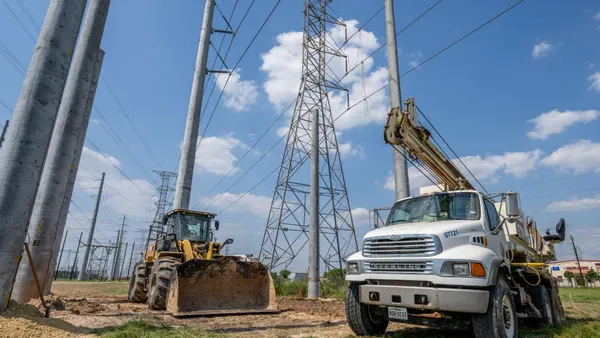
Along with generation resources, transmission technologies such as dynamic line ratings, topology optimization, power flow controllers and reconductoring, will be essential to meeting the growing demand, NEMA’s report said.
“Demand is growing faster than the grid can physically expand, creating costly and potentially hazardous transmission and distribution capacity constraints,” MacLean Power Systems President Mike Plaster said in a statement, commenting on the NEMA findings. “The answer isn’t to stop building wires. It’s to deploy advanced conductors, power flow controllers, microgrids, and other advanced systems to maximize the capacity of infrastructure that’s already built and online.”