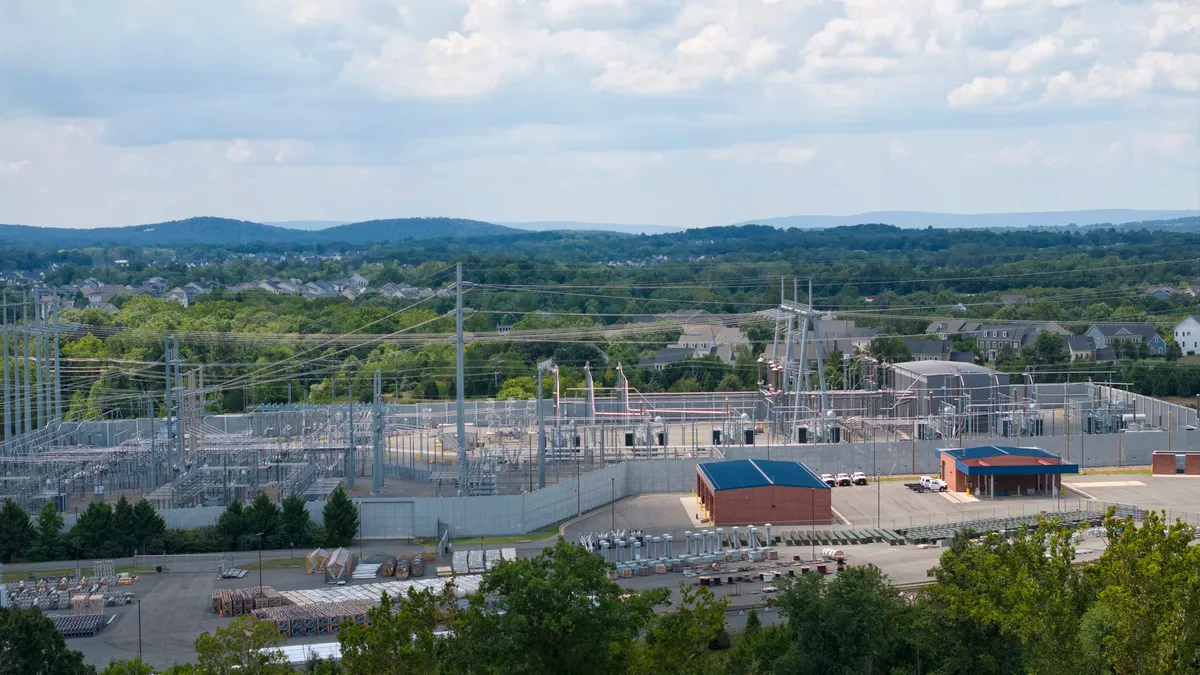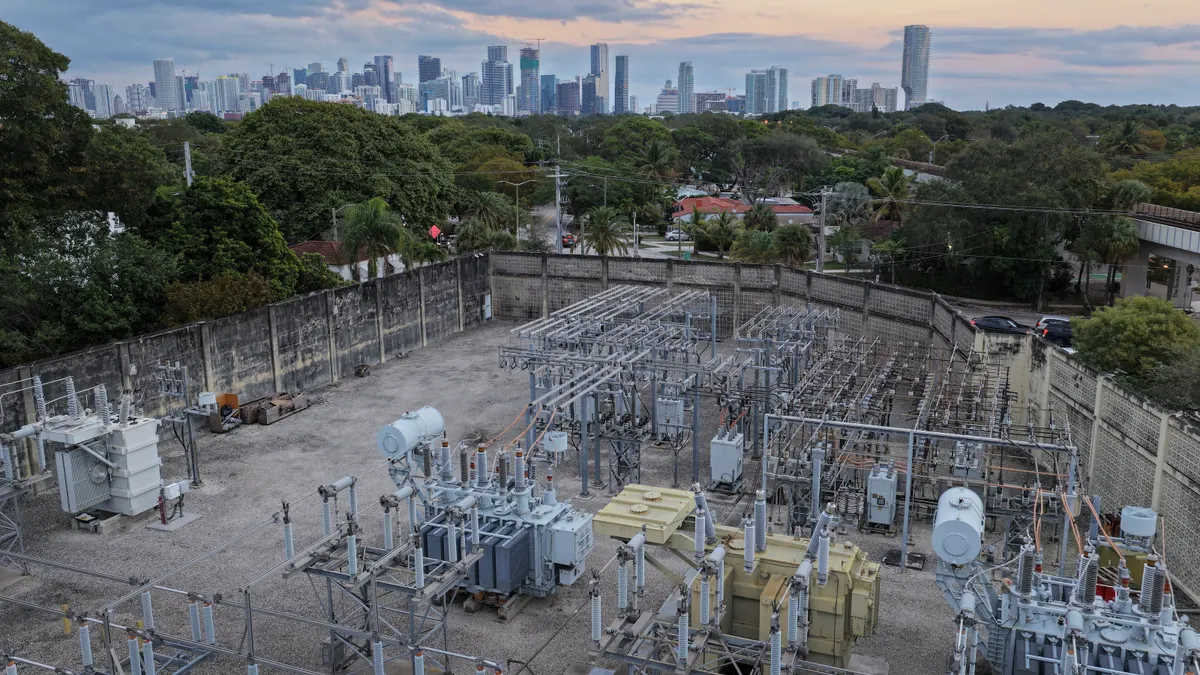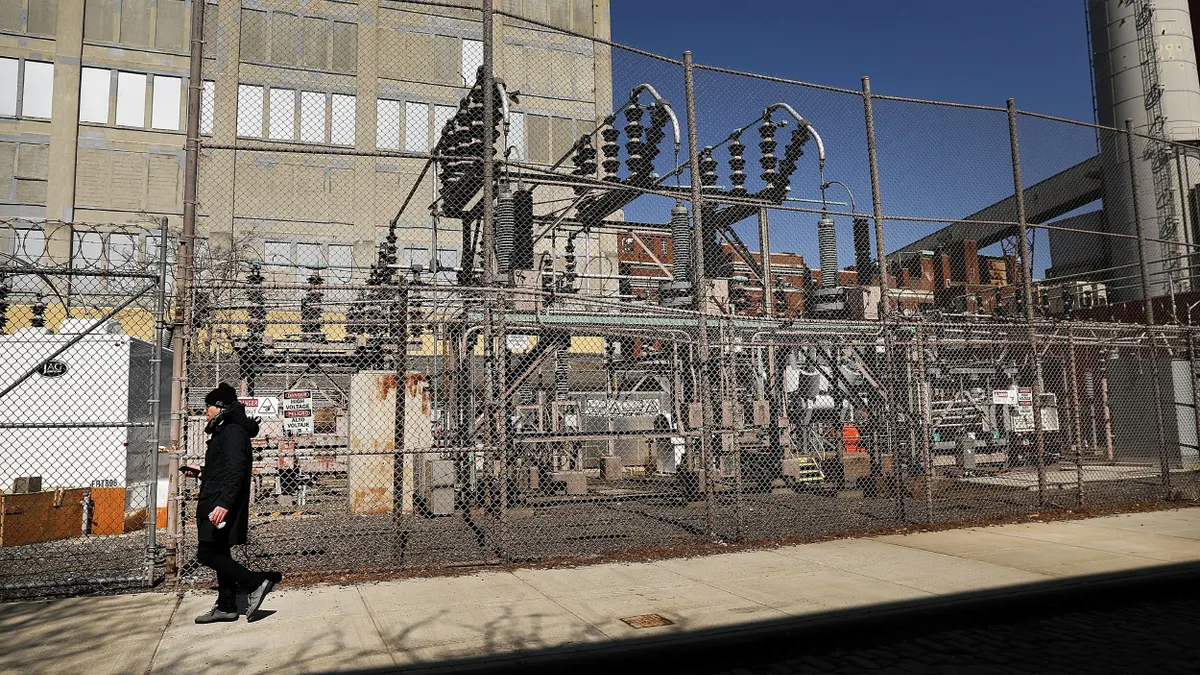
Consolidated Edison, Inc. is planning to spend more than $29 billion over the next five years on substations and other grid upgrades to meet rising electrification in its territory covering New York City and parts of its suburbs. Unlike some peer utilities, buildings and transportation — not data centers — are Con Edison’s primary demand drivers.
Consolidated Edison Co. of New York, commonly known as CECONY and by far the larger of ConEd’s two electric utilities, outlined roughly $27.2 billion in capital spending between 2026 and 2030 in a first-quarter earnings presentation released May 7.
Orange & Rockland Utilities, named for the two counties it serves in the western Hudson Valley, is planning about $2.3 billion over the same period, it said. Consolidated Edison Inc.’s total capital spending plan, including investments in gas and steam, through 2030 remained relatively unchanged since last quarter at about $38 billion.
Meanwhile, sales trajectories diverged at the two electric utilities in the first quarter of 2026.
CECONY reported weather-adjusted electricity sales 0.1% lower than the first quarter of 2025 in a territory spanning the five boroughs and Westchester County, New York.
CECONY’s fuel costs increased $29 million in the three months that ended March 31, 2026, compared with the 2025 period, due to higher unit costs and higher purchased volumes from the company's electric generating facilities, it said in its quarterly filing to the U.S. Securities and Exchange Commission.
O&R saw weather-adjusted electricity sales rise 1.9% year over year.
Chairman and CEO Tim Cawley said in a statement Thursday that the relatively slow rate of growth belies key tailwinds for ConEd’s electric business. The utility did not hold a first-quarter earnings call with analysts.
“Electrification of heating and transportation is accelerating at an unprecedented pace, driven by years of state and local policy that have been reinforced by strong customer preference and sustained economic growth in our region,” Cawley said.
According to Con Ed’s first-quarter investor presentation, new buildings in CECONY’s service territory are requesting 20% to 25% more power than comparable buildings in the past. Some 20 MW of fast-charging capacity was added in CECONY territory in 2025, 18% more than was installed in 2024. And the two utilities’ medium- and heavy-duty transportation electrification incentives “are supporting the electrification of more than 500 trucks and buses,” the company said.
Cawley said Con Ed’s electric utilities are making “proactive” investments to address the expected increase in demand from electric vehicles and electrified heating. Between CECONY and O&R territories, the region will add 22 substations by 2034, the company said.
Rockland Electric has a rate case pending before the New Jersey Board of Public Utilities requesting approval of a $31.8 million revenue increase, representing a 11.2% total electric bill increase for consumers. The company cited higher operating and maintenance costs and rate base growth, among other factors.
Growing reliability needs in New York City
In its investor presentation, Con Ed nodded to the New York Independent System Operator’s expectations for growing reliability challenges in downstate New York as electricity demand rises.
The grid operator has repeatedly warned of tightening capacity reserve margins in New York later this decade and in April said a prolonged heat wave this summer could cause a shortfall. It forecast a reliability margin of 417 MW this year under “baseline summer conditions” but said a three-day or longer period of 95-degree weather would result in a negative reliability margin of -1,679 MW.
CECONY’s own reliability modeling shows an additional need in New York City of 125 MW in 2032 and 750 MW by 2036, driven by forecasted increases in peak demand, retiring fossil generators and uncertainty around whether planned transmission and generation projects will come online as expected, Con Ed said Thursday.
CECONY has issued a request for information for “feasible, effective, timely and cost-effective options to meet those needs,” it said.
One planned project set for review by the New York Department of Public Service is Propel NY Energy, a 90-mile transmission line that Con Ed says will expand transmission capacity between mainland New York and Long Island. Its anticipated in-service date is 2030, Con Ed said.
Forthcoming ‘large-scale’ renewable program
Though New York appears poised to relax compliance deadlines for some elements of its landmark 2019 climate law, Con Ed said it’s pushing ahead with its own clean energy initiatives.
In October, CECONY and O&R proposed “a regulated large-scale renewables ownership model whereby the New York utilities would jointly procure and own renewable generation in New York State” at an initial level of 1 GW per year, the company said.
The framework would allow CECONY, O&R and other participating New York utilities to recover service costs “as they do with existing capital investments,” Con Ed said.
In April, the utilities proposed a separate procurement process that would see them and other New York utilities jointly solicit bids for renewable projects — a proposal that NYDPS is expected to address in a forthcoming white paper, Con Ed said.