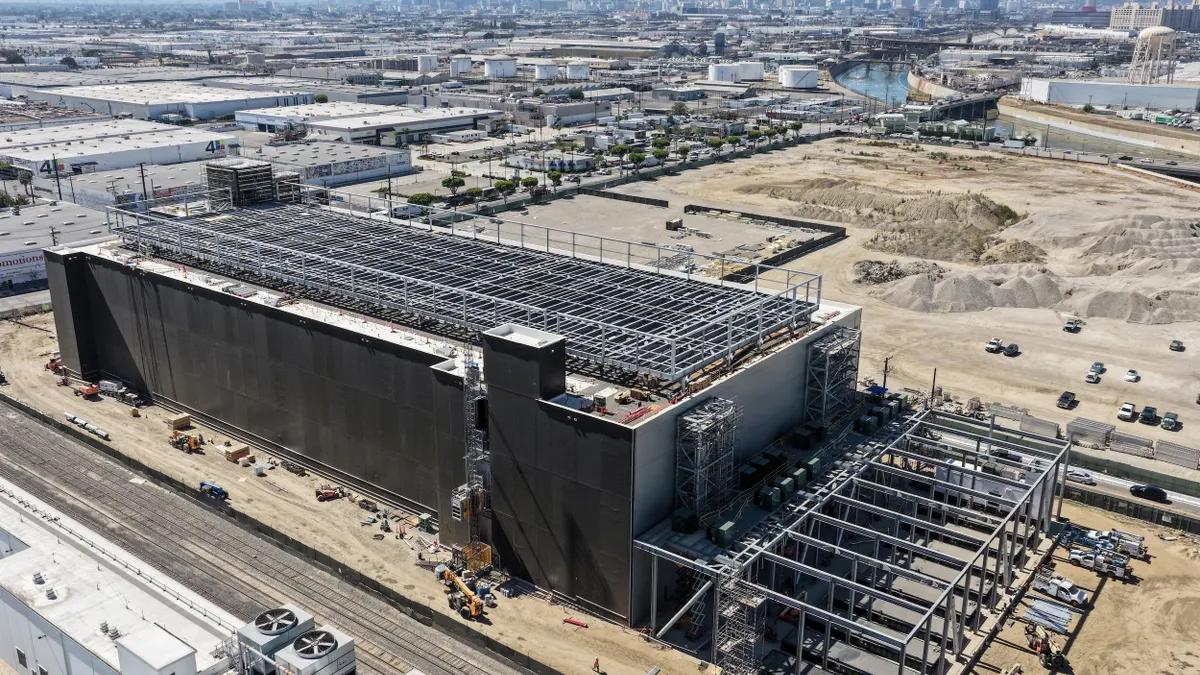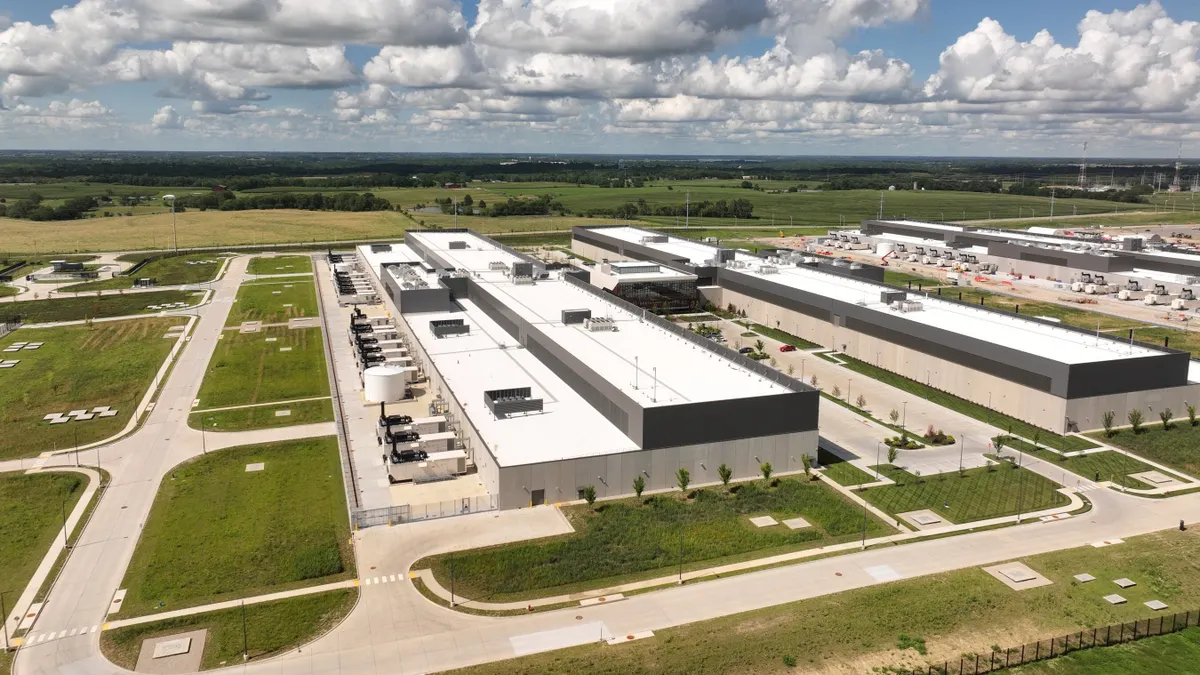
Eversource Energy CEO Joe Nolan is “not interested” in the development of data centers in the company’s service territory, as it’s “only going to drive up the price of energy,” he said on the company’s first quarter earnings call on Thursday.
“It's of no value to our residential customer — actually, any customer,” Nolan said. “If you look at the volatility in ISO New England, there's not a very volatile market compared to PJM. So, I feel good about it.”
However, in its quarterly earnings report filed with the Securities and Exchange Commission, Eversource noted that ISO-NE “average market prices received for [Connecticut Light and Power’s] wholesale sales increased to an average price of $112.71 per MWh for the three months ended March 31, 2026, as compared to $99.02 per MWh for the same period in 2025.”
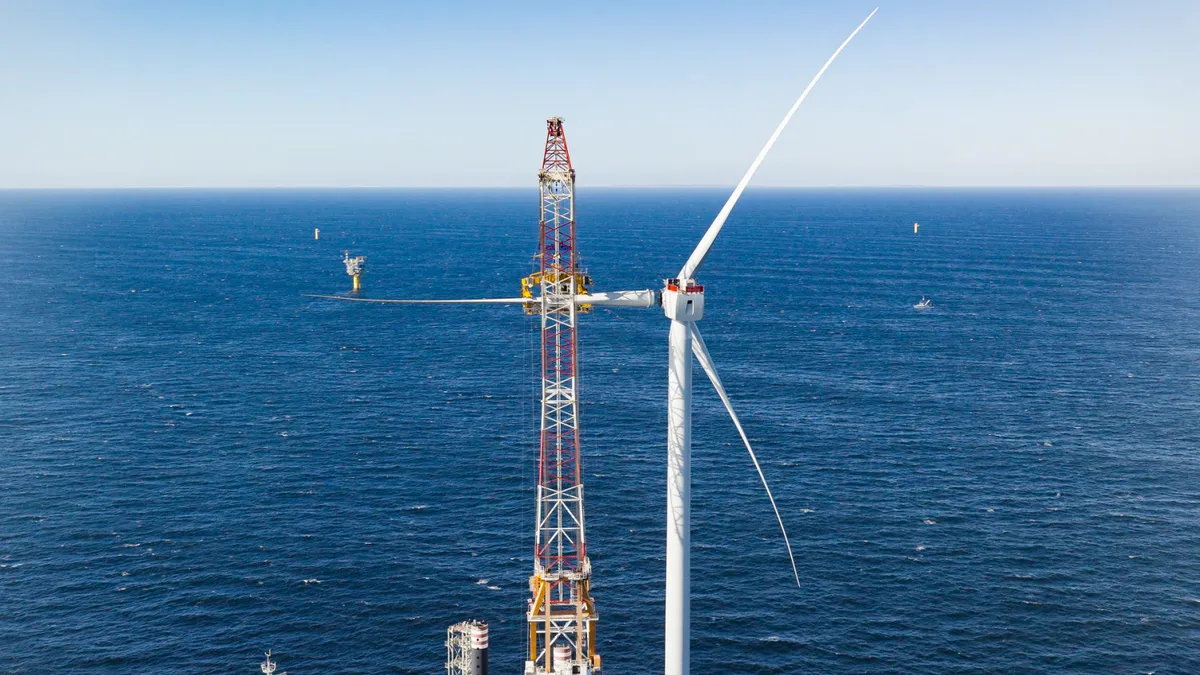
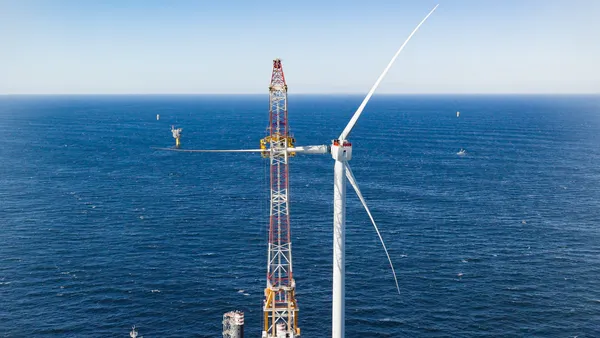
Nolan also said he’s “very encouraged” by the fact that the 700-MW Revolution Wind and 800-MW Vineyard Wind projects are “having a significant impact on pricing in the region … [coupled] with the fact that we are resisting data centers. I feel we're very well positioned to help our customers manage energy costs.”
“I continue to be encouraged by the number of requests that we're getting to inject into our system,” he said. “These [are] clean energy resources, whether it's the hydro or the offshore wind. Obviously, I love more generation — I wish we had a dozen more combined-cycle plants built here, but I think we're still very well positioned, and we're not going to see the volatility that some of these other exchanges are seeing.”
Eversource is working alongside Avangrid and other New England transmission owners to appeal a Federal Energy Regulatory Commission decision which calculated a 9.57% base return on equity for the transmission companies, arguing in court that market conditions have changed due to factors like the war in Iran, and the ROE should be recalculated to 11.39%.
In the meantime, “the change in the base ROE is expected to lower Eversource’s future after-tax earnings in the aggregate by approximately $70 million for 2026,” said John Moreira, Eversource’s CFO, executive vice president and treasurer.
In the quarterly earnings report, Eversource said that based on the FERC decision, it has “estimated a range of reasonably possible pre-tax losses of $60.4 million to $932 million, which includes a range of interest of $28.8 million to $256 million, as of March 31, 2026.”
“The low end of the estimated range of loss reflects estimated refunds associated with the fifteen-month first complaint period, including interest,” the report said. “The high end of the estimated range of loss includes the refunds associated with the first complaint period, as well as estimated refunds for the retroactive refund period from October 16, 2014 through March 19, 2026, including interest, in the pre-tax amount of approximately $871 million.”
Moreira said the company also adjusted for the “potential” $2.4 billion sale of its subsidiary Aquarion Water Company to the state’s new Aquarion Water Authority. The sale has been controversial, but received final approval from the Connecticut Public Utilities Regulatory Authority in late March. “These items together resulted in revised 2026 non-GAAP earnings guidance in the range of $4.57 to $4.72 per share,” he said.
Steve Fleishman, a managing director at Wolfe Research, asked on the call what Eversource is waiting for with regard to the Aquarion deal, after PURA rejected Connecticut Attorney General William Tong and Consumer Counsel Claire Coleman’s petition for the agency to reconsider its approval. Nolan said Eversource is still waiting for the close of the second appeal period, which will come on June 14, at which point the company will close the transaction.
Nolan noted that Revolution Wind, which began delivering power to the grid in March, is around 95% complete and should become fully commercial operative in the second half of this year. “We look forward to this much needed source of generation for the New England region,” he said.
Eversource remains obligated for certain costs associated with Revolution Wind after selling its 50% stake in the project to Global Infrastructure Partners, and faced financial risk associated with the stop work orders the project was subject to in 2025, but has continued making payments and reduced its liability from $448 million to $298 million in the first quarter of this year.
Vineyard Wind completed construction in March, but has not begun full commercial operations, and in April sued its turbine supplier GE Renewables to block it from exiting a supply agreement over a pay dispute.