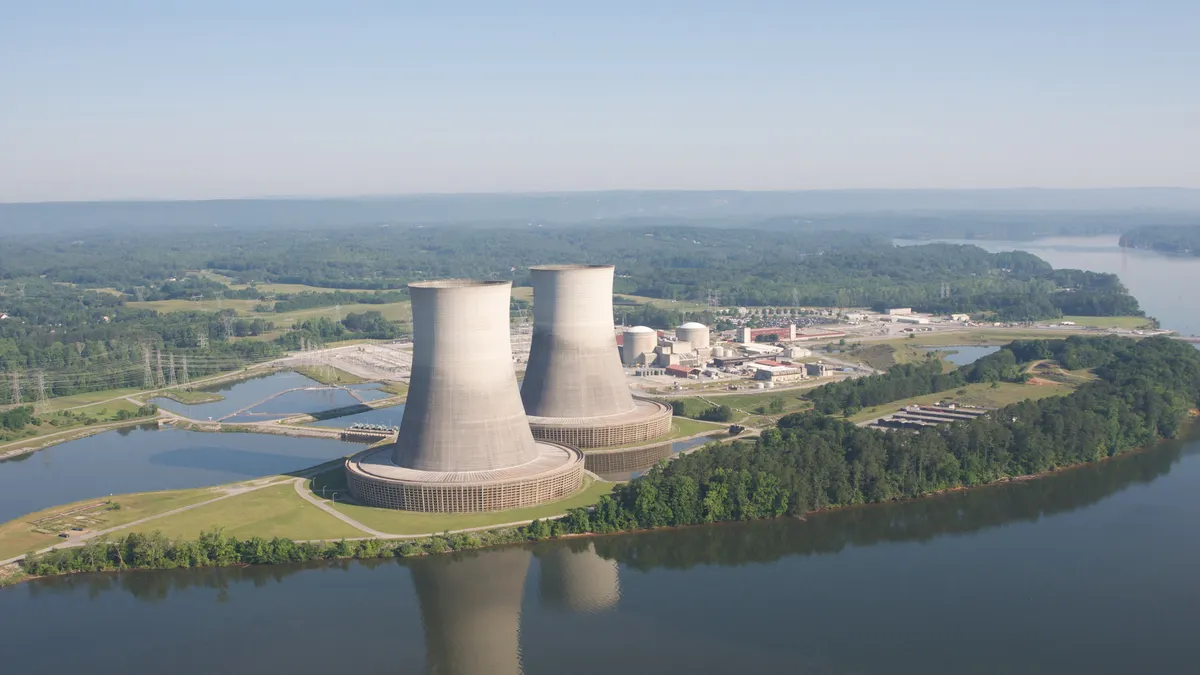
The Tennessee Valley Authority’s nuclear fleet supplied 41% of its power supply in the first half of its fiscal year 2026, compared to 31% in the year-ago period, and the federal utility’s interim president and CEO Mike Skaggs said in a Tuesday earnings call that nuclear is a major priority for him.
Skaggs particularly wants to “[establish] clarity on our position around new nuclear technologies,” and “work with the federal administration and our board of directors to clarify TVA's path going forward and the U.S. nuclear development and regional deployment,” he said.
“TVA is a pro-nuclear organization,” he said. “We operate one of the largest nuclear fleets in the nation, and nuclear is a good investment to meet our future energy needs.”
TVA announced Skaggs had been selected as interim CEO on April 24. During the call, TVA’s vice president of financial planning and investor relations Clifton Lowry said that Skaggs’ “leadership and deep operational knowledge, particularly in nuclear generation and system reliability, align directly with TVA's strategic focus on expanding our generation and transmission system and modernizing our nuclear fleet to support the region's growing energy needs.”
President Donald Trump has pushed for TVA to turn back toward coal generation. He fired three Biden appointees from the TVA board in July, remaking the board with his own appointees after it authorized the retirement of coal units at TVA’s Cumberland and Kingston power plants so they could be replaced with natural gas generation.
In February, the new board approved the operation of the Cumberland and Kingston coal plants past their retirement dates. “We are taking steps to continue operations of TVA's coal fleet … subject to all applicable permits and regulatory requirements,” said TVA’s CFO Tom Rice.
In March, the utility entered into a 20-year agreement to “develop the Bobwhite Energy Storage project, a 225-MW battery storage project in East Tennessee,” Rice said. “Construction is expected to begin in 2027, with commercial operation targeted for late 2029.”
Comparing TVA’s power supply for the first half of its fiscal year 2026 to the first half of fiscal year 2025, coal’s contribution remained at 14%, according to TVA’s quarterly report. Natural gas went from 26% to 22% in that period, and hydroelectric went from 9% to 7%. TVA’s amount of purchased power declined from 20% to 16%.
Rice said TVA has 3,770 MW of generation under construction, only a slight increase from the 3,700 MW the utility said was under construction in February. TVA’s base revenue went up 2% year over year, he said, and power sales were up 1%.
“Weather did not contribute to the increase in sales,” Rice said. “Instead, the growth we saw was primarily driven by higher sales within the data processing, hosting, and related services sector, which more than offset the milder weather.”
From the first half of 2025 to the first half of 2026, the utility’s net income rose from $533 million to $658 million, according to TVA’s quarterly report.
“We are building out the region's energy system through one of the largest capital investment campaigns in our history,” Rice said Tuesday. “We are investing in the long-term reliability and efficiency of our existing assets, including extending the licenses of our three nuclear plant sites for an additional 20 years. The Browns Ferry site license extension has already been approved by the Nuclear Regulatory Commission.”