The outlook for adding nuclear capacity in New Jersey has improved, but major hurdles remain, Ralph LaRossa, Public Service Enterprise Group chair, president and CEO, said Tuesday during a first-quarterly earnings conference call.
New Jersey Gov. Mikie Sherrill, D, in early April signed a bill that lifts the state’s moratorium on new nuclear power plants. Sherrill also created a nuclear task force via an executive order that aims to help New Jersey develop new nuclear energy.
However, no nuclear project will get underway without long-term support from the federal government, according to LaRossa.
Also, states and hyperscalers need to look for offtake agreements, he said.
“You need to ensure that not only do you have some financial support, but that you have the permitting support and the siting support,” LaRossa said. “I heard a lot of that from our governor, that that's one of the things that they want to streamline here in New Jersey.”
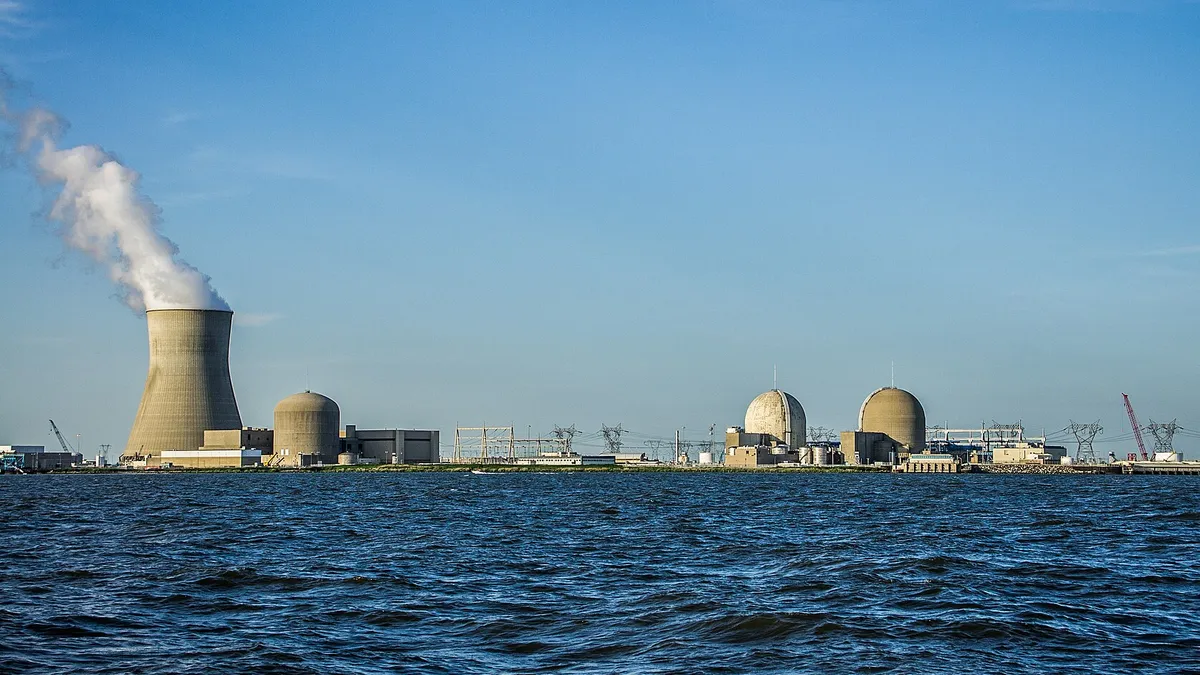
PSEG’s main subsidiaries are Public Service Electric and Gas Co. and PSEG Power. PSE&G has about 2.4 million electric customers and 1.9 million gas customers in New Jersey. PSEG Power owns 3,758 MW of nuclear capacity in New Jersey and Pennsylvania.
LaRossa also weighed in on the PJM Interconnection’s plan for a reliability backstop auction. The auction could have a limited effect, he said.
Under a pending proposal, PJM would support adding about 15 GW to its system. However, to be eligible, those resources would need to be online by 2031, which could limit the response, LaRossa said.
“It's a good step that we're trying, and I hope it produces some results,” LaRossa said. “But I think the limiting factor of 2031 is going to make it really tough for us to make this a game-changer.”
It appears that data center developers are cooling on New Jersey, in part because the state doesn’t offer the same financial incentives doled out by other states, according to Daniel Cregg, PSEG chief financial officer.
PSEG has a roughly 11 GW data center pipeline, about the same as it had in recent quarters, Cregg said. The company expects 10% to 20% of the pipeline could come to fruition, he said.
Meanwhile, the New Jersey Bureau of Public Utilities on Thursday holds its first stakeholder meeting on its review of the utility business model, LaRossa noted.
The proceeding is one of the “most consequential” regulatory reviews New Jersey has taken on in years, BPU President Christine Guhl Sadovy said in a press release Tuesday. “It goes to the core question of how utilities should earn revenue in a modern energy system. As we examine new approaches, our priority is ensuring we balance reliability with affordability, and tie utility profits with performance for the benefit of New Jersey ratepayers,” she said.
PSEG expects that a BPU consultant will release a study this summer and that the stakeholder process will continue through the rest of the year, LaRossa said.
On the financial front, PSEG’s first-quarter income jumped to $741 million from $589 million a year ago. Not including one-time items, its income increased to $778 million, or $1.55 a share, up 8% from $718 million, or $1.43 a share, in the same period last year. PSEG’s revenue grew to $3.8 billion in the first quarter from $3.2 billion a year ago.