American Electric Power is considering its options for how its utilities participate in the PJM Interconnection and the Southwest Power Pool due to the grid operators’ slow pace of interconnecting generation to meet customer demand, Bill Fehrman, AEP chairman, president and CEO, said Tuesday during a quarterly earnings conference call.
Those options include leaving PJM and SPP, staying in them or adopting “alternative structures,” Fehrman said. “We're committed to participating in a market that's responsive to the customer needs, but we also know that we have to figure out a way to get it to move more efficiently and more effectively.”
AEP is particularly concerned about difficulties in connecting new power supplies to the grid in PJM, according to Fehrman.
“The current state of PJM's performance and stakeholder approval process does not give me great confidence that these issues will be resolved anytime soon,” he said. “There's efforts that the government has put into place to try to move PJM along and SPP along, and there's fits and starts on that, and it's not really moving that quickly.”
Despite its concerns with PJM, AEP is considering participating in the grid operator’s proposed reliability backstop auction through an unregulated generation company, according to Fehrman.
AEP is also considering adopting a non-utility, “genco” model to serve large loads in West Virginia, Fehrman said.
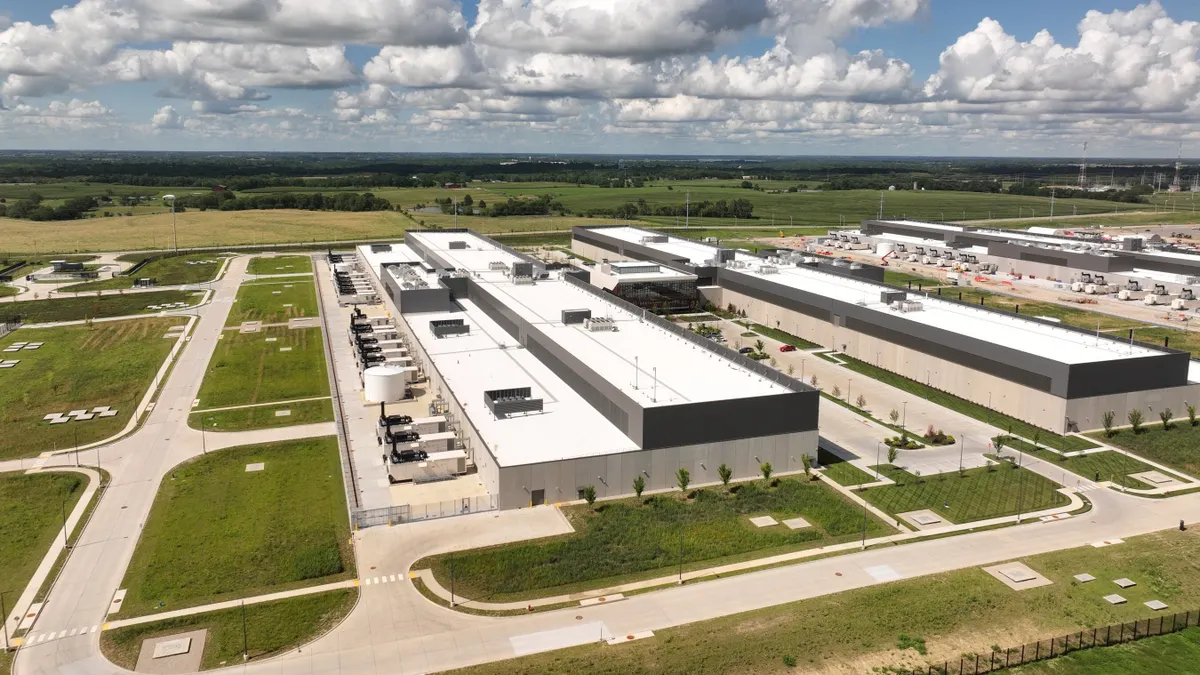
AEP’s review of its options in PJM and SPP comes amid a surge in customer demand across its multi-state footprint, mainly from data center developers.
AEP’s utilities have 63 GW in contracted new large load that is set to be online by 2030, with nearly 90% of it coming from data center companies, according to the company’s earnings presentation. Their total large load pipeline has grown to 190 GW of active projects in the interconnection queue, AEP said.
About 41 GW of the contracted large load is in Texas; 16 GW is in PJM and 6 GW is in SPP, according to the Columbus, Ohio-based utility company.
AEP estimates that its contracted large load will produce up to $16 billion in “offsets” for its existing customers through their contribution to utility fixed costs. Overall, AEP expects its residential customers face 3.5% annual rate increases on average through 2030.
Driven by pending increases in large loads, AEP increased its five-year capital expenditure plan by $6 billion to $77.9 billion, including $33 billion in transmission, $24 billion in generation and $17 billion in distribution upgrades. It has an additional $10 billion in projects that are likely to be built, according to Trevor Mihalik, AEP chief financial officer.
The additional projects include Ohio’s 765-kV Piketon transmission project, a Wyoming fuel cell initiative and gas-fired generation projects at Indiana Michigan Power, he said.
Retail sales at AEP’s utilities increased 6.6% in the first quarter, despite residential sales falling 6.2% on temperature conditions, the company said in its quarterly report filed with the U.S. Securities and Exchange Commission. Commercial and industrial sales surged 13.6% in the quarter.
On the financial front, AEP plans to use a “full range of tools” to fund its expansion plans, including hybrids and other equity-like instruments, structured financing and “growth equity,” according to Mihalik.
AEP expects it will generate over $47 billion of operating cash flows over its five-year capital expenditure period, Mihalik noted.
AEP’s first-quarter income jumped to $874 million, up 9% from $800 million in the same period last year, driven by rate increases, transmission investments, higher sales to data centers and “gain related to renewable contract termination proceeds,” according to its filing.
AEP’s Southwestern Electric Power Company in Texas and the Public Service Company of Oklahoma have pending rate cases.
AEP’s first quarter operating income climbed to $891 million, or $1.64/share, from $823 million, or $1.54/share, over the same period last year.
First-quarter revenue grew to $6 billion from $5.5 billion in the first three months last year.
AEP said it is monitoring environmental regulatory shifts and their implications for its coal-heavy generation fleet. As of March 31, AEP owned about 10.2 GW of coal-fired capacity, it said.
“Should additional corrective measures like groundwater treatment or ash removal be mandated at any of AEP’s coal-fired facilities, AEP could face substantial costs that could materially and adversely affect financial condition, results of operations, and cash flows,” it added.
AEP’s utilities have about 5.6 million customers in Arkansas, Indiana, Kentucky, Louisiana, Michigan, Ohio, Oklahoma, Tennessee, Texas, Virginia and West Virginia.