Vistra has 4.5 GW of capacity additions recently completed or in process — including gas and nuclear uprates, coal-to-gas conversions, and new gas and renewables projects — as the company projects steady load growth in both the PJM interconnection and the Electric Reliability Council of Texas territories.
“In ERCOT, we believe annual load growth of at least 5% to 6% through 2030 is reasonable, and in PJM, 2% to 3% annual load growth appears likely to persist,” Vistra’s president and CEO, Jim Burke, said on a May 7 first quarter earnings call.
Burke added that “while these views remain below many third-party forecasts and ISO projections, they reflect what we believe to be the pace of physical development and are consistent with the perspective we shared nearly two years ago on our first quarter 2024 earnings call.”
“I think there is a wide disparity in view out there because I think the market had a view that it was gonna compound a lot faster than this,” he said. “We did not. We actually have said the physical world takes much longer to develop than what people might imagine it takes, and we think that’s playing out.”
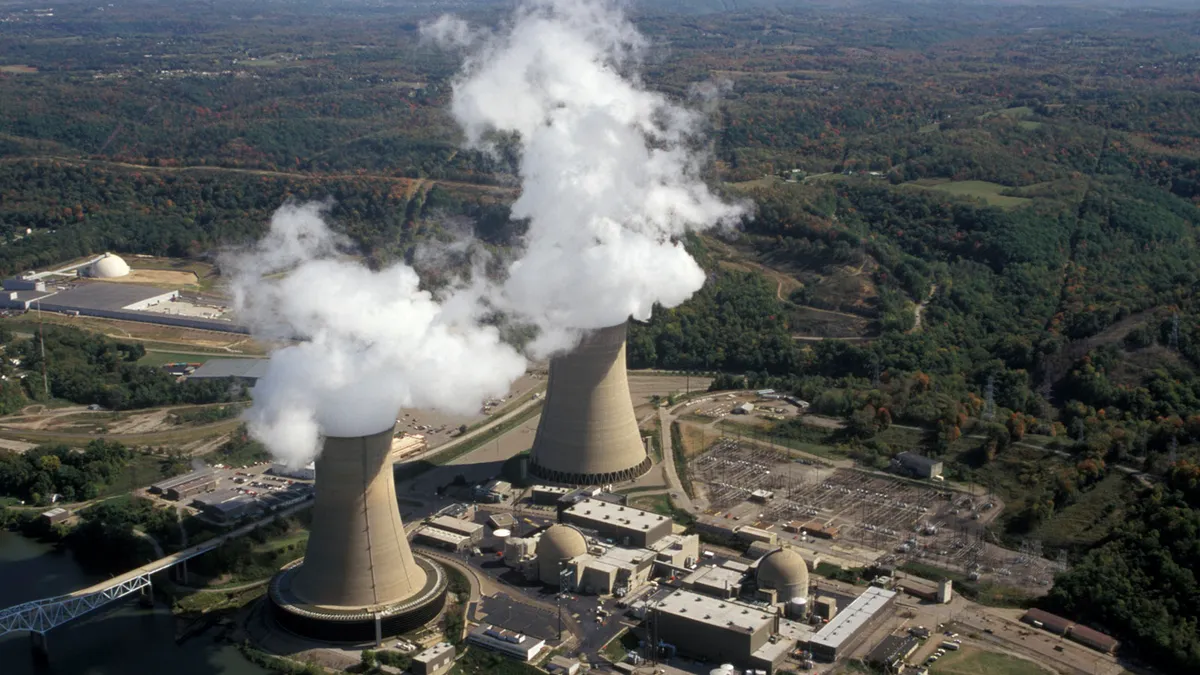
In January, Vistra signed a deal to purchase Cogentrix Energy, including its 5.5-GW gas plant portfolio, pending regulatory approval expected later this year. Around the same time, the company inked a 20-year agreement for Meta to purchase more than 2.1 GW of power from Vistra’s Beaver Valley plant in Pennsylvania and its Perry and David-Besse nuclear plants in Ohio, in addition to uprates at the Ohio plants.
“Within the geographies we serve, we are seeing a structurally improved demand environment,” Burke said. “Load growth remains elevated. Hyperscalers are executing on record capex spending plans, and our conversations with large load customers continue to advance.”
In parts of PJM, Vistra saw considerably higher year-over-year average power prices in the first quarter of 2026, according to the company’s latest quarterly filing with the U.S. Securities and Exchange Commission. In the PJM Western Hub, average power prices were $97.41/MWh, up 81% from compared to $53.91/MWh in the same period of 2025. In the PJM AEP Dayton Hub, they were up to $70.66/MWh compared to $47.91/MWh in the first quarter of 2025.
Jefferies analyst Julien Dumoulin-Smith noted during the earnings call that Vistra has been “pretty instrumental” in advocating for energy storage in Illinois — where it successfully advocated for the Coal to Solar & Energy Storage Act, which was incorporated into the Climate and Equitable Jobs Act of 2021 — but that the topic of storage had not come up much during the call.
“Batteries have different roles to play,” Burke said in response. “Obviously, batteries on sites that might support data centers play a different role than just putting a wholesale battery out onto the system and hoping that it gets a fair capacity payment and maybe a spark or some sort of spread. We’ve seen in ERCOT, that’s been a difficult proposition.”
Burke noted that batteries “have not come down in price as much as people might think. Obviously, there’s ITC challenges if it’s not, you know, more domestic in origin. We don’t see from our math that batteries inherently have a better [internal rate of return] opportunity than some of the other dispatchable options.”