Constellation Energy has 5 GW of projects — nuclear uprates, gas-fired generation and battery storage — in the PJM Interconnection’s generation queue, company officials said Monday during an earnings conference call.
However, the world’s largest independent power producer said potential data center customers are waiting to see how PJM’s pending rules for colocating load and a proposed reliability backstop auction process shake out, according to Joseph Dominguez, Constellation president and CEO.
“Some customers have been willing to continue advancing project discussions and agreement negotiations while others have chosen to pause and wait for regulatory clarity,” Dominguez said.
Constellation, based in Baltimore, is also waiting to see what projects it wants to advance in PJM, according to Dominguez.
“I don't know that at this point we're in a position to commit anything until we get a little bit more detail from PJM on the backstop proposal and obviously get further along on contracts that might call for some of our resources as part of the bilateral agreements we enter into,” he said.
More than half of Constellation’s first-quarter power revenue, or $3.5 billion out of $6.5 billion, came from its operations in the PJM’s Mid-Atlantic and Midwest footprint, the company said Monday in its quarterly U.S. Securities and Exchange Commission report.
In the quarter, average day-ahead prices in PJM West jumped 81% to about $97/MWh from the year-ago period and prices in PJM’s ComEd zone increased 44% to $51/MWh in the same period, according to the report.
Constellation was busy in the first quarter.
It bought Calpine, with about 23 GW in mainly gas-fired assets and a competitive retail platform, on Jan. 7 for $21.8 billion.
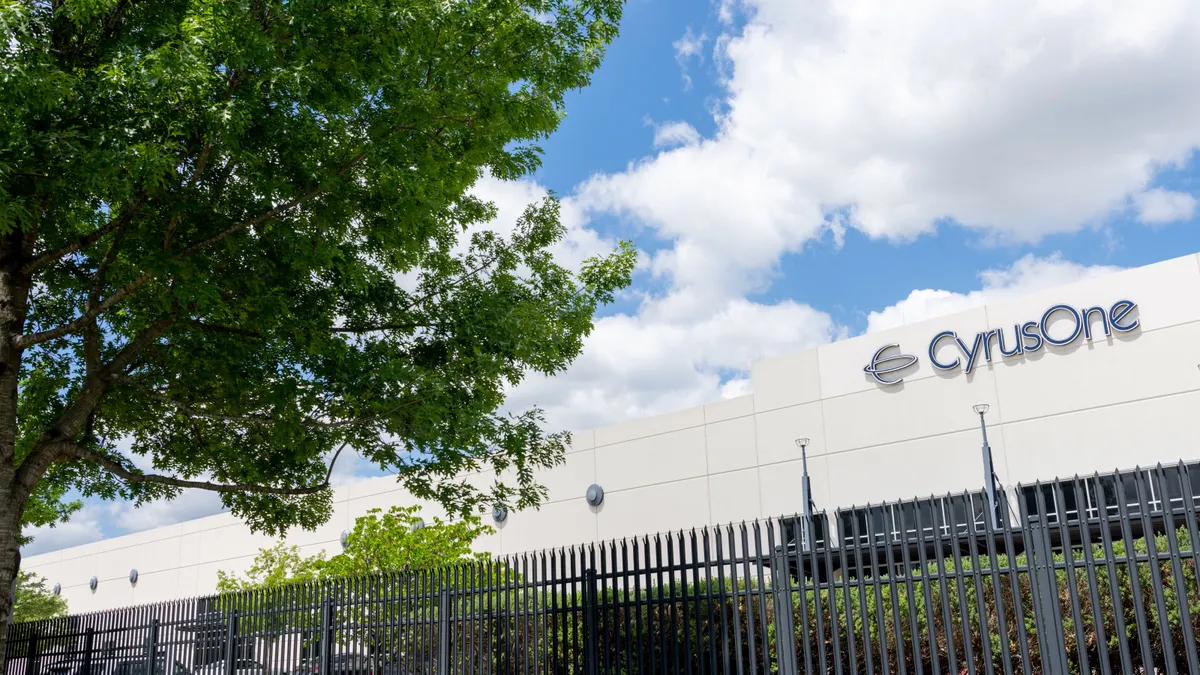
Also, Constellation signed a 380-MW agreement with CyrusOne, a data center developer and operator, to serve a new data center next to the Freestone Energy Center, in Fairfield, Texas. Calpine has also entered into an exclusive agreement to provide power, grid connectivity and site infrastructure for an additional 380-MW phase. Constellation owns 781 MW of its majority-owned Freestone power plant.
In April, Constellation’s 460-MW Pin Oak Creek Energy Center gas-fired peaker plant started commercial operations in Fairfield, Texas. Constellation sold a 25% stake in the project this month to an undisclosed party, the company said in its SEC report.
Undervalued ERCOT?
The ERCOT market is undervalued, driven by uncertainty around data center load growth, Dominguez said in response to an analyst question about its weak forward electricity prices.
“There is … an incredibly wide range of forecasted additional potential growth in the ERCOT market, and when that comes in and how it's interconnected,” he said. “We don't think that the prices in the outer years, in particular, make a great deal of sense.”
The forward market beyond 2029 appears to assume that only 10,000 MW to 15,000 MW of new load will come online, according to Andrew Novotny, senior executive vice president of Constellation Power Operations.
“So if we see numbers like 30,000 MW, we believe that the market will see upward pressure,” he said. “In the short term, we're not surprised by the weakness, and we've been well hedged and protected against it.”
Constellation’s electricity sales in ERCOT fell 7.9% in the first quarter to about 5,780 GWh, according to the SEC filing. However, first-quarter average day-ahead prices jumped 30% to about $41/MWh in ERCOT North and 22% to $39/MWh in ERCOT’s Houston zone, Constellation noted in the filing.
Uncertain timeline on nuclear restart
Constellation plans to restart its 830-MW Crane Clean Energy Center, the nuclear unit formerly known as Three Mile Island Unit 1, before 2031, despite potentially not having full capacity injection rights until then, according to Dominguez. The restart is supported by a 20-year power purchase agreement with Microsoft.
“What we're talking about is getting full capacity credit for the asset,” he said. “I don't want anybody to be under the misconception that the plant won't start sooner.”
Constellation in late March asked the Federal Energy Regulatory Commission for waivers from PJM’s rules to enable full power delivery from the Crane unit when it restarts, possibly as soon as next year. Constellation wants to transfer Capacity Interconnection Rights, or CIRs, from its Eddystone power plant near Philadelphia that it planned to retire before the U.S. Department of Energy invoked emergency powers to order Eddystone to remain online.
“Transferring the Eddystone CIRs to Crane will not affect PJM's ability to operate and dispatch Eddystone for reliability in compliance with the DOE's orders,” the company said in its SEC filing.
PJM’s independent market monitor opposes the request. Constellation asked FERC to make a decision by June 1.
During the conference call, Constellation didn’t reaffirm its plans to restart the Crane unit in 2027 and the project wasn’t mentioned in the presentation slides, analysts with Jefferies observed in a note on Tuesday.
Meanwhile, Constellation’s first-quarter income surged to $1.6 billion, or $4.49/share, from $118 million, or 38 cents/share, a year ago, on the Calpine purchase, favorable unrealized gains on economic hedges and other factors, the company said. First-quarter revenue jumped to $11.1 billion from $6.8 billion in the first three months last year.
After removing one-time factors, Constellation’s first-quarter income climbed to $972 million, or $2.74/share, from $673 million, or $2.14/share, in the same period last year, the company said.