Dive Brief:
- Transmission planning and development is improving in most parts of the United States, driven by new federal planning requirements, according to a report released Tuesday by Americans for a Clean Energy Grid.
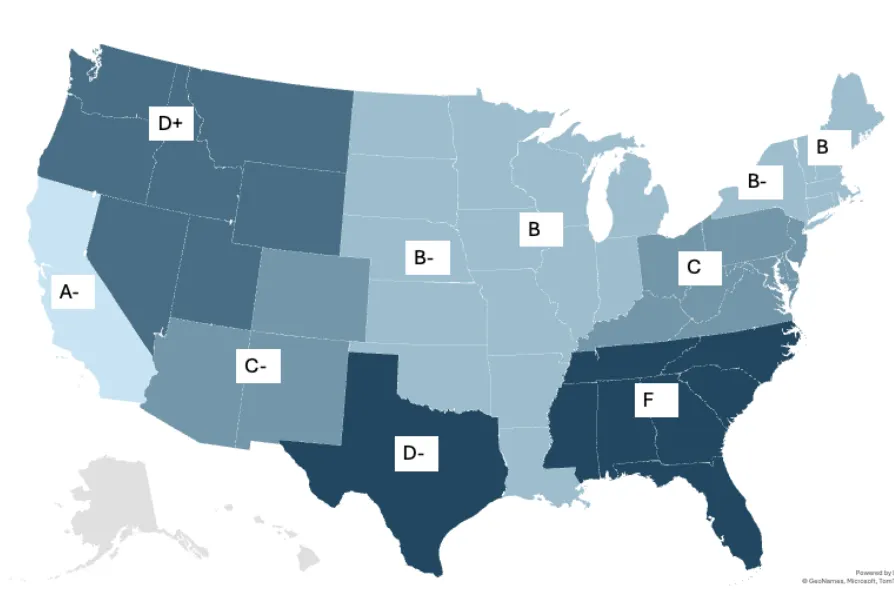
- New England’s grade jumped to a “B” from the “D+” it received in the benchmark report ACEG issued in 2023. However, the grade for Texas slipped to a “D-” from a “D+” two years ago, and the grade for the Southeast remained unchanged at “F.”
- “In the Southeast, a key hurdle for regional transmission planning is the lack of access to information and transparency,” Grid Strategies, which wrote the report, said. “Beyond the projects under development in Georgia, there is resistance to building large, high-voltage transmission.”
Dive Insight:
“Transmission planning works when it’s proactive, coordinated, and long-term,” Christina Hayes, ACEG executive director, said in a press release. “The challenge now is scaling those successes fast enough — across and between regions — to keep electricity affordable and reliable for all Americans as demand continues to grow.”
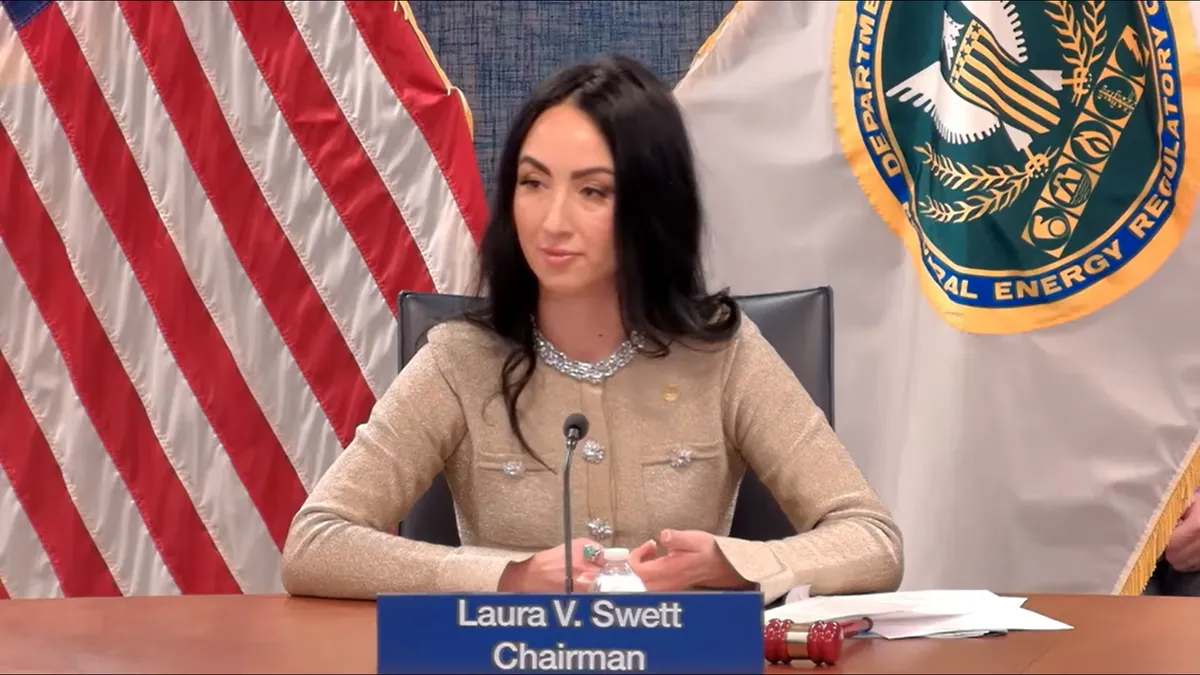
Regional transmission planning reforms from Federal Energy Regulatory Commission’s Order No. 1920 are beginning to take hold, and early progress is visible in several regions, Grid Strategies said in the report.
“However, many regions continue to fall well short of best practices, and progress remains uneven relative to the scale and urgency of today’s transmission needs,” Grid Strategies said.
The report comes amid surging load growth forecasts, which could lead to short-term, inefficient transmission fixes, it says. The report’s authors call for the power sector to embrace long‑term regional and interregional planning.
“Proactive, holistic long‑term planning that also accommodates near‑term needs has proven to deliver the lowest costs to consumers,” they said. “It captures economies of scale that 'just‑in‑time' projects miss and enables high‑capacity upgrades to come online ahead of demand.”
FERC’s Order 1920 requires long-term regional transmission planning. But grid operators are only now beginning to file the plans for complying with the order, and implementation is years away.
The PJM Interconnection and California Independent System Operator submitted compliance plans to FERC in December. New York’s grid operator, the Midcontinent Independent System Operator, NorthernGrid, WestConnect and the Southwest Power Pool are set to file their plans before mid-June, while plans from the Southeast are due for review at FERC in mid-August, according to FERC. ISO New England has until mid-2027 to file its plan.
Regions can improve their transmission planning by implementing a few key elements, according to Grid Strategies. They include:
- Proactive, 20-year planning for generation and load;
- Scenario-based planning that goes beyond “sensitivities” and includes extreme weather beyond a 1-in-10 standard;
- Multi-value planning across needs and benefits;
- A portfolio approach;
- Consideration of all business models and advanced transmission technologies; and
- Integration with related planning processes, including resource adequacy and regional and interregional efforts.
“Accelerating electricity demand — driven by data centers, manufacturing growth, and electrification — is increasing the importance of forward-looking transmission planning, compressing planning timelines, and raising the stakes for regions that continue to rely on incremental or reactive approaches,” Grid Strategies said.