Shaun Walsh is chief marketing officer at Peak Nano, an advanced materials manufacturer.
Some of today’s most important technologies didn’t come to dominate because they were better. They won over alternatives because they were easier to deploy, fit existing business models, or were better marketed. Over time, we often discover that the “runner‑up” is better suited for where the world is headed. That dynamic is playing out now with the shift from alternating current (AC) to direct current (DC) in data centers and electrified transportation.
History offers plenty of examples where a stronger technology lost the market. Betamax was widely regarded as higher quality than VHS, yet VHS became the home video standard because it was cheaper, easier to scale, and aligned with content distribution and consumer habits.
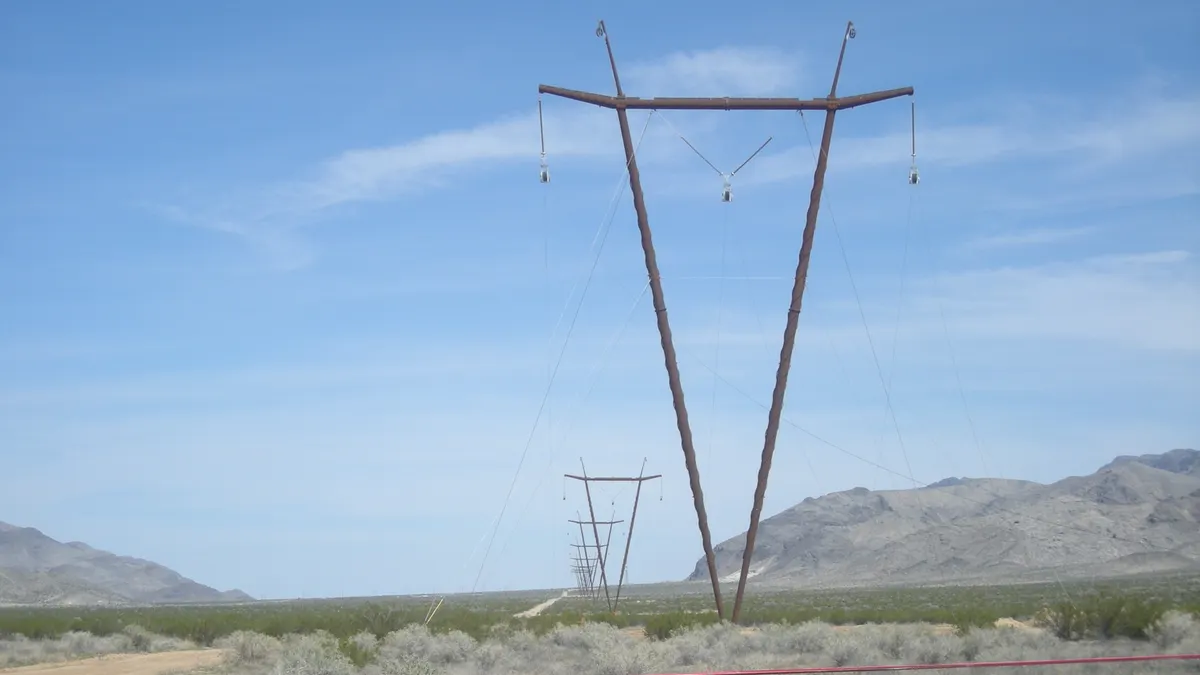
Similarly, in the “War of the Currents,” AC’s advantage wasn’t efficiency but because it was easier to change voltage for long‑distance transmission and a rapidly expanding grid. DC couldn’t deliver then, but today, DC–DC power converter technologies enable efficient, reliable DC voltage changes.
However, a century later, AC’s early win continues to shape power distribution even as the assumptions that favored AC break down under the demands of hyperscale data centers, AI, EVs, and new forms of electrified mobility.
DC’s comeback
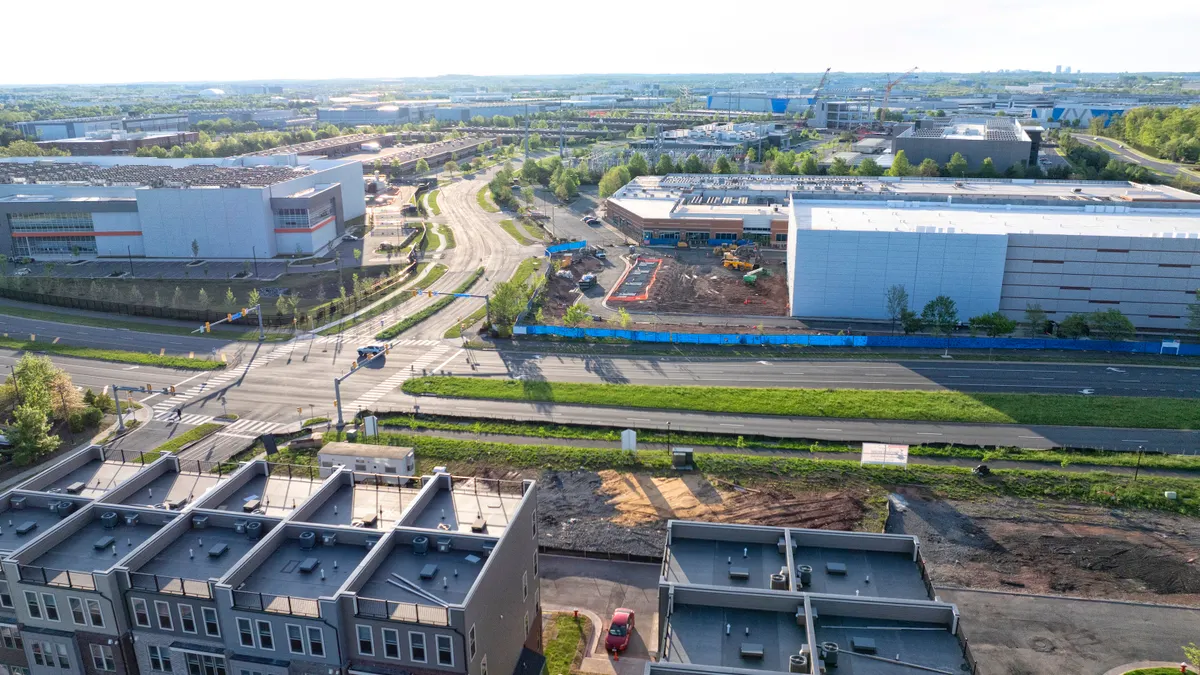
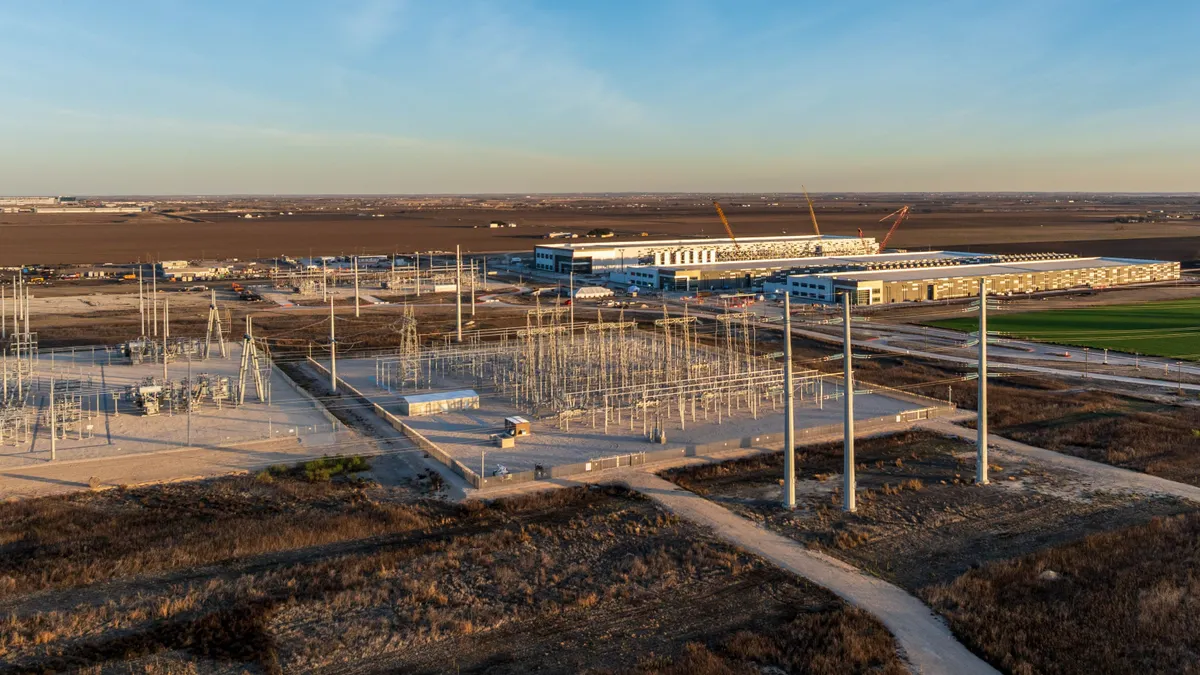
In today’s data centers, AC remains the default. AC power arrives from the grid, then is stepped through transformers and UPS systems, converted to DC, often reconverted to AC at the rack, and finally converted back to DC inside servers. This back‑and‑forth can waste up to 18% of total power, a strategic and financial liability as AI workloads soar.
To save space and reduce losses, data center operators are exploring end‑to‑end DC designs, bringing DC into the building, distributing DC to racks and shelves, and running electronics directly on DC.
However, DC behaves differently from AC. The further it travels, the more voltage sags. As a result, deliberate design and advanced energy capacitors are needed to keep voltage stable.
Most grid conversations focus on power generation, transmission lines, transformers, and inverters. In DC systems, advanced capacitors are just as important, maintaining voltage between conversion stages, rapidly changing loads, and demand spikes while preserving power quality deeper in the system.
Data centers and hyperscale providers like Vertiv, Schneider Electric, and Eaton are experimenting with DC architectures at 400V, 800V, and beyond. These designs pull more advanced capacitors into the system: between DC buses, alongside converters, and at critical points in racks and distribution.
DC distribution isn’t new. Telecommunications networks have run on DC for most of the last century to provide stable service. Data centers are now walking a similar path, with much larger loads and more concentrated power density. The same principles keeping phone networks reliable now apply to AI training clusters and cloud campuses: simplify conversions, tighten power quality, and design distribution around DC.
AC is no longer the preferred current. A transition is underway, but it calls for technology leaders to prepare new technology and components that smooth and stabilize power for a radically different duty cycle.
AI, EVs, and national resilience
Innovative companies anticipate where today’s emerging technologies are headed, building materials before those technologies become standard practice. AI and data center clusters are dramatically reshaping utilities’ load forecasts, and are expected to use more electricity than entire cities as soon as the 2030s-2040s. DC power is essential to handling this continuous, high-density load, reducing conversion losses, and integrating renewables and batteries.
This AC‑to‑DC shift is also happening in electrified transportation. Fast‑charging EV infrastructure depends on DC to reach high power levels and meet tight charging requirements along highways, at depots and in urban hubs. Emerging electric aviation concepts, including short-haul electric planes, air taxis, and rooftop “vertiports” being tested in California, New York, and Dubai will also lean on DC architectures for high‑power charging, rapid turnaround, and highly sensitive onboard electronics.
Supporting these technologies requires DC backed by advanced converters, power electronics, and capacitors that deliver stable power. Much of our manufacturing and supply chain for solar panels and batteries are foreign-sourced. Rather than outsourcing, the U.S. must reshore manufacturing of advanced grid materials and components. When critical materials are sourced half a world away, every geopolitical shock, extreme weather event, and logistics disruption can turn into a grid reliability and cost crisis. Building domestic manufacturing capabilities isn’t just good industrial policy; it is how the U.S. takes back control of its energy future and national security.
Intentional design, deployment
The pattern is familiar: one technology wins because it fits the tools, markets, and assumptions of the time. While AC triumphed in the 20th century, needs have changed in this world where data centers are expected to more than double their electricity use by 2030, and EVs and electrified fleets are becoming mainstream.
DC distribution is better aligned with new demands, but it comes with a trade-off. DC requires more intentional design and deployment to ensure stable power from the substation to the server rack and the fast‑charging depot.
Smart leaders know when a legacy technology has reached its limits. Utilities, EV charging networks, and data center operators must quickly adapt planning, procurement, and standards to a modern grid where DC dominates, and the capacitors that stabilize it become critical infrastructure.
The last century of energy was defined by AC and a centralized grid. The next hinges on how well we integrate DC into a more flexible, resilient, intelligent system. The leaders in this transition are already moving, systematically redesigning core components so today’s grid can power tomorrow’s economy.