Dive Brief:
-
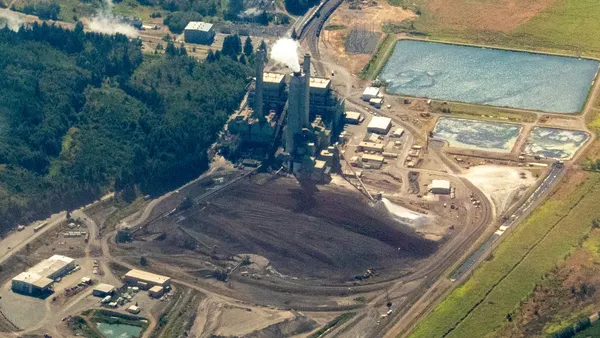
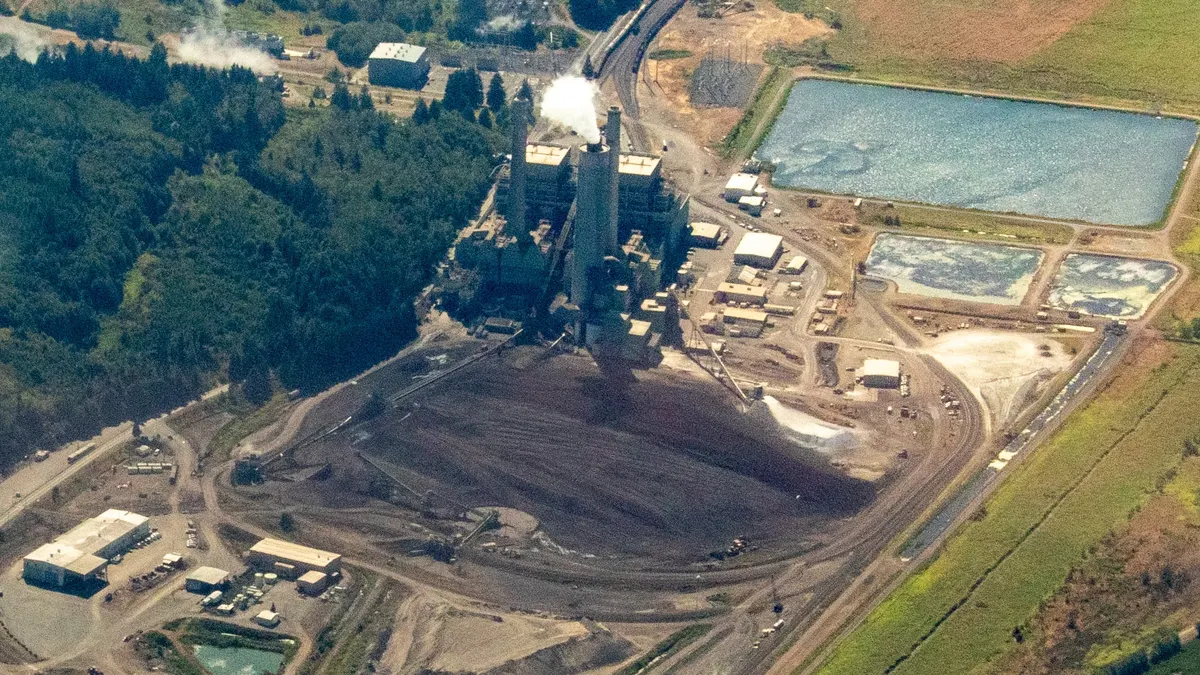
The owner of Washington’s last coal plant, which Energy Secretary Chris Wright ordered to remain online past its planned retirement date of Dec. 31, said it is complying with the order but it is unlikely the generating unit will be asked to run given “how flush” the state is with hydropower.
-
The comments by TransAlta’s president and CEO, John Kousinioris, came during an earnings call Friday hosted by the Calgary-based independent power producer. He said despite the order, the company’s plan to convert the plant to run on natural gas appears to be on track. “Our primary focus is more on getting clarity on the existing order,” including how TransAlta will recoup its expenses from keeping the unit online, Kousinioris said.
- Meanwhile, DOE faces mounting lawsuits over the order. In separate appeals, Washington state and a coalition of advocacy organizations on Tuesday sued the department in federal court, claiming no emergency exists and the order disrupts long-term state planning. The state also sued the DOE in the U.S. District Court for the Western District of Washington for allegedly failing to respond to Freedom of Information Act requests seeking information related to the department’s Centralia decision.
Dive Insight:
In its 90-day order for the Centralia plant issued Dec. 16, Wright said the Northwest faces emergency conditions that could last years and lead to power outages due to increasing demand and accelerated power plant retirements.
The plan to retire the Centralia power plant is enshrined in a state law based on SB 5769. TransAlta retired its 670-MW Centralia Unit 1 in 2020. Power from the 730-MW Centralia Unit 2 was under contract to Puget Sound Energy.
TransAlta said in December that it had partnered with Puget Sound to convert the Centralia unit to natural gas under a 15-year deal starting in late 2028. The $600-million conversion would reduce carbon emissions from the power plant by 50%, according to TransAlta.
Wright ordered the Centralia unit to remain running until March 16. It should operate at the direction of either the Bonneville Power Administration — in its role as a balancing authority — or the California Independent System Operator as reliability coordinator for the region, Wright said.
Using its authority under the Federal Power Act’s section 202(c), DOE has prevented six power plants totaling about 4,300 MW from retiring as scheduled. So far, DOE hasn’t let any of its 90-day orders for those power plants lapse.
Those orders have been challenged at DOE and in court by states, utilities and advocacy groups. Generally, they argue that DOE has failed to show that there is an energy emergency that requires the plants to continue running.
“DOE’s order presents no legitimate factual basis — let alone substantial evidence — to support its claim that maintaining Centralia as a coal-fired facility is necessary to ‘meet’ any emergency,” Washington state said in its rehearing request to DOE, which was included in the lawsuit filed with the Ninth Circuit Court of Appeals. “[...] DOE both misreads and misrepresents the sources it cites as support for an emergency — to the point that DOE’s Order can only be explained as aimed to benefit the coal industry rather than at any true ‘emergency’ in the Northwest.”
A separate suit filed by conservation and advocacy groups, including NW Energy Coalition, Earthjustice, the Sierra Club and the Environmental Defense Fund, made similar arguments.
“The Northwest has plenty of resources to maintain reliability without Centralia, and our utilities and planners in the Northwest are exercising lawful authorities and prudent planning to ensure this continues,” Lauren McCloy, NW Energy Coalition utility and regulatory director, said in a statement. “This order disrupts planning and causes costs that will be borne by Washington families, who deserve cleaner, more affordable resources — not a lifeline for an unnecessary coal plant.
In its latest Short-Term Energy Outlook, the U.S. Energy Information Administration expects the Northwest’s hydroelectric output will increase to 124.2 million MWh this year, up from 116.3 million MWh in 2025.
However, the Northwest River Forecast Center, a part of the National Oceanic and Atmospheric Administration, said in its last water supply report that the Northwest faces an uncertain water outlook this year.
The current “water year,” which began Oct. 1, started with dry conditions persisting from the last water year, the forecast center said Feb. 5. Runoff volume forecasts for April to September call for a mix of above- and below-normal runoff across the Northwest, according to the report.
Meanwhile, plans for the coal-to-gas conversion at Centralia are moving ahead, Kousinioris said. The shift to gas at the power plant is supported by Washington and the DOE, he said.
“Regardless of the trajectory of 202(c) on the facility, it is our expectation that it won't impede the work that we're trying to do from a coal-to-gas conversion,” Kousinioris said. “It's full steam ahead from a regulatory and planning perspective for us and for Puget, candidly, as they look to get the rate base.”
TransAlta expects to declare a final investment decision for the project in early 2027, after receiving required regulatory approvals.