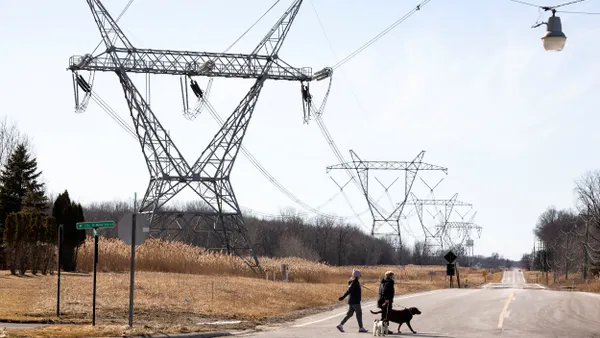
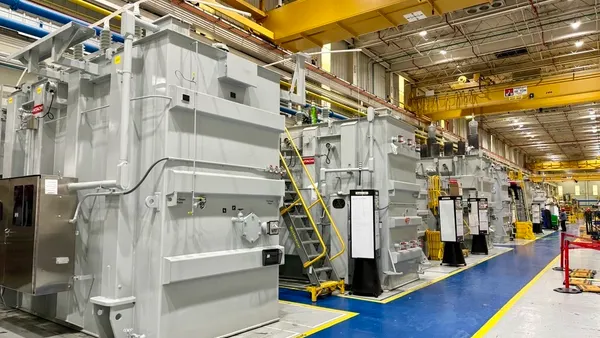
It's well known that the electric grid faces a capacity crisis. Energy-intensive operations such as data centers, commercial and industrial electrification and bitcoin mining are driving unprecedented demand while transmission constraints and permitting timelines limit infrastructure expansion. For power suppliers, a critical solution is transforming energy-intensive loads from liabilities into assets through intelligent control.
Understanding Controllable Loads
Flexible, controllable loads represent a fundamental shift in capacity management. Rather than viewing large industrial customers solely as demand to be met, controllable load technology allows these operations to be part of the larger Distributed Energy Resource Management System (DERMS) ecosystem, effectively increasing generation capacity without building new plants.
A controllable load gives grid operators or power suppliers the ability to dynamically adjust consumption in real-time. This capability becomes essential as the grid integrates more intermittent renewable generation and faces tightening capacity margins.
The Market Context: Why Now?
Several converging forces are driving unprecedented growth in power demand. The number of AI data centers is growing and bitcoin mining continues to scale in deregulated markets. Commercial and industrial (C&I) electrification is accelerating across sectors—from manufacturing facilities converting to electric processes to transportation fleets transitioning to EVs.
While surging demand presents the primary challenge, other factors make controllable loads essential for modern grid management:
- Renewable Integration Volatility: Renewable energy production such as solar and wind fluctuates throughout the day, while transmission constraints prevent power from moving freely between regions, creating price volatility and reliability challenges.
- Outdated Grid Infrastructure: Traditional infrastructure operates with binary logic—generators on or off, loads consuming or not—clashing with dynamic grid requirements.
- Evolving Market Structures: Real-time pricing and ancillary service markets reward flexibility. ERCOT's Controllable Load Resource (CLR) program integrates flexible loads directly into grid dispatch.
- New Regulatory Requirements: Texas Senate Bill 6 (SB6) is likely to mandate that loads above 75 megawatts demonstrate flexibility and NYISO’s DER model is aggregating programs into a single resource that needs to be able to follow a set point. Similar legislation is emerging in other jurisdictions, prioritizing interconnection access for flexible loads.
The Spectrum of Flexibility
Demand response—the ability to adjust electricity consumption in response to grid conditions or price signals—has traditionally been viewed as a reliability tool for emergencies. However, the demand response landscape offers multiple levels of control.
- Traditional "Call and Hope" Demand Response relies on contacting facility managers during emergencies and hoping they implement curtailment. With 30 to 60 minute notice and manual execution, this introduces uncertainty when reliability matters most.
- Automated Demand Response improves reliability through pre-programmed responses to price signals or grid conditions, removing human delay. However, it still depends on customer-side implementation and lacks surgical precision for modern grid management.
- Full Controllable Loads provide power suppliers with direct, bidirectional control to both increase and decrease consumption within seconds. This eliminates the "hope" from demand response, giving operators command authority over flexible loads matching generation resources.
The Solution: Precision Control of Flexible Loads at Scale
Controllable loads give power suppliers tools to confidently engage high-power customers while managing risk. OBM's advanced flexible load control solutions allow you to precisely adjust large loads in response to changing grid conditions, maintain grid stability during peak demand periods and minimize business interruptions for high-power customers.
Our partnerships with aggregators, co-ops, regulated utilities and other market participants span major regulated and deregulated markets nationwide, simplifying program implementation across service territories. For customers in multiple energy markets, we create unified programs that seamlessly integrate all aggregators and utilities.
OBM manages 500+ MW loads and integrates them into leading demand response programs nationwide. We've curtailed over 7 million MWh and de-risked nearly $170 million, demonstrating flexible loads maintain operational efficiency while supporting grid stability.
Proof in Practice: Revolution Mining recently qualified for ERCOT's CLR program, proving controllable loads work in practice. Read the Case Study.
Building the Grid of the Future
Controllable loads offer power suppliers a path to meet growing demand without waiting for new generation. By providing intelligent control over flexible loads, suppliers can optimize infrastructure, reduce financial exposure and develop innovative supply strategies.
The technology is proven and market structures are evolving to support it. As the grid continues its transformation, controllable loads represent an opportunity to deliver better service to high-power customers while maintaining the reliability your communities depend on.
About OBM
OBM is a leader in flexible load management solutions, providing energy agility, operational simplicity and risk mitigation through innovative compute management platforms, comprehensive energy optimization technology and broad energy partnerships. With a proven track record of managing loads up to 500 MW and integrating them into leading demand response programs nationwide, OBM is transforming the landscape of energy-intensive operations. Learn more at obm.io.