
AI-driven data center growth is accelerating, with campuses quickly scaling toward the gigawatt level. This rapid expansion is pushing existing grid infrastructure — and traditional electrical architectures — beyond their limits. As a result, power availability is increasingly the primary constraint shaping where, how and whether data center operators can develop new capacity.
Two trends are emerging as developers navigate these challenges, according to The 2026 Data Center Power Report, Bloom Energy's survey of data center leaders, utilities, independent power producers and equipment providers.
First, hyperscalers, colocation providers and other developers are increasingly chasing power availability in new markets — reshaping the demand landscape and eroding market share in traditional hubs like California and Oregon.
Second, the report points to a growing willingness among developers to deploy dedicated onsite power when the interconnection queue or classic procurement process can't meet the data center timelines.
These shifts create significant opportunities for the utilities that can adapt to this new environment and meet AI data centers’ demand for fast time-to-power and scale. Those that can't adjust will lose out on meaningful customer load growth when developers are forced to rely on their own generation rather than the grid.
The Gigawatt Era Arrives
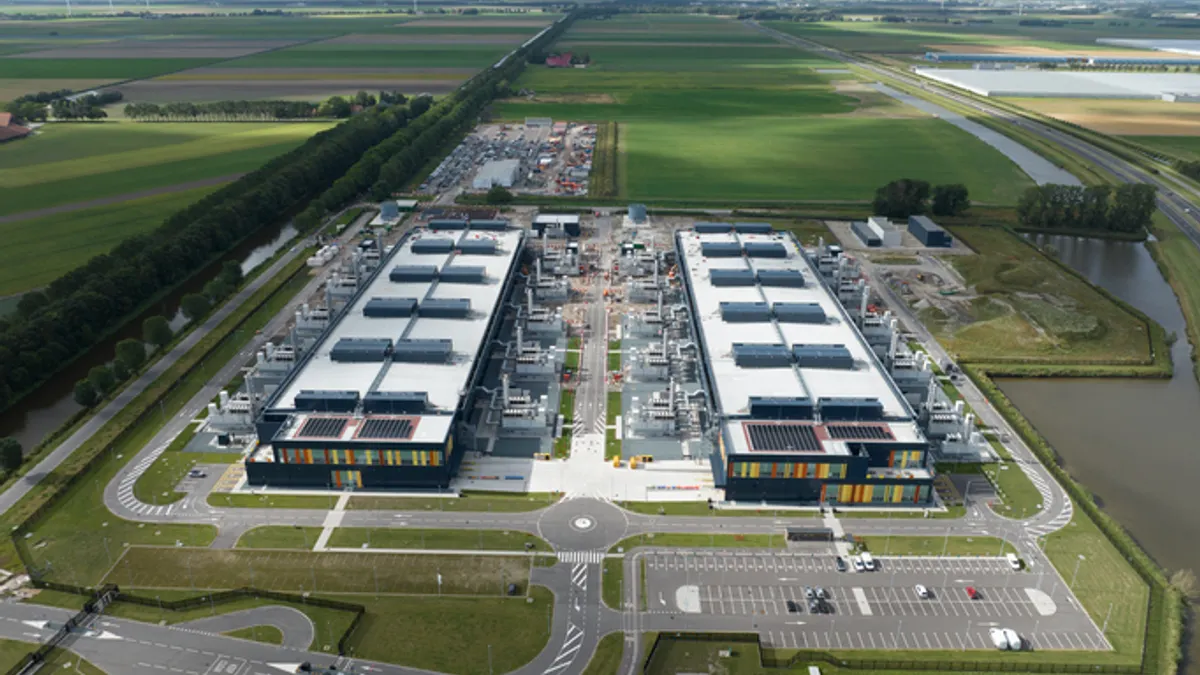
Data centers are growing at a pace that would have seemed implausible just a few years ago. Nearly one in five data center campuses is expected to exceed gigawatt scale by 2030, according to the Data Center Power Report. That number jumps to one in three by 2035.
To put that into perspective, a single gigawatt-scale campus can demand as much energy as a medium-sized city. At that level, data centers are no longer incremental load additions — they are system-defining assets that reshape regional planning, transmission development and generation strategies.

That kind of scale doesn't just stress the grid — it renders traditional electrical architectures increasingly inadequate. In response, the industry is moving quickly toward next-generation designs.
By 2028, 60% of respondents surveyed by Bloom Energy expect to adopt high-voltage central busways, which enable more efficient power distribution across large campuses. Another 45% expect to adopt direct current distribution architectures, which offer better efficiency and improved thermal performance.
Together, these shifts signal that the data center of the near future will look fundamentally different, in terms of size and power design. Utilities are still strongly positioned to offer their expertise and certainty by partnering with their customers and deploying innovative strategies to pair with the traditional electric grid infrastructure.
Time-to-Power is Redrawing the Data Center Map
While cooling capacity, water access, permitting complexity and network infrastructure remain critical considerations for data center developers, electricity supply now sits at the top of the site-selection checklist. More than half of the developers surveyed reported that securing power has become more difficult over the past 12 months.
At the same time, expectations between developers and utilities remain misaligned. Hyperscalers and colocation providers reported that utility interconnection timelines are running 1.5 to two years longer than anticipated. In a market where speed determines competitiveness, that gap is significant. That gap also offers an opportunity for utilities to provide power to their customers in new ways while maintaining or even improving reliability and affordability.
The table below describes the significant challenges presented to developers regarding interconnection queues.

The strain is particularly evident in established hubs such as Northern Virginia, the Bay Area and Atlanta, where time-to-power delays are growing. As one Director of Energy Strategy at a hyperscaler put it: “Grid capacity continues to fall behind demand, and I’ve never seen conditions improve — only deteriorate. Building the necessary infrastructure is extraordinarily difficult, which is why project lead times are becoming longer and far more uncertain.”
As constraints intensify, development momentum is shifting toward regions that can meet hyperscalers’ time-to-power expectations.

Within three years, Texas is projected to become the country's leading data center market, with more than 40 GW of capacity by 2028. At that point, Texas will represent nearly a third of total U.S. data center demand, a 142% increase in market share compared to 2026.
Onsite Power Moves from Backup Plan to Core Strategy
As confidence in grid delivery timelines wanes, developers are fundamentally re-evaluating long-held assumptions about grid dependence. Permanent onsite power generation is now emerging as their preferred long-term approach.
The numbers reflect a significant and rapid shift in mindset. In just the past six months, the share of hyperscalers and colocation providers expecting to operate entire campuses on onsite power has grown by 22%, now accounting for roughly one in three data centers.

That shift is already translating into procurement activity. Seventy-three percent of respondents said they are actively evaluating or selecting onsite power providers, with fuel cells (47%), reciprocating engines (38%) and mobile turbines (33%) topping the list of technologies under consideration.

Compared to other onsite options, fuel cells offer shorter lead times, lower emission profiles and modularity that allows developers to scale and ramp output as demand grows — all while aligning with long-term sustainability commitments.
Rethinking the Utility Relationship
Critically, the rise of onsite power doesn't have to mean the end of the utility relationship. Utilities that recognize this shift as an opportunity rather than a threat can partner with developers to create integrated onsite solutions that serve both parties.
Fuel cells offer a configurable electrical architecture be it grid-forming, grid-parallel or islanded, which creates an opportunity for a utility to integrate fuel cells with other generation technologies and with customer loads. For sites with tight emissions restrictions, fuel cells can offset the impact of higher-emitting generation sources, potentially increasing the power exported to the customer while staying below permit limits.
The flexibility and mobility of fuel cells also offers the potential of a bridge power solution until a grid connection becomes available.
For example, AEP is demonstrating how forward-thinking utilities can remain essential partners even as the data center industry moves beyond sole reliance on the grid. The utility partnered with Bloom Energy to deploy solid oxide fuel cell systems to meet the immediate power needs of two large data centers.
Onsite power can be structured as a utility-led solution — delivering speed while preserving the long-term customer relationship.
Meeting the Moment: How Utilities Can Keep Pace
To thrive in this new environment, utilities must deliver faster time-to-power and support next-generation data center architectures — including gigawatt-scale campuses, high-voltage distribution and DC-powered designs.
Bloom Energy’s SOFC Energy Server® power systems offer flexible solutions, deployable either behind or in front of the meter and available through a variety of contracting models. Bloom’s solid oxide fuel cell systems provide ultra‑resilient, highly scalable onsite electricity for Fortune 500 customers around the world, including data centers, large utilities and other commercial and industrial sectors.
To learn more, download Bloom Energy’s 2026 Data Center Power Report, watch the webinar or contact Bloom Energy.