
Dive Brief:
- Alphabet, Google’s parent company, announced last month it will acquire clean energy and data center infrastructure developer Intersect in a $4.75 billion deal expected to close in the first half of this year.
- Intersect’s operations will remain separate from Google and Alphabet’s, with Intersect founder and CEO Sheldon Kimber retaining his title, according to a Dec. 22 press release. Existing investors also plan to purchase a portion of the developer’s assets and run them as a separate company, the release said.
- Google is already a minority owner of Intersect, according to the release. The two companies closed a deal in 2024 to develop data centers co-located in energy parks with $20 billion of renewable energy and battery storage systems.
Dive Insight:
The deal comes as Google combats rising emissions, in part due to the continued adoption of artificial intelligence. The tech and search engine conglomerate said in its latest sustainability report it had decided to prioritize decarbonizing its operational electricity consumption, specifically the energy supply at its data centers and offices. Google — which now frames its climate goals, including a goal to reach net-zero emissions across its supply chain by 2030, as “moonshots” — reported its overall emissions in 2024 increased 51% from a 2019 baseline.
Alphabet will now acquire the projects in construction or under development that resulted from Google and Intersect’s partnership, according to the release. Intersect, which was founded in 2016, has an overall portfolio that includes $15 billion worth of operating or under construction infrastructure, with 10.8 gigawatts of clean energy capacity expected to be operating or in construction by late 2028, according to its website.
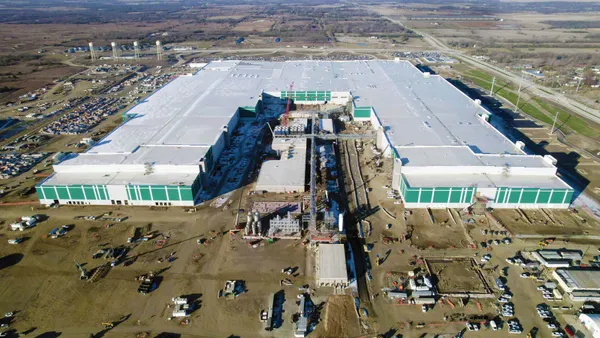
The portfolio Alphabet will acquire includes projects under construction in Texas and California and an in-development Texas solar and wind project with approximately 3.6 GW solar and wind capacity and battery energy storage systems with 3.1 gigawatt hours of capacity. Following the acquisition, Intersect will continue to work with Google’s infrastructure team on existing and new joint projects, the release said.
“Intersect will help us expand capacity, operate more nimbly in building new power generation in lockstep with new data center load, and reimagine energy solutions to drive U.S. innovation and leadership,” Alphabet and Google CEO Sundar Pichai said in the release.
Kimber called the acquisition “the logical extension” of Intersect’s partnership with Google in a December blog. He said that AI is currently hindered by the U.S. electric power industry, and the business model for electricity has trended towards a “bring your own generation” framework.
“The truth is that modern energy infrastructure now sits at the center of American competitiveness in AI,” Intersect’s CEO said. “And [Intersect and Google] share a deep conviction that energy innovation, community investment, and responsible use of resources are the pillars of what must come next.”
The separate investor-led company — led by sustainable investors TPG Rise Climate, Climate Adaptive Infrastructure and Greenbelt Capital Partners — will acquire Intersect’s operating assets in Texas and California, as well as an in-development combined 1.6 GW solar and 4.8 GWh battery storage project in California.
The acquisition represents a new approach for Alphabet in its decarbonization journey as the company has typically partnered with utilities and energy developers to bring new clean power generation online in the past.
In 2025, its subsidiary Google signed multiple nuclear power generation deals, its first Asia Pacific region offshore wind agreement and a long duration energy storage partnership. The company announced a deal to support the development of an Illinois-based natural gas plant with carbon capture and storage in October, calling it “a first-of-its kind corporate agreement.”
Google’s climate goals include ambitions of halving its scope 1, 2 and absolute scope 3 emissions and running its global operations on 24/7 carbon-free power by 2030. The company’s 2025 sustainability report documented a 22% increase in scope 3 emissions for 2024 that erased an 11% decrease in scope 1 and 2 emissions, which included a 12% decrease in data center emissions.