Dive Brief:
- The California Public Utilities Commission voted 4-1 Thursday to drop the return on equity for Pacific Gas & Electric, Southern California Edison, Southern California Gas Company and San Diego Gas & Electric by 0.3 percentage points each.
- “The CPUC authorized [ROEs] just under 10 percent” for each utility, CPUC said in a release. “These authorized ROEs are below current levels and consistent with national trends.”
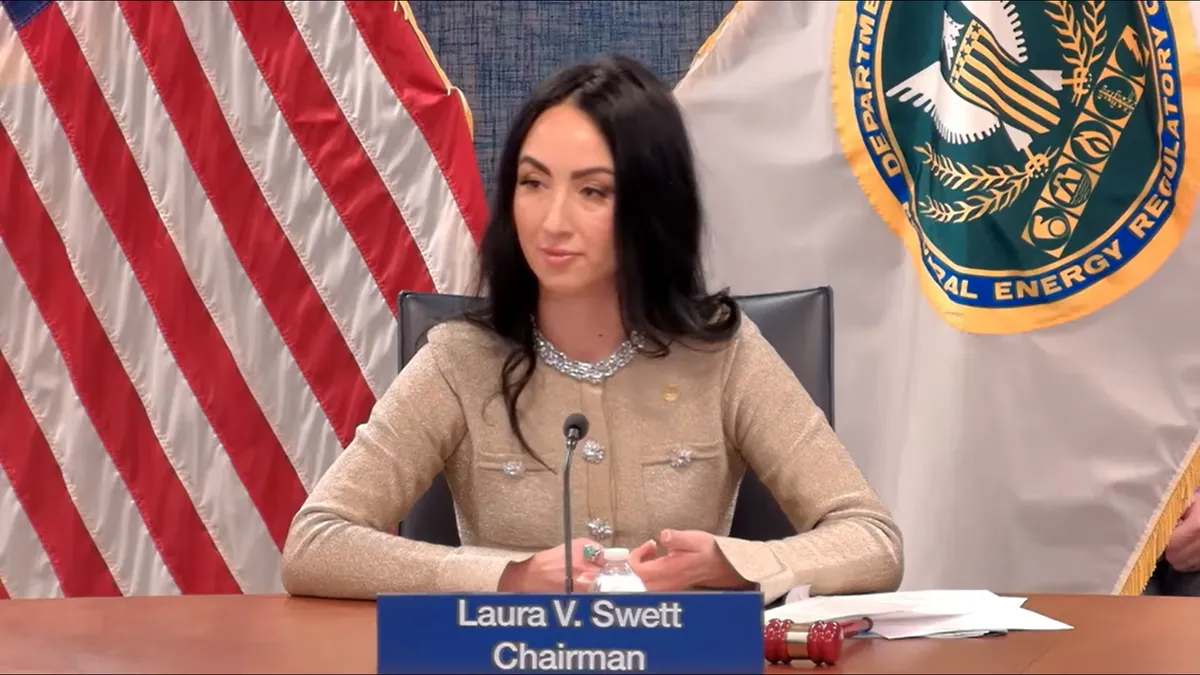
- During the commission’s Thursday hearing to vote on the issue, Commissioner Matthew Baker called the decision “one of the most important investment market decisions made from the CPUC this year.”
Dive Insight:
PG&E’s ROE is now 9.98%, down from 10.28%, San Diego Gas & Electric’s is now 9.93%, down from 10.23%, Southern California Gas is down to 9.78% from 10.08%, and Southern California Edison’s is now 10.03%, down from 10.33%. California has some of the highest rates in the country, second only to Hawaii.
Commissioner Karen Douglas, one of the yes votes, said that the ROE for each utility has to be set in a way that provides ratepayers with relief while also being “adequate to enable a utility to attract investors to finance the replacement and expansion of the utility’s infrastructure to fulfill its public utility obligation.”
Baker noted that wildfire risk is creating significant strain for the state’s utilities and wildfire-related costs “constitute nearly 30% of PG&E's revenue requirements.”
“Since 2019, approximately $40 billion in wildfire-related expenditures has been added to the rate base of the three largest utilities,” he said. “We have one utility that is currently working to have an investment grade credit rating, while others can face potential downgrades due to investor concerns about wildfire risk.”
The commission’s lone no vote, Commissioner Darcie Houck, similarly said the state is “grappling with both an affordability crisis and the need to ensure investor-owned utilities can access capital to maintain safe and reliable services for California ratepayers.” But she concluded that “the decision does not quite strike the right balance as to the customer side of the pendulum” and opted not to support the proposal.
The decrease in ROE will “slightly decrease rates relative to maintaining the status quo,” Houck said, and “provide the utilities with slightly lower returns this year, totaling almost $100 million less than total return across all four utilities than they would if we kept the current rates of return.”
However, the CPUC recently authorized significant rate base increases, Houck noted, which represent an “$840 million increase in total authorized return from 2025, which will increase in future years.” She suggested making the capital cost proceeding annual, instead of triennial, and taking “a closer look at the capital structures that are authorized here.”
The Sierra Club criticized the CPUC’s decision in a Thursday release, saying that returns on equity of “~6% would balance consumer and utility needs” while saving “$440 per household compared to the utilities’ proposals.”
“We presented clear evidence showing that utilities are inflating their cost-of-capital estimates and that authorized returns should be significantly lower to reflect actual market conditions,” said Julia Dowell, senior organizer at Sierra Club. “The Commission ignored that record, split the difference, and moved on.”
Average electricity rates at PG&E, SCE and SDG&E grew by 48% to 67% between 2019 and 2023, according to a January report from the California Legislature’s Legislative Analyst’s Office.
Correction: This story has been updated to correct the amount by which the PUC lowered each utility's return on equity.