Dive Brief:
-
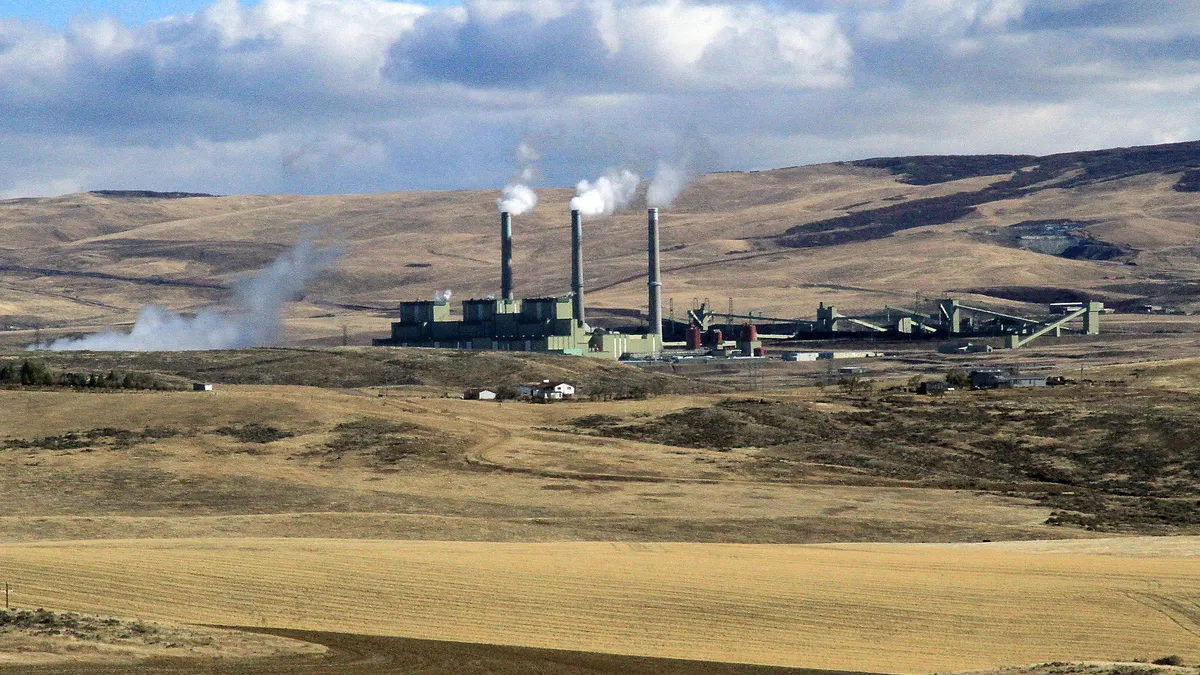
Two days before the coal-fired, 446-MW Craig Unit 1 in Colorado was set to be retired, the U.S. Department of Energy on Dec. 30 ordered Tri-State Generation and Transmission Association and the unit’s other co-owners to keep it running.
-
Citing a North American Electric Reliability Corp. long-term reliability assessment, a DOE report from July and executive orders from President Donald Trump, DOE Secretary Chris Wright said the action was needed because the Rocky Mountain region faces an energy emergency.
-
Using its authority to issue 90-day emergency orders under the Federal Power Act, DOE last year prevented six power plants totaling about 4,300 MW from retiring. Five of the power plants burn coal. They are in Colorado, Indiana, Michigan and Washington. DOE also ordered Constellation Energy to continue running two oil- and gas-fired units totaling 760 MW at its Eddystone plant in Pennsylvania.
Dive Insight:
Growing demand for electricity, coupled with “accelerated” power plant retirements, could lead to power outages, Wright said in the order.
DOE directed Tri-State and the other Craig Unit 1 co-owners to have the unit available to operate at the direction of either of two authorities: the Western Area Power Administration — Rocky Mountain Region Western Area Colorado Missouri, in its role as a balancing authority, or the Southwest Power Pool West, in its role as a reliability coordinator.
However, Tri-State, which operates Craig Unit 1, said it has been preparing to retire the unit for five years for economic reasons and to meet state and federal environmental requirements.
The Colorado Public Utilities Commission in August approved the wholesale cooperative’s most recent integrated resource plan, finding that the unit’s shutdown wouldn’t harm grid reliability.
“This retirement decision has informed operational and maintenance decisions, and Tri-State has planned for adequate resources to maintain reliability on its system following the unit’s retirement,” the cooperative said in a Dec. 31 press release.
Also, the unit, which started operating in 1980, went offline Dec. 19 because of a valve failure, and Tri-State and the other co-owners will need to repair the valve, according to the cooperative.
“As a not-for-profit cooperative, our membership will bear the costs of compliance with this order unless we can identify a method to share costs with those in the region,” Duane Highley, Tri-State CEO, said in the press release. “There is not a clear path for doing so, but we will continue to evaluate our options."
Based on Craig Unit 1’s fuel and operations and maintenance costs from 2022 through 2024, Grid Strategies estimates that running the unit for 90 days will cost about $21 million. So far, DOE has extended all its 90-day emergency orders for retiring power plants for additional 90-day periods when they expire.
In a recent period, the cost of running Craig Unit 1 has almost always exceeded the cost of wholesale power, according to the consulting firm.
Craig Unit 1’s owners include Salt River Project, which owns 29%; Tri-State, 24%; PacifiCorp, 19%; Platte River Power Authority, 18%; and Xcel Energy, 10%.
The owners of the 410-MW Craig Unit 2 plan to retire it in September 2028, and Tri-State intends to shutter its 450-MW Craig Unit 3 on Jan. 1, 2028, according to a Dec. 1 update on Tri-State’s resource plan.
Driven by its resource plan, Tri-State said it has contracted for 550 MW of storage resources, 200 MW of wind resources and 100 MW solar, and it is negotiating for other preferred portfolio resources.
Including those planned retirements and expected additions, Tri-State estimates that it will need 19 MW of additional generation capacity by the summer of 2035 to maintain adequate reserve margins, according to the report.