Paige Knutsen is executive director at the Midwest Energy Efficiency Alliance and Erin Kempster is director of regulatory policy at Power TakeOff.
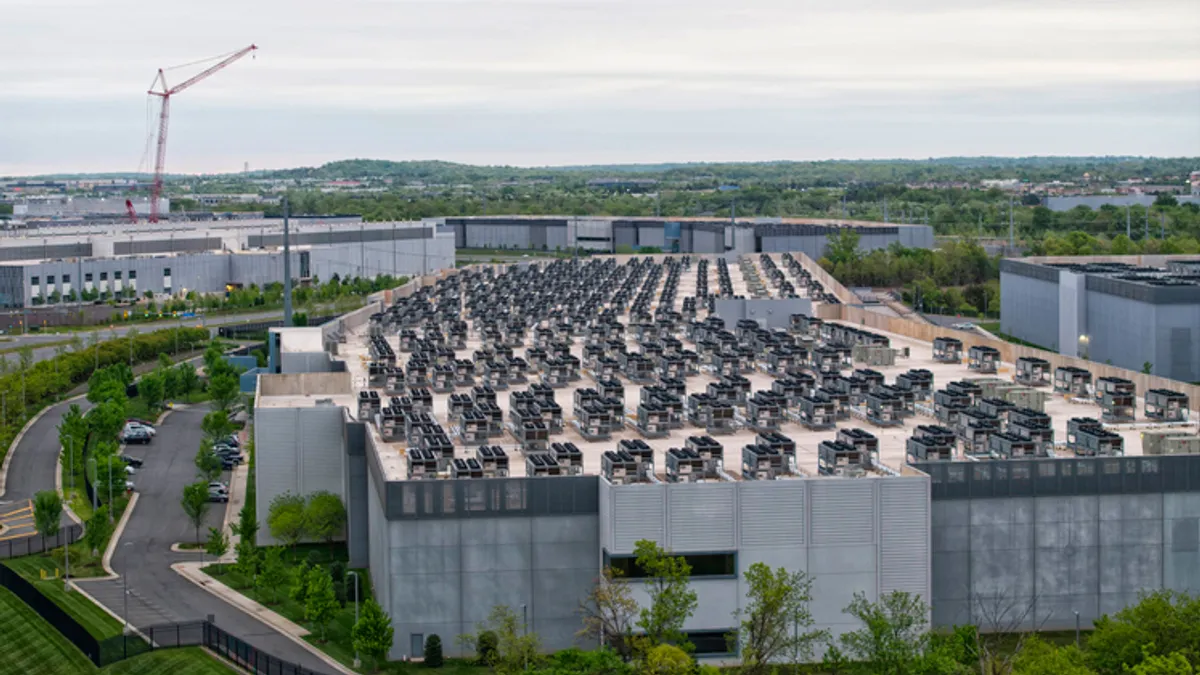
Electricity prices surged nearly twice as fast as inflation in 2025, making energy costs a political issue for voters. At the same time, power demand from AI and data centers is expanding at an unprecedented pace. Industry projections suggest these facilities could account for nearly 9% of U.S. electricity usage by 2030 — roughly double their current share.
The traditional instinct to build our way out of rising demand faces a gauntlet of challenges: long lead times, higher financing costs, siting and community pushback, and uncertainty around where new load will actually materialize. The December 2025 PJM Interconnection capacity auction — which maxed out the FERC-approved price cap while still falling short of the preferred 20% reserve margin — served as a warning of the risks ahead: a projected $70 monthly bill increase per household by 2028 or potential rolling blackouts. Conversely, overbuilt or misallocated projects can leave ratepayers responsible for costs that persist for decades, often leaving utilities with fixed generation assets geographically divorced from load centers.
Prioritizing demand side management as the first resource before committing billions to new infrastructure mitigates many of these risks. To be clear, this is not a call for excluding new infrastructure, but a recommendation for sequencing. Efficiency-first means prioritizing and exhausting cost-effective demand-side capacity before committing to the multi-billion-dollar, long-lived supply or transmission projects that define traditional grid expansion. While some grid expansion is inevitable for AI loads, these investments should occur only after the potential for cost-effective demand management has been fully accounted for. Compared to supply-side projects, RMI posits that demand-side measures can increase grid capacity at roughly half the cost and five to 10 times the speed.
Over nearly two decades of flat load growth, we have had the luxury of adding capacity at a measured pace. Now, as hyperscalers prioritize "speed-to-power," fossil-fired stationary generation is the most familiar solution, and regulatory structures still favor traditional capital projects. Yet, the industry is moving toward more agile solutions.
A landmark 2026 framework report by the Alliance to Save Energy and The Ad Hoc group, "Bridging the Load Gap," introduces the Bring Your Own Distributed Capacity (BYODC) model. Sponsored by Google, this framework allows large-load customers to fund strategic demand-side investments on the distribution network in return for capacity credits. By pivoting to BYODC, hyperscalers can secure the reliability and social license they need while delivering direct benefits to local customers.
Why efficiency should come first
Stakeholders urging an efficiency-first approach mirror “first in the loading order” mandates for energy efficiency already in place in several states’ energy policies. Efficiency provides value regardless of how demand evolves. Most utility programs are approved only if they confer at least $1 in benefits for every $1 in costs. Even if the anticipated surge of AI-driven consumption plateaus, every avoided kilowatt and kilowatt-hour produces measurable savings for customers and the grid.
Getting the sequence right ensures that infrastructure spending occurs only where needed, preventing stranded costs. Once billions are committed to a power plant or transmission upgrade, the decision is effectively irreversible. Efficiency protects ratepayers from the risks of overbuilding while ensuring capital is allocated strategically.
Energy-efficiency focus often centers on “widget” retrofits: swapping out old equipment for higher-efficiency systems. While valuable, this overlooks the “low-hanging fruit” of operational efficiency. Thousands of commercial buildings have under-optimized equipment and system scheduling, offering immediate savings through no-cost operational changes.
State leaders are already innovating; in the first 11 months of 2025, over 190 bills were introduced to manage load growth, and state public utility commissions have reviewed a multitude of large load tariff proposals. A standout trend is the “Clean Energy Choice” rider within large load tariff settlements in Kansas and Missouri (and similar concepts introduced in Nevada and Virginia proceedings), which allows hyperscalers to bring efficiency as a capacity resource. This CEC rider aligns with an efficiency-first mindset, benefiting all stakeholders: residential and small commercial customers get cost-saving upgrades, utilities mitigate the risk of overbuilding fixed generation and large-load customers earn the social license to operate.
Where we go from here
To date, the conversation about efficiency within these legislative bills and large load tariffs has been a niche within a niche. Peel away at this regulatory onion, however, and a workable approach emerges. With the BYODC model delivering capacity at roughly $33/kW-year — less than half the cost of recent capacity market prices and a fraction of the cost of new traditional generation — the economics are undeniable. Hyperscalers operating under regulatory regimes that require them to pay for all new capacity may find this approach far preferable to traditional centralized sources. To accelerate capacity at lower cost, we recommend the following:
- Stakeholder collaboration to establish protocols enabling verifiable, firm demand-side resources, such as energy efficiency, to “count” as capacity in grid planning efforts and to define the value stack for such investments to recognize the various attributes (kWh, kW, GHG) of these efforts.
- Regulators should codify "loading orders" requiring utilities to verify that demand-side capacity has been fully incorporated into planning before approving new, long-term infrastructure, and allow host utilities to count the resulting kWh and kW energy efficiency attributes toward their demand-side management goals, as appropriate.
- Utilities need to integrate the BYODC framework into large-load tariffs, enabling hyperscalers to secure capacity by subsidizing geographically relevant demand-side investments.
- And large-load customers should adopt the "Efficiency First" sequence to secure faster speed-to-capacity while strengthening your social license to operate.
The big four hyperscalers were on track to spend well over $300 billion in capital in 2025, enough to pay for the entire country’s energy efficiency portfolio about 30 times over. Creating a more intelligent, adaptive system that balances cost, reliability and long-term flexibility requires maximizing demand-side resources, including demand reduction through energy efficiency, before turning to capital-intensive projects. That discipline protects ratepayers and ensures every investment dollar delivers lasting value.