Devin Hartman is director of energy and environmental policy at R Street Institute. Kent Chandler is resident senior fellow, energy and environmental policy, at the R Street Institute.
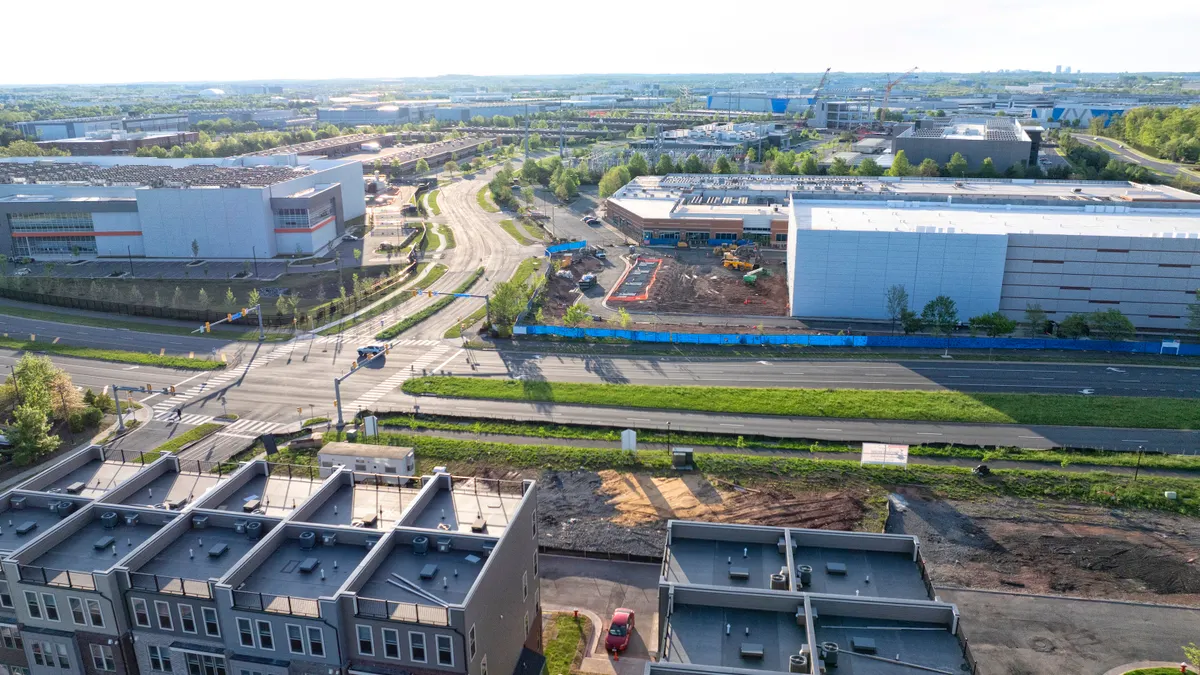
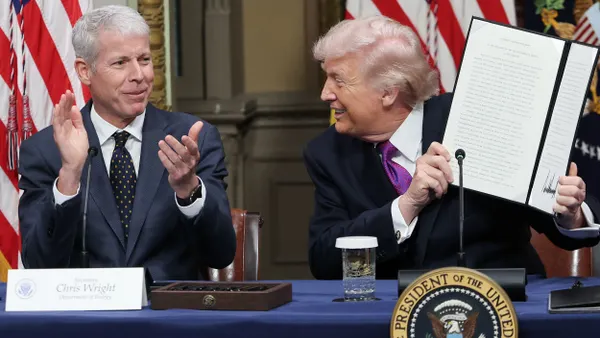
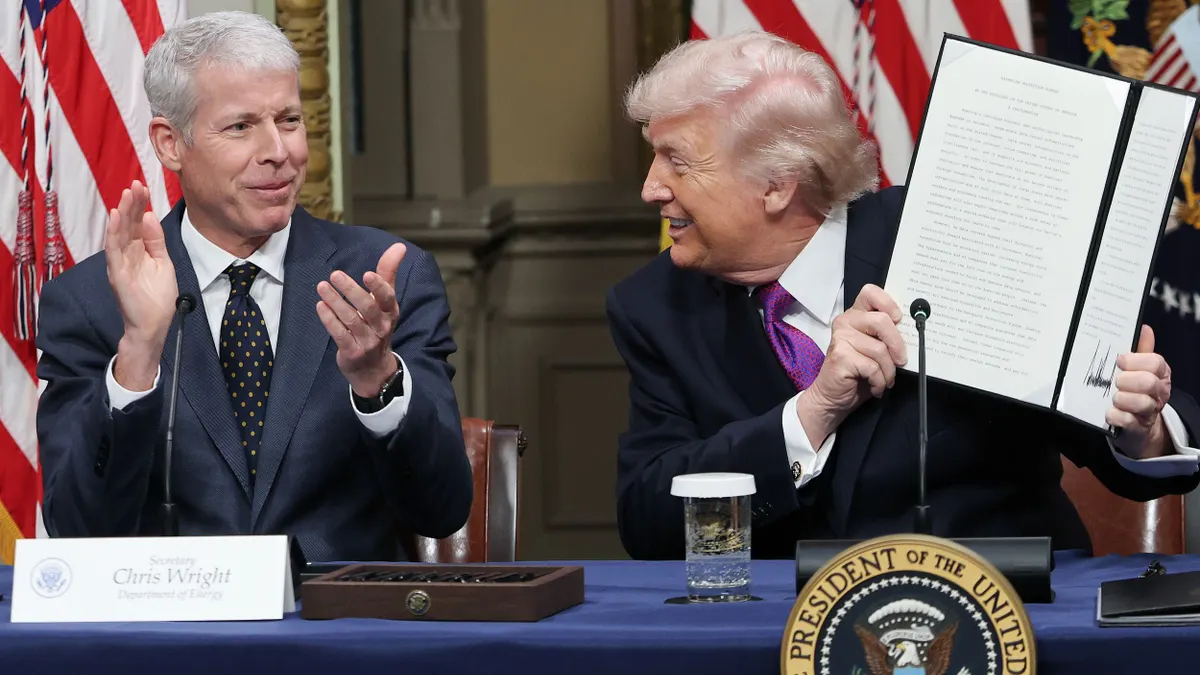
Last month, President Trump issued a Ratepayer Protection Pledge that called on hyperscalers and artificial intelligence companies to “build, bring, or buy all of the energy” needed for data centers.
The policy statement reflects the administration’s prioritization of infrastructure expansion, while ensuring that everyday Americans do not foot the bill. This sentiment is shared by state politicians, who have more influence over electricity rates than the feds. At federal and state levels, technology companies face immense public pressure over their perceived impact on rising electricity rates
Despite agreement from leading technology companies, many experts are skeptical the pledge will yield ratepayer relief. This is not because of a lack of sincerity among pledging parties. Rather, rate increases are inevitable because of prior policy choices and tight economic fundamentals. The status quo is an electric system facing a supply crunch and demand shock overlaid on an inefficient and antiquated regulatory system.
There is no magic wand to fully insulate ratepayers under current circumstances. Prices would continue to rise even without a data center surge. The primary hurdle to implementing the pledge is cost-of-service utilities, whose business model depends on socializing costs and risk amongst customers. Nevertheless, the pledge could motivate transformative electric supply and delivery reforms that benefit all ratepayers
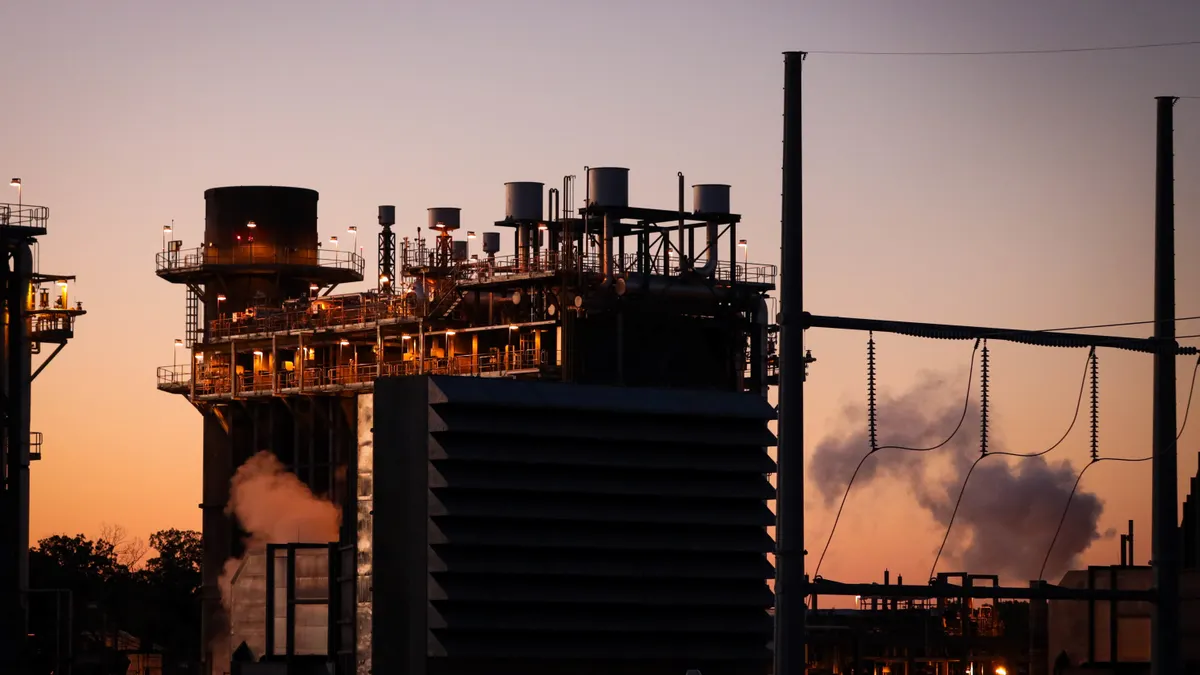
Requiring new customers to build, bring or buy new generation resources prevents them from contracting with existing power sources. This apparently contradicts electricity law rooted in non-discrimination, where any customer is able to contract with new or existing supply sources. By this standard, tech companies agreeing to this pledge principle is an overcompromise. This appears to be the price of retaining a social license to operate.
The prime barrier to data centers building, bringing or buying their own supply is state franchise utility laws. The monopoly utility model is not conducive to the commercial freedom data centers need to procure their own supply, especially in ways that insulate other captive customers. The monopoly model also happens to underserve other ratepayers, by virtue of stunting innovation and elevating costs.
Monopoly utilities have recently developed unique retail tariffs for data centers to ostensibly ringfence costs from other ratepayers. Yet even the most creative utility arrangements, such as data center tariffs or creating a separate “monopoly within a monopoly” company, still leave risk on the balance sheet of the parent company that is ultimately reflected in higher rates for utility customers. Credit rating, borrowing cost increases and the risk of stranded costs from data center deals would still be passed onto existing customers.
The best way to leverage the pledge’s supply commitment is to accelerate nationwide momentum to give business customers retail choice. That applies to central grid services, which are the most cost-effective today, as well as off-grid arrangements that could unleash permissionless innovation tomorrow. Both forms of competition give data centers the commercial freedom to contract with suppliers of their choosing, while ensuring the cost and risk of those deals stays between the transacting parties. This means no direct or indirect effects on a utility’s rate base or regulated rates, and thus maximum protection for captive ratepayers.
Businesses are clamoring for retail competition in monopoly states, such as Wisconsin, Indiana, Iowa, Louisiana, West Virginia, Missouri, Michigan, South Carolina, Oklahoma and Virginia. Business customers are pushing to defend and improve markets in competitive states, such as Ohio, knowing that markets deliver lower-cost supply than the cost-of-service model. Many are learning that retail competition, among other factors, explains why Texas is by far the most load-growth ready state.
Delivery reforms
The ratepayer protection pledge says that technology companies will pay for “all new power delivery infrastructure upgrades required to service their data centers.” That is fair, but executing it is not straightforward.
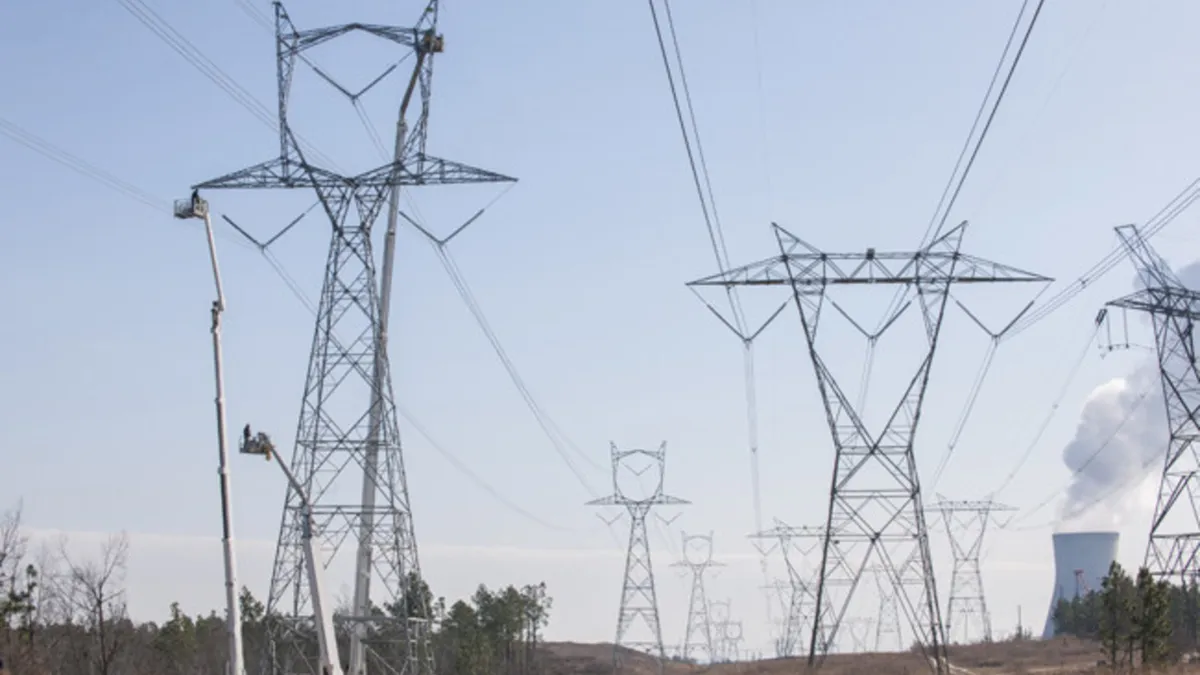
Transmission and distribution wires are complex network industries where a single line benefits thousands to millions of customers. “Direct” or “but for” cost allocation was done away with two decades ago for large scale projects. A recent study delineates why calculating exact benefits for all customers of such projects is impractical, if not impossible. This rationale explains why FERC adopted, and the courts upheld, cost allocation that is “roughly commensurate” with the benefiting ratepayers.
One read of the pledge is that it calls for direct cost allocation to specific end-use customers, rather than a wholesale allocation to utilities based on cost-causation standards.
While direct cost allocation could work in select applications where data centers are the main beneficiaries, regulatory structures at the retail and wholesale level limit its broader feasibility. Those select applications include allowing data centers to contract directly with competitive transmission providers for local upgrades or merchant high voltage direct-current lines. A novel idea is to provide for the use of open seasons to fund new transmission lines, which is standard practice for pipelines.
It is also possible that refining the “roughly commensurate” cost allocation standard will satisfy the spirit of the pledge principle but, again, regulatory structures pose an issue. Regional cost allocation rules are written under the presumption that the “customers” receiving network cost allocations are utilities, so even if costs for incremental infrastructure needed to serve data centers are allocated proportionately to the correct utilities, those costs would also have to accurately be allocated again to data centers at the retail level. This would be necessary for many lines, where data centers only constitute a fraction of a beneficiary pool that numbers in the thousands.
Cost allocation aside, it is reforms that minimize T&D costs that hold the most promise to advance the spirit of the pledge. Hyperscalers would benefit themselves and other ratepayers the most by spearheading a customer-led agenda to reform regulation of T&D upgrades and expansion, which is long overdue. The status quo reflects the woes of ineffective cost-of-service regulation by encouraging capital-inefficient projects over efficient ones. The resulting cost pressures are inducing consumers to file legal complaints before the Federal Energy Regulatory Commission, not to mention the political complaints of voters.
The motivation for reform is clear: transmission costs have tripled the last two decades while distribution costs have doubled. Neither trend is expected to abate on their own.
Fortunately, the reform blueprint has come to light. Two convenings of transmission customer groups have identified four reform principles: improved transmission planning, optimized existing infrastructure, effective competition and quality governance.
Reforms that enable voluntary projects, optimize regional seams and unleash the promise of advanced transmission technologies are expeditious ways to expand the grid while lowering costs. Meanwhile, pivoting transmission planning toward efficiency is essential in the long-term. The key: redirect capital away from opaque, localized utility-initiated projects that follow no economic criteria, have little regulatory oversight and face no competition. These constitute over 90% of projects today. Instead, much of that capital is better spent on projects that are transparently and independently planned, leverage economies of scale, use cost-benefit criteria and are put out for competitive bid.
Grid heroism
Technology companies would best uphold the Ratepayer Protection Pledge by becoming the hero of the consumer movement. Shockingly, the consumer voice remains overshadowed in the national discussion on energy affordability. FERC Chairman Laura Swett just said that she hears “probably nine times as much” from utilities as from hyperscalers. This reflects an historic collective action problem. That is, the dispersed interests of consumers get steamrolled by the concentrated interests of incumbent utilities.
The affordability conversation must hold hyperscalers accountable, but the main accountability deficit emanates from incumbent utilities. The affordability agenda should leverage hyperscalers’ clout to initiate reforms that benefit all consumers. In particular, reforming incumbent-backed regulation would reduce excessive supply costs. The hyperscalers’ priority, speed-to-power, is compatible with all consumers’ cost discipline agenda.
The time is now, as a tsunami of utility capital expenditures awaits. A new analysis by Powerlines noted that utilities sought over $30 billion in rate increases in 2025, more than double their 2024 request.
Consumer classes historically aligned on overcoming the drivers of excessive power costs, but went to battle with each other over cost allocation. If hyperscalers demonstrate that they will pay as much or more than their fair share, then cost allocation need not be a distracting wedge. That leaves more resources for the consumer movement to unify into a collaborative, cost-cutting force.
Encouraging signs are evident. A particularly promising effort is the Electricity Customer Alliance, which pulls together national business and residential class customers into a coherent consumer agenda. At the state and regional levels, commercial, industrial and residential advocates are teaming up on wires-related efforts and see business customer choice and competitive markets as a win-win for technology companies and existing ratepayers. Should the pledge fuel such reforms, it would buoy America in the AI race while benefiting everyone’s monthly electric bill.