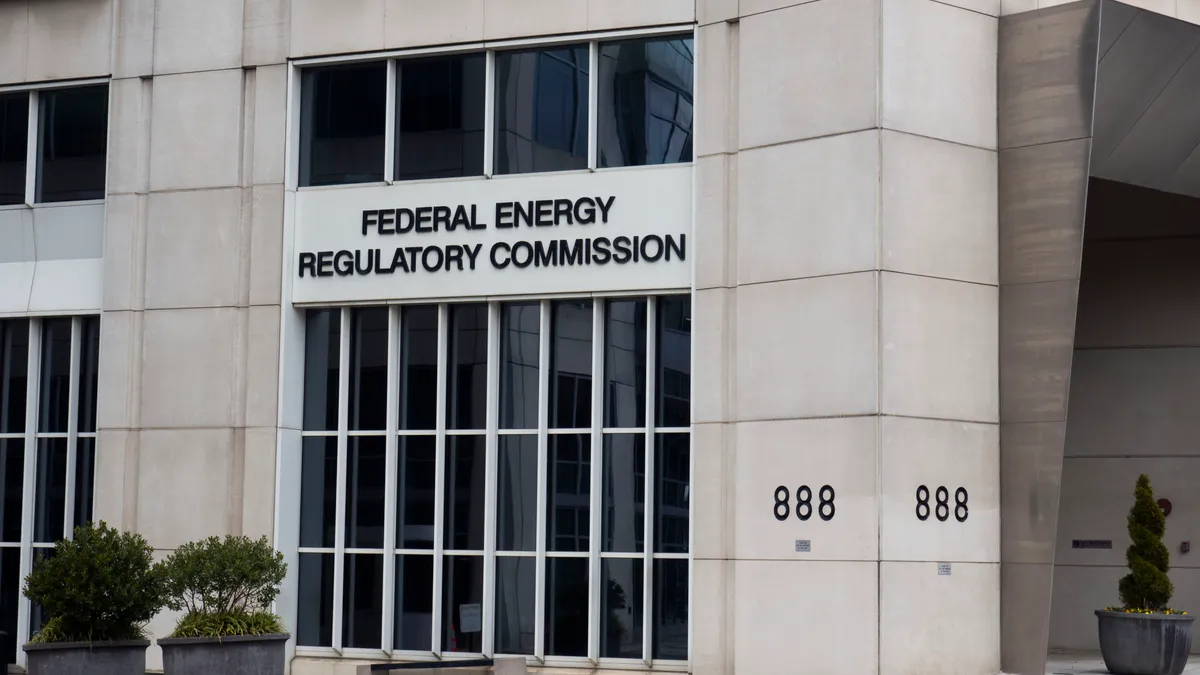
The Federal Energy Regulatory Commission on Thursday upheld its decisions approving temporary fast-track generator interconnection processes for the Midcontinent Independent System Operator and the Southwest Power Pool.
MISO’s Expedited Resource Addition Study and SPP’s Expedited Resource Adequacy Study framework are designed to address growing resource needs in the grid operators’ footprints.
“These one-time processes give a framework for expedited interconnection, and these studies will address urgent resource adequacy needs — a common theme across our country — needs that both [regional transmission organizations] have shown their existing interconnection processes are unable to meet,” FERC Chairman Laura Swett said at the agency’s open meeting.
However, in separate lawsuits, public interest groups in November asked a federal appeals court to overturn FERC’s original approval of the MISO and SPP fast-track review processes, saying, in part, they give the reviewed projects an unfair advantage compared to projects in the grid operators’ standard interconnection queues.
In case other regions want to adopt similar programs, Swett said, the MISO and SPP processes include two key features. One, they result in swift decisions — SPP’s process takes about six months and MISO’s takes 90 days, Swett said. Two, they expedite shovel-ready projects that meet certain criteria, including higher milestone payments and financial security deposits.
About 51.6 GW of planned projects are moving through the fast-track processes, according to FERC Commissioner David Rosner.
The MISO and SPP fast-track processes are “stopgaps” while grid operators work on grid interconnection reforms under FERC Order 2023 and adopt innovative practices like automation to get queue times down, Rosner said.
FERC commissioners also said SPP’s High Impact Large Load and High Impact Large Load Generation Assessment proposals — approved by FERC on Jan. 14 — are examples of innovative solutions for bringing data centers and other large loads quickly with a pathway to new, dedicated power supplies.
“It's critical that this moment spurs more efficient planning and strategies to get new and needed generation built and plugged in fast,” FERC Commissioner Lindsay See said. “Those efforts need to be both creative and legally sound. They have to respect the distinct roles of the states, the RTOs and ISOs and this commission, and they have to tackle cost responsibility to ensure fairness for all of those who write their utility checks every month.”
FERC Commissioner Judy Chang warned that improvements to interconnection processes must be coupled with transmission planning reforms.
“The success of any of these reforms depends on solving the long delays and cost uncertainties associated with transmission system upgrades that [are] needed to bring new generation online,” Chang said. “Just because we accelerate the processes upfront for generation and perhaps load interconnection, without sufficient amount of grid and reliability upgrades to the system, we can't actually operate. So the ultimate bottleneck around cost and timing uncertainties around how the grid will need to be enhanced is a pervasive problem that will continue to frustrate the interconnection of new generation regardless how quickly the interconnection studies take place.”
FERC approves 1.2-GW pumped storage project
At its meeting, FERC also approved a 1.2-GW pumped storage hydroelectric project in Washington being planned by Rye Development, with the backing of Copenhagen Infrastructure Partners. The project is set to be built at a former aluminum smelter near Goldendale, Washington, and would store electricity for up to 12 hours, according to Rye.
The project is expected to provide 3.5 million MWh in stored generation, according to Swett. It is the first major pumped storage project FERC has approved in 12 years, she said.
The FERC-led permitting process for the Goldendale project took seven years, partly because of various required federal and state reviews, according to Rosner. Swett said she aimed to find ways to speed the hydro permitting process.
In 2024, 213 MW of hydro capacity came online, down from 230 MW the year before, according to FERC.
FERC approves ANR gas pipeline
FERC also approved a $902-million gas pipeline project between Illinois and Wisconsin that will provide an additional 473,000 dekatherms per day of firm transportation service. The ANR Heartland project creates significant new incremental firm transportation services to serve power plants and gas utilities in Wisconsin, according to See.
“ANR pointed out in its application that MISO’s transition to seasonal resource adequacy requirements and the higher reserve requirement in the winter helps support natural gas infrastructure development,” See said. The project is designed to provide power plant owners more flexible service so generators can get the fuel they need to operate reliably when called on, she said.
FERC is hiring
Like the rest of the federal government during the Trump administration, FERC has been under a hiring freeze. The agency, however, is now seeking to hire about 15 people and expects to seek new employees in waves, according to Swett.
“Those waves will continue, because our mission is critical to this country, and we need experts,” Swett said. “I'm really hoping and optimistic that we will get them as people understand that our doors are open again.”
FERC is seeking attorneys for its enforcement office, engineers and a human resource specialist, according to the agency’s LinkedIn page.
FERC has about 1,400 employees, according to Swett. The agency had 1,518 full time equivalents in its 2025 Fiscal Year, according to a financial report released in November.
Swett seeks to rein in waivers
Swett said she intends to more closely scrutinize requests for waivers from agency-approved rules and requirements.
“I believe the commission has been overly generous over time in granting waivers,” Swett said at the meeting. “While waivers are appropriate and extremely useful in the right circumstances, I believe that they should be deliberately limited.”
In some cases, tariff waiver applicants are seeking permission to avoid certain requirements due to issues that are their own fault, according to Swett.
“Interconnection parties in particular and other parties in general are becoming increasingly reliant on tariff waivers,” Swett said.
See backed Swett’s concerns.
“I think that is critical for us as well to understand the importance of tariff waivers as a tool, but to make sure that we are applying our policies fairly and transparently, to make sure that those exceptions where they are warranted and appropriate don't swallow the rules,” she said.