The Federal Energy Regulatory Commission should reject TeraWulf’s planned power plant purchase in Maryland because the seller failed to disclose Google’s 14% ownership stake in the data center company, Public Citizen and other groups said.
Under FERC’s regulations, GenOn, the owner of the Morgantown, Maryland, power plant, was required to disclose any “affiliates” that control more than 10% of TeraWulf, according to a motion to dismiss the application Public Citizen, NAACP and Port Tobacco River Conservancy filed on Wednesday.
In exchange for providing backstop credit for data center leases, Google obtained warrants to buy about 73.6 million TeraWulf shares for 1 cent/share, according to TeraWulf's annual report, which it filed Feb. 27 with the U.S. Securities and Exchange Commission.
“The joint applicants’ concealment of TeraWulf’s affiliation with Google is a material omission that must result in the Commission rejecting the application,” the groups said.
Google has FERC-approved market-based rate authority and controls generating assets in PJM through long-term power purchase agreements, they said.
TeraWulf didn’t respond to a request for comment.
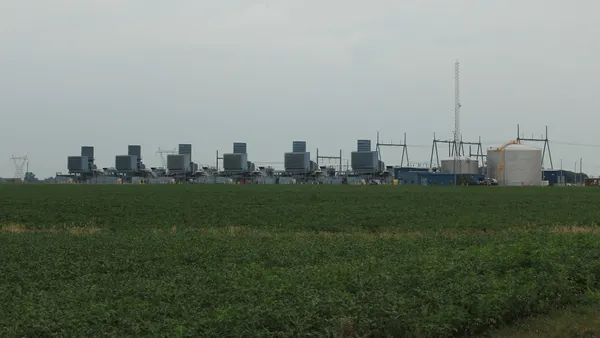
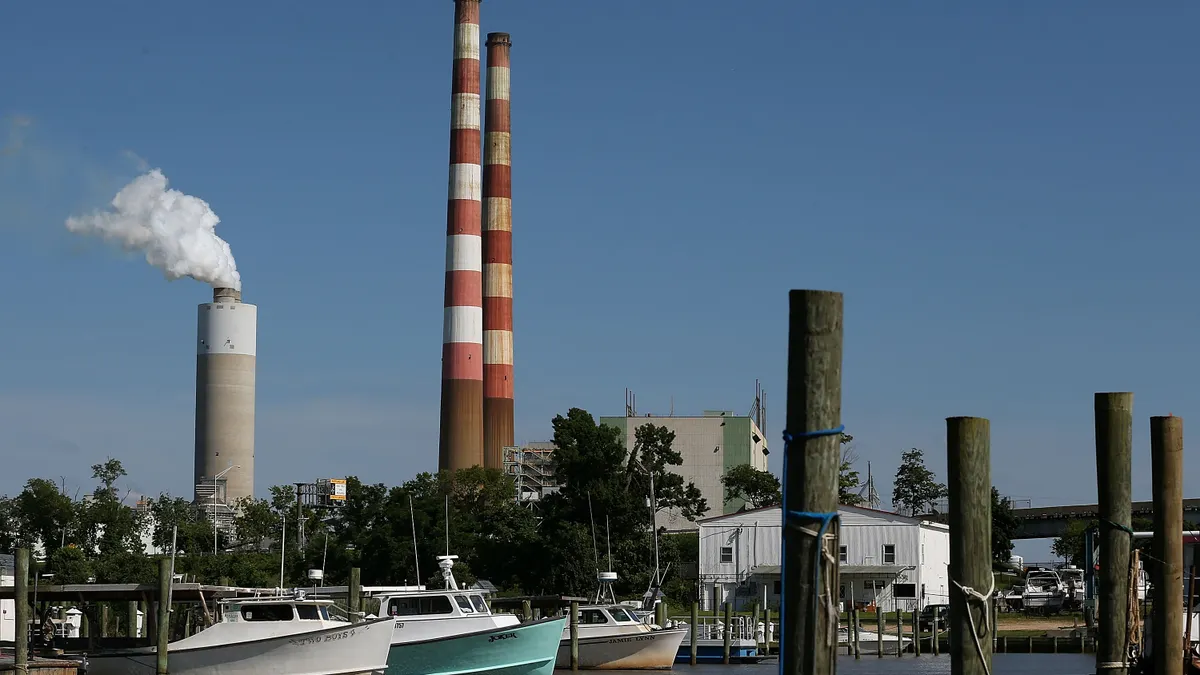
The issue centers on GenOn’s plan to sell a 216-MW, oil-fired power plant in Newburg, Maryland, to TeraWulf. The site has four coal-fired units totaling about 1,260 MW that were shuttered in 2022.
TeraWulf intends to build its project in two phases, each with about 500 MW of gas-fired generation, 250 MW of battery storage and 500 MW of data center load, Paul Prager, TeraWulf chairman and CEO, said during a Feb. 26 earnings call.
GenOn’s application to sell Morgantown to TeraWulf has run into other opposition at FERC, including from the PJM Interconnection’s market monitor, the Maryland Office of People’s Counsel, the Sierra Club and citizens in the area around the power plant.
The OPC, which represents Maryland ratepayers, said TeraWulf made no assurances in the application that it would bring its own new generation to the site. Also, it is unclear how, or if, any new generation would participate in the PJM markets, according to the OPC. Further, TeraWulf could remove the existing Morgantown units from the PJM markets, which could raise market prices, the ratepayer advocate said.
The OPC — and others — have also raised concerns about TeraWulf’s financial health, including its inability to turn a profit.
TeraWulf posted a $661.4 million loss in 2025, up from a $72.4 million loss the year before. Its revenue increased to $168.5 million from $140.1 million in the same period, according to its annual report.
Since 2022, TeraWulf has mainly funded its operations by selling bitcoin and issuing debt and equity, the company said.
It is unclear how TeraWulf would get gas to the power plant site, according to Public Citizen. The nearest gas pipeline — Berkshire Hathaway’s Eastern Gas — is 20 miles away, and it is operating at full capacity, Public Citizen and Port Tobacco River Conservancy told FERC.
However, GenOn told FERC the issues surrounding the future of the site and possible effects on PJM’s market are outside the scope of its application to sell the Morgantown power plant.
“The transaction will have no adverse effect on competition, rates or regulation or result in any cross-subsidization concerns and is therefore consistent with the public interest,” GenOn said.
Any future development at the Morgantown power plant would face public regulatory and permitting reviews, GenOn said.
“The purchaser has confirmed that no such plans have been announced, nor would they be relevant to the transaction,” GenOn said.