Dive Brief:
- Central Georgia Electric Membership Corp. will deploy up to 50 MW of small-scale, customer-sited energy storage in partnership with Base Power, the organizations said last week.
- Set to begin in 2027, the deployment marks Base Power’s first utility partnership outside its home state of Texas, Base and CGEMC said. CGEMC will charge the batteries when wholesale power prices and members’ energy demand are low and discharge during periods of peak demand, helping to stabilize the grid across its 14-county territory southeast of Atlanta.
- The batteries will add capacity to a CGEMC system that could see substantial large-load growth in the coming years. Multiple data center projects are proposed or under development in its territory, including a 240-MW Equinix campus near Hampton.
Dive Insight:
Base Power operates as a retail energy choice provider in Texas and the Illinois zone of the PJM Interconnection, and as a direct partner for public power entities in parts of Texas. The company says its fleet has more than 750 MWh of capacity spread over 30,000-plus homes.
Base is one of several companies that provide deeply discounted home battery subscriptions via energy choice retail frameworks in restructured markets or utility partnerships in regulated markets.
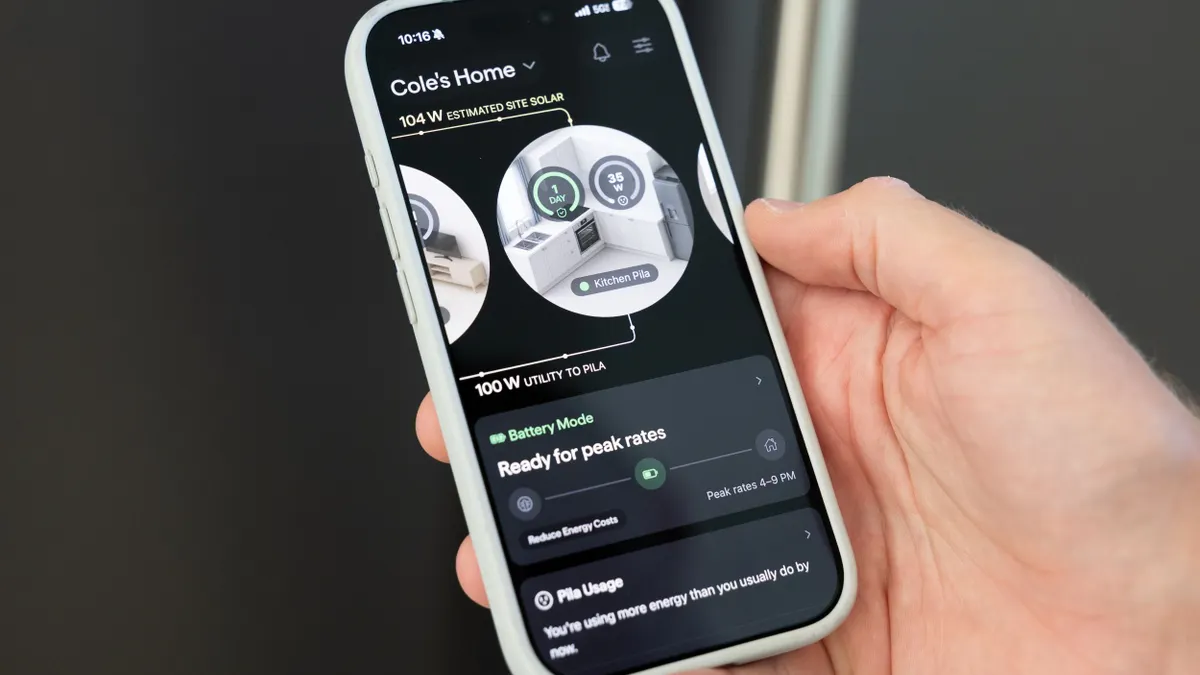
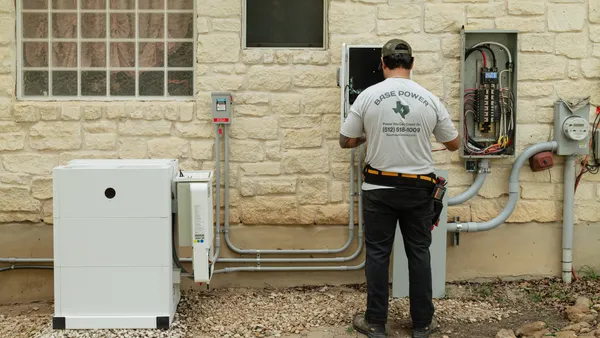
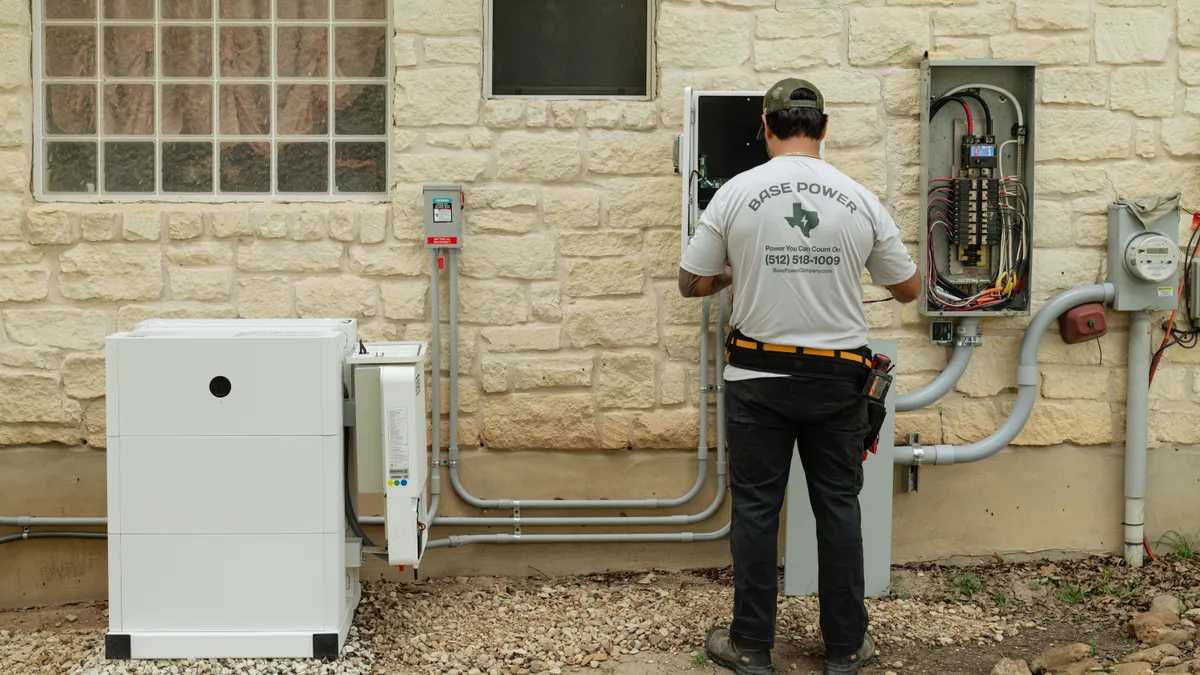
In both scenarios, Base installs and maintains relatively large residential backup batteries at little or no direct cost to the homeowner. When the grid is up and running, Base or its utility partners charge and discharge the batteries to shave demand peaks, mitigate price spikes and tap energy arbitrage value. During outages, Base says each 39.2-kWh battery can provide up to 36 hours of backup power.
Base’s partnership with CGEMC marks its first outside Texas and one of its first in a regulated utility market. Base is also partnering with El Paso Electric, a vertically integrated utility serving parts of far west Texas outside the deregulated Electric Reliability Council of Texas market, on a resilience-focused pilot program.
While that means the company and its utility partners target different value streams, the core business proposition — using distributed batteries to reduce power supply costs — remains the same, company spokesperson Gabriel Federman said in an email.
“In Texas, that means addressing transmission and energy costs through peak-shaving and arbitrage. In Georgia, the main value is in transmission and reducing capacity obligations,” Federman said. “However, the core principles and the value of distributed storage [are] consistent across markets.”
Both transmission-scale energy storage and customer-sited distributed batteries deliver benefits at the wholesale level, according to an analysis published in September by the consultancy ICF. Distributed BESS offers additional value in alleviating distribution grid congestion, boosting local resilience and allowing utilities to defer grid upgrades, ICF said.
Unlike vertically integrated utilities that earn a regulated rate of return on infrastructure spending, member-owned rural electric cooperatives like CGEMC and not-for-profit municipal power utilities like Base Power partner Austin Energy have strong incentives to minimize wholesale power costs and avoid expensive system investments. Regardless of local market structure, they’re tapping distribution-connected energy storage for help — from networked residential batteries to multi-megawatt installations at substations or industrial sites.
George Weaver, CGEMC president and CEO, framed the utility’s partnership with Base Power as a win for members themselves and the grid they pay to support.
The 50-MW deployment will “add flexible local capacity to support our electric system while giving participating members greater peace of mind through dependable backup battery power,” Weaver said in a statement.