Joshua Skov is a professor of practice at the University of Oregon’s Lundquist College of Business.
The chatter about nuclear energy is everywhere in the air. Just as the tech boom and AI and electrification generally are pushing us to get more generation on the grid, nuclear is on the tip of every tongue.
But is it more than talk? In fact, “nuclear” has become a muddled set of topics, mixing different technologies, timeframes and deployment realities. It’s time to sort it out.
I propose a simple taxonomy to keep three mostly distinct categories separate in our minds. With a nod to Charles Dickens’ A Christmas Carol, I’ve chosen the labels based on the ghosts that visit Ebeneezer Scrooge.
First, the ghost of nuclear past is our legacy fleet — and I will suggest thinking and speaking of it that way, as old infrastructure that still delivers significant benefits but which we don’t build more of.
Second, the ghost of nuclear present is our current ability to build anew, which is … basically zero, with a few narrow exceptions.
Third, the ghost of nuclear future is the most mysterious, notably because — despite the considerable hype — it doesn’t exist yet and probably won’t for longer than you think.
The ghost of nuclear past
The United States has 94 nuclear power plants, far and away the world’s largest fleet, and it generated 18.6% of our electricity in 2024 — more than coal, or more than solar and wind combined (at least for now). The fleet’s capacity factor of over 92% is the envy of the world’s nuclear generators. The marginal cost of operation at these existing plants is highly competitive, and we have no other “firm” power that is low-cost and low-carbon. This legacy fleet is part of our energy backbone, without a doubt.
What’s striking is that we don’t build these plants anymore. Indeed, the last time we started a new nuclear power plant on a new site was 1978; that plant, the Harris Nuclear Plant just outside of Raleigh, North Carolina, entered service in 1987. A handful of other reactors came online in the 1990s and 2000s after long delays, but essentially the nuclear building boom in the U.S. tapered out 20 or 30 years ago.
I know what some of you are saying. “But we did build some more! The Vogtle Units 3 and 4!” I will say flatly: those don’t count. They took 15 years and nearly $37 billion, and just for additional reactors at an existing site. It isn’t clear that we would do it all again, and the effort has failed to spark a nuclear renaissance.
The ghost of nuclear present
Here I’m focused on what we can do now with nuclear tech in the U.S. Sadly, the answer is, in essence, almost nothing. How could you be hearing so much nuclear news, you ask? It is a problem of what and when.
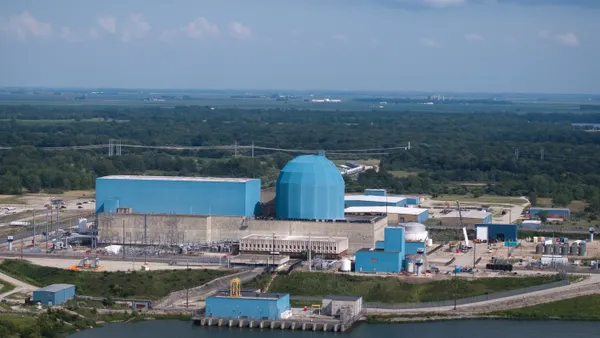
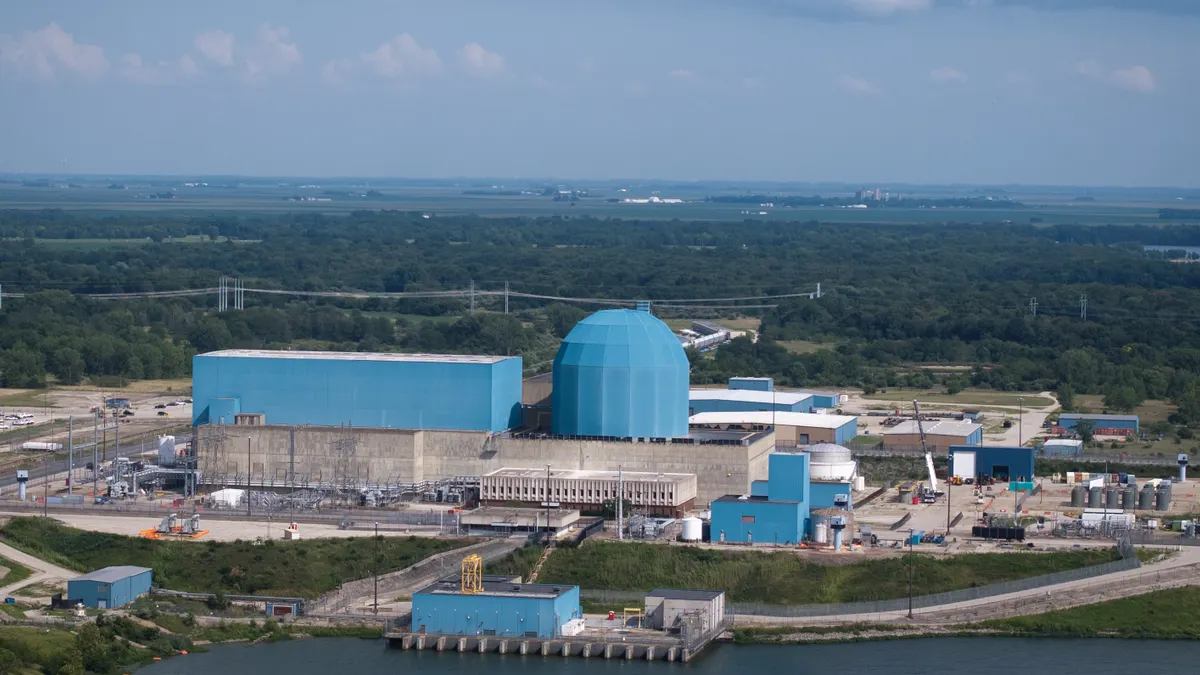
The reality of what additional nuclear capacity can happen right now is quite simple: new reactors of the old kind are prohibitively expensive to build. A handful of reactors are ripe for repurposing — Meta’s investment in Illinois, Microsoft’s at Three Mile Island, Google’s similar just-announced deal in Iowa — but those are few and largely spoken for; and everything else is a pilot project.
Don’t get me wrong: the “handful” I’m talking about in that middle category will mean a lot of energy. Meta has agreed to keep the Clinton Power Station open past 2027 (when it was scheduled to close), signing a 20-year agreement for all of the energy from the facility. When one considers the high capacity factor of nuclear plants, this is the equivalent of 3-4 GW of solar or 2-3 GW of wind.
Yet these are truly the exceptions to the rule. Few nuclear power plants in the U.S. have a spare reactor to bring back online, or a viable one that is headed toward decommissioning. Indeed, it isn’t clear that there will be any more deals of this kind.
In theory, we could get new builds at existing plants. But that scenario is extremely expensive and slow to deploy. If only we had new and better nukes!
This hope leads us inexorably to the final ghost.
The ghost of nuclear future
For many readers, this grim picture is at odds with the news. But the hype, you say, the hype! What about all of the investments we’re hearing about? The pilot projects? The enthusiasm from Big Tech? Recent advancements by General Atomics? The permit for TerraPower’s Wyoming site? The avalanche of cash from Bill Gates? The recent announcement from TVA that it wants more SMRs? Those fall into three categories, none of which leads to scalable megawatt-hours until well into the next decade.
First, pure tech with not a single yard of concrete in the ground. Many nuclear power articles pump up “discoveries” and “advances” that are closer to basic science than applications, much less a settled reactor design, much less commercial production.
Second, much high-profile ink has been spilled on announcements of interest, but these get coverage that misleadingly suggests imminent deployment. Amazon wants nuclear! Microsoft wants nuclear! And most recently, the article whose headline on the Tennessee Valley Authority proclaims that the “Largest US public power supplier leads push for small reactors” — only to reveal that the push is for “first-of-a-kind technologies that are not expected to be commercially available until the 2030s.”
Finally, many of the real live “deals” are only one step ahead of TVA, i.e., for first-of-a-kind projects that have “starting as early as” dates that are years away, sometimes many years. Amazon’s multi-reactor deal with Energy Northwest and Bill Gates-funded TerraPower are both publicly aiming for 2030, a suspiciously round number that appears ambitious. Others are farther out, such as Oklo (2032), many targeting “early 2030s” such as Radiant, NuScale, Aalo and Google-backed Kairos Power (2035).
Meta’s widely reported recent announcement for 6.6 GW of advanced nuclear leads with fanfare, but says it will do so by 2035.
Do I sound pessimistic? Consider the most bullish pathway for advanced or next-gen nuclear out there right now, the one articulated in exquisite detail in the Biden DOE’s report Pathways to Commercial Liftoff: Advanced Nuclear. This half-plan, half-wish, all-serious detail-rich trajectory describes a way for all of the pieces to fall into place — initial deployment, additional R&D, aligned policy, complementary investment by the private sector — for the first commercially viable, nth-of-a-kind advanced reactors to enter service … by the late 2030s. And again, the many necessary building blocks and stepping stones in that report are not guaranteed.
What about the rest of the world?
You might be wondering, why this unabashed focus on the United States? It’s worth briefly noting that these distinctions don’t work as well elsewhere. Two issues stand out.
First, few countries have notable fleets of legacy nuclear power plants.The U.S., China and France account for half of the 416 operational plants, and the top seven countries represent 75% of the global fleet. In short, most countries don’t have any “legacy” nuclear.
Second, some important countries have continued building nuclear power plants and, as a result of the associated learning, they’re doing so at reasonable prices, most notably South Korea and China. (Some observers might add Russia, but that’s complicated.) For reasons beyond the scope here, the conditions facilitating those opportunities probably aren’t replicable in the U.S. More power to those nuke-builders beyond our borders, but we won’t be able to emulate them anytime soon.
Yet the ghost of nuclear future is the same everywhere. The U.S. appears to be a leader on advanced nukes, so the measured pessimism likely has broad international relevance.
So am I saying we won’t get any more nukes? Not at all. But I hope this analysis encourages all of us — journalists, clean energy advocates, Big Tech visionaries, venture capitalists, everyday business writers — to be clearer when we invoke “nuclear” and specify the what and the when.