Cameron Brooks is the executive director of Think Microgrid, a 501(c)(6) advocacy group representing the microgrid industry.

Across the country, it’s shaping up to be a particularly dangerous and damaging wildfire season. Where I live in Colorado, there have been more than two dozen “red flag” days this year already.
One of the worst spring droughts in memory has left parts of the country parched. In mid-April, there were already dozens of active fires. In Georgia and Florida, eight separate blazes have destroyed structures and forced residents to evacuate. Experts predict that between 5.5 and 8 million acres will burn across the country this year, with the Southwest, Rockies, Great Basin and Northwest facing the highest risks.
Many communities are frustrated with how utilities manage the electric grid in the face of wildfire threats. In the West, there’s a collective anxiety every time the wind picks up. Increasingly, there are calls to “bury the lines.” Undergrounding has its place, but it's not the only answer. It’s also not a complete answer. There are faster, cheaper and higher quality options to make communities resilient today, not years from now. Microgrids include physically interconnected resources on-site (providing backup power) and they are capable of modulating their demand (acting as a virtual power plant). In the wildfire context, this means that if certain lines need to be de-energized, customers are unaffected because they can safely operate while islanded from the grid.
The hidden costs of undergrounding
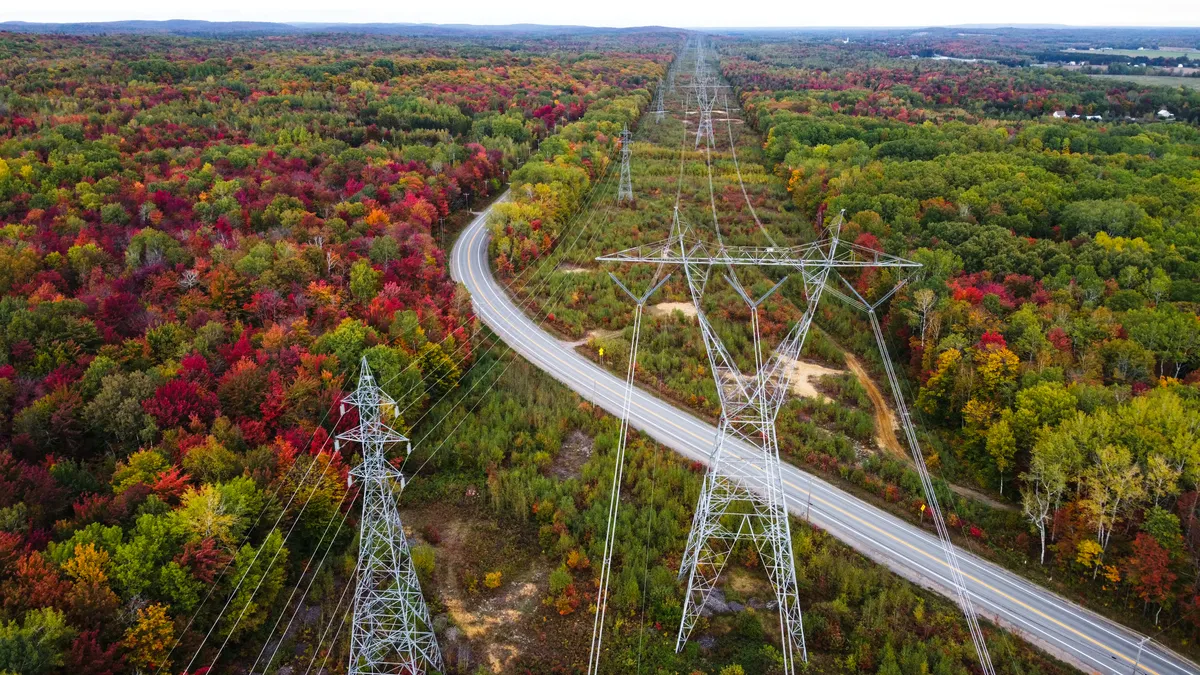
Burying power lines makes intuitive sense. A buried line can stay operational and is unlikely to start a fire. But as a resilience strategy, undergrounding falls short because it’s expensive and slow. However, it’s worth noting that undergrounding is the solution that brings the greatest profit to regulated utilities.
Why? Because the economics of the regulated utility industry are upside down and create incentives that don’t align with customer interests. Investor-owned utilities make money when they invest your money. Who pays to bury the lines? Utility customers do. It's roughly equivalent to a bank financing home improvements and adding them to your mortgage — whether you requested them or not. A rate hike approved by a public utility commission isn’t much different.
Consider Xcel Energy’s most recent wildfire mitigation plan in Colorado. State regulators approved a $200 million budget to bury 50 miles of power lines — an upfront cost of roughly $4 million per mile. But that's just the initial capital investment. When you factor in financing costs spread over 25-30 years, ratepayers will pay more.
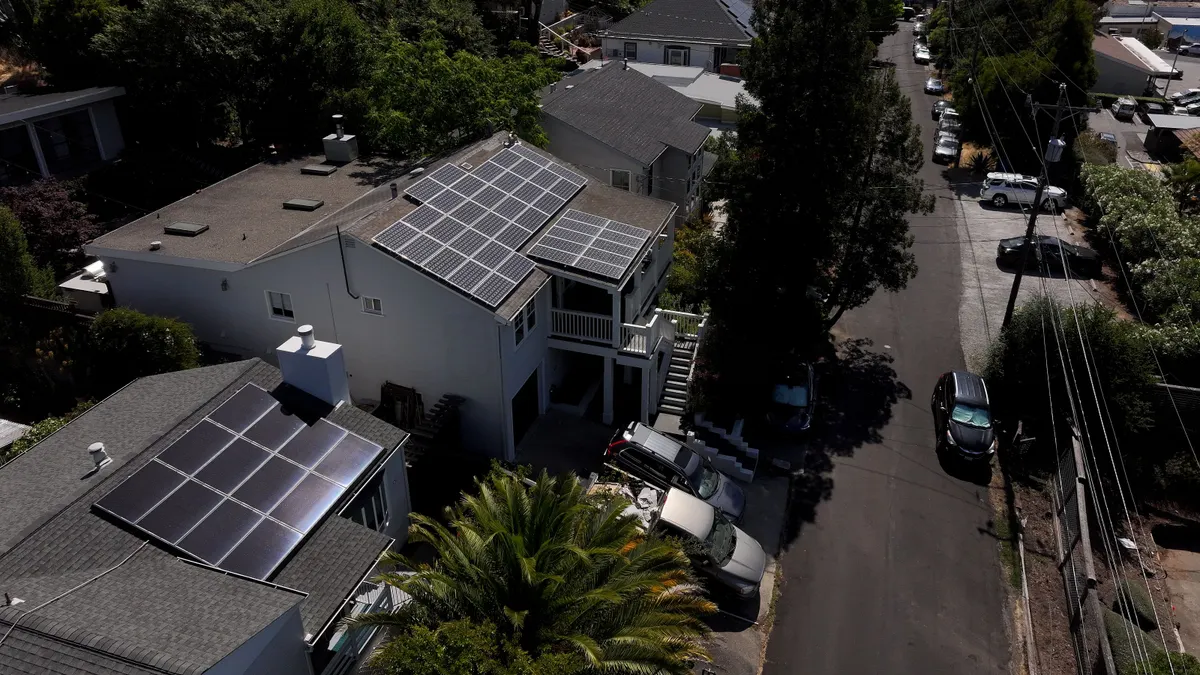
How else might we invest that money? That money could instead equip 7,500 to 15,000 homes with battery systems that provide 24-48 hours of backup power, keeping them online during public safety shutoffs. The batteries could also be paired with solar and intelligent controllers to help customers manage energy demand and save money (especially for those under time-of-use pricing). When the grid needs flexibility, the same batteries could be tapped for capacity, saving yet more.
That is, they could be microgrids, capable of interacting with changing grid conditions and operating independently when needed, leveraging private and community capital to stretch ratepayer dollars even further. The Department of Energy agrees. They’ve put forward a vision of a grid in 2035 where 30-50% of our electricity comes from the edge of the grid and microgrid “building blocks.”
Regrettably, these are not the kinds of solutions put forward by utility companies. At Think Microgrid, we are tracking regulatory activity at utility commissions across the country. For the most part, utility plans rely overwhelmingly on public safety power shutoffs — blackouts that could collectively cost customers and businesses millions of dollars. On the legislative side, we see proposals to limit utilities’ financial liability and wildfire plans dominated by expensive capital solutions (like undergrounding).
Looking beyond single solutions
Certainly, some lines should be buried. But in our rush to put everything underground, we risk overlooking solutions that could protect communities immediately while building long-term resilience.
Undergrounding projects take years, perhaps decades, to complete. Meanwhile, communities face blackouts today as we enter fire season. We have alternatives that work now: home-level and community microgrids. The costs of batteries, solar, fuel cells and controllers continue to decline while undergrounding costs escalate.
Our public leaders face difficult decisions, and complicated systems often limit the practical options. But that does not absolve them of the responsibility of demanding the best possible options be on the table. When utilities propose wildfire mitigation plans, our leaders should be asking harder questions about cost-effectiveness, timelines and what delivers the most protection per dollar spent.
The economics increasingly favor distributed solutions. The technology exists today and will only get better in the decades ahead. Instead of burying our money in the ground, we should be investing in solutions that protect communities today.
What does this look like from a regulatory point of view?
Oregon is in the process of becoming the first state to establish a comprehensive regulatory framework for private and community microgrids, following a directive from recent legislation, enabling compensation for the resilience value of microgrid solutions that cost less than undergrounding or other distribution upgrades. Many states, including Michigan and Maine, have opened dockets to explore innovative ways to address resilience and storm costs. Texas finalized rules last month for its program to deploy behind-the-meter backup power at critical facilities such as hospitals, emergency response centers, shelters and water infrastructure. And here in Colorado, legislators permanently extended the state's Microgrids for Community Resilience grant program, which supports electric coops and municipal utilities in purchasing microgrid resources for eligible rural communities.
There is a growing community of people across the country who are actively involved in developing policy and implementing practical solutions. At Think Microgrid, we’re tracking as many of these activities as we can and are eager to collaborate with policy leaders, community decision-makers, academics and industry to highlight microgrid solutions like these. We shouldn’t have to wait decades, enduring regular blackouts, to address wildfire protection. Better options exist, but only if we demand them and shape them.