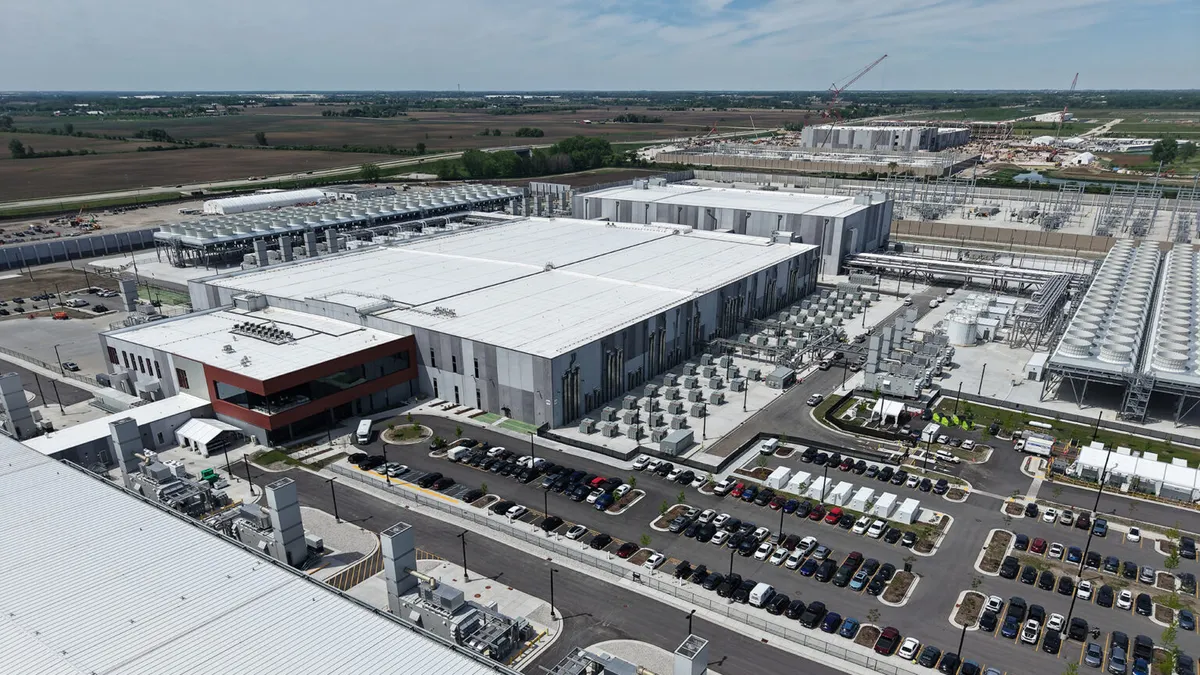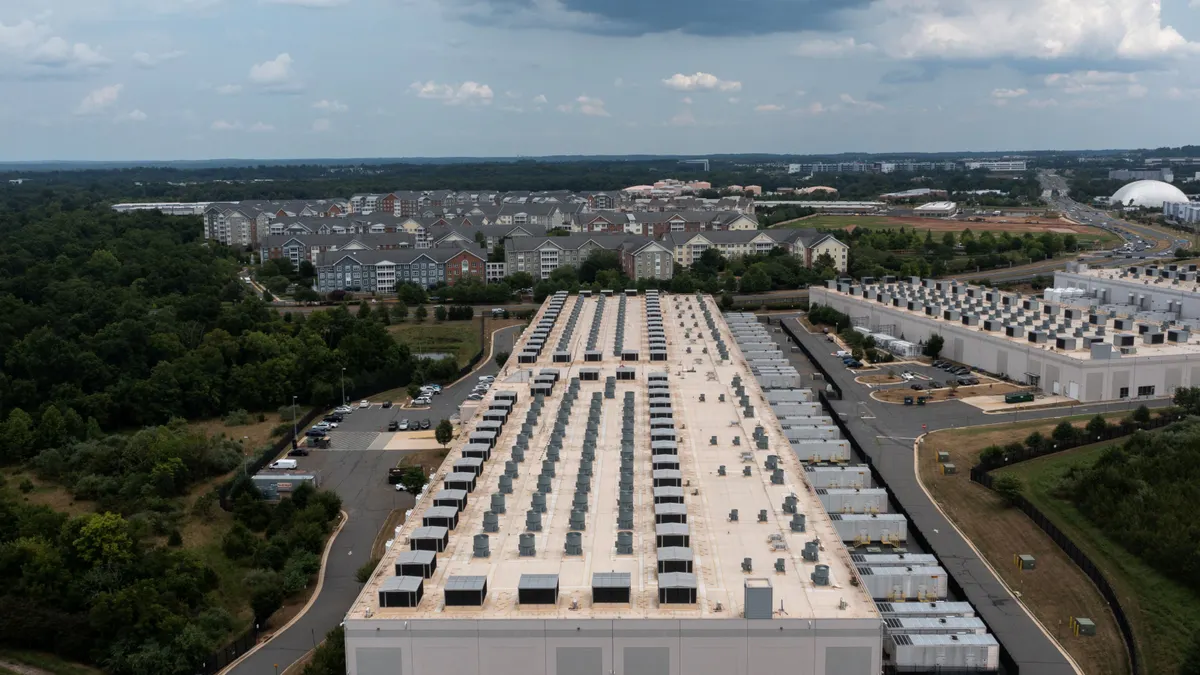
FirstEnergy’s utilities have contracts to serve 6.4 GW of data center load by 2035, up 50% from the first quarter, and the company expects to sign deals to serve another 1.5 GW within two weeks, Brian Tierney, FirstEnergy chairman, president and CEO, said Wednesday during an earnings conference call.
At the same time, FirstEnergy’s total data center demand, including its pipeline of potential customers, increased 30% in the second quarter to 24.8 GW, led by its Ohio service territory, according to an earnings presentation by the Akron, Ohio-based utility company.
FirstEnergy contends that serving data centers is a key part of its growth potential. The company’s data center contracts and its contract pipeline totals about 70% of its July system peak load of 34.8 GW, according to Tierney.
Besides building transmission for data centers, FirstEnergy is planning power plants for them.
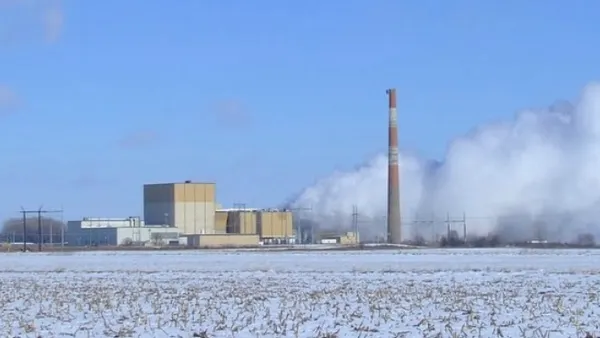
Two FirstEnergy utilities — Monongahela Power and Potomac Edison Co. — are seeking permission from the West Virginia Public Service Commission to build the Maidsville Energy Center, which includes a 1,200-MW, gas-fired power plant and three solar projects totaling 70 MW.
The utilities plan to spend about $2.5 billion on the gas-fired plant, which is expected to be operating by the end of 2031, and $182 million on the solar farms, according to their mid-February application for a certificate of public convenience and necessity for the projects.
Although the project is mainly for potential data center load, Mon Power wants to level a surcharge on its customers to pay for the projects’ construction, according to the CPCN application. The utility expects the surcharge will boost residential rates by about 2.3% on average. Once online, the projects will result in “large, anticipated revenues,” the utilities told the PSC.
Where service agreements are later executed between FirstEnergy and data centers and approved by the West Virginia PSC, those data center owners would be responsible for their share of the surcharge, Michon Ellis, a FirstEnergy spokesman, said in an email.
FirstEnergy earlier this month signed the White House’s voluntary Ratepayer Protection Pledge, which aims to shield existing customers from grid infrastructure and power supply costs caused by data centers.
A coalition of groups — West Virginia Citizen Action Group, Solar United Neighbors and Energy Efficient West Virginia — told the PSC to reject the surcharge, saying the data center project is too speculative, according to a May 29 filing. The 1,012-MW data center’s ramp up schedule has already been delayed by two years and won’t be fully online until 2035, the groups said.
Potentially, all the gas-fired plant’s output will be contracted to a data center under a “fully bundled” service agreement that would be filed for approval at the PSC, FirstEnergy CFO Jon Taylor said on the conference call.
“The agreement is expected to include significant protections and long-term benefit sharing for existing West Virginia customers,” he said.
FirstEnergy data center demand grows
The second-quarter surge in contracted data center load across FirstEnergy’s utilities reflects a desire by data center companies to enter the PJM Interconnection’s transmission planning process, which is viewed as a bottleneck to getting online as quickly as possible, Tierney said.
Every GW of data center load requires roughly $250 million in transmission upgrades, FirstEnergy estimates. Currently, major transmission costs caused by data centers in PJM are shared by all ratepayers. FirstEnergy last month asked federal regulators to assign those transmission costs directly to data centers.
FirstEnergy is considering options, such as creating a separate generation company, to help it build power plants in West Virginia, according to Tierney.
“We're evaluating the right structure to support that future growth, including the potential for structures that would allow Mon Power or Potomac Edison West Virginia to enter into a wholesale power agreement with an affiliated generation company,” he said.
Meanwhile, overall electric sales are growing across FirstEnergy’s service territories.
Total second-quarter sales increased 0.7% to 34.7 million MWh, with a 4.4% jump in industrial sales more than offsetting a 1.9% and 1.2% drop in residential and commercial sales, respectively, according to FirstEnergy. Adjusting for mild weather, total electric sales increased by 0.9%.
The industrial growth was especially strong in the metals, oil and gas, and chemical sectors, “reflecting strengthening order activity and tailwinds from the AI and data center infrastructure build-out,” Taylor said.
FirstEnergy’s utilities have about 6 million customers in Ohio, Pennsylvania, New Jersey, West Virginia, Maryland and New York.
This story was updated to clarify that data centers added to the service territory would pay a proportionate share of the proposed surcharge for the Maidsville power plant.