Dive Brief:
- The U.S. Department of Energy will not move forward with the designation of three proposed National Interest Electric Transmission Corridors that the Biden administration selected for review in 2024, saying in a Wednesday release that the corridors were selected as a “means to advance” that administration’s “Green New Scam agenda.”
- “Transmission policy must serve the American people,” Energy Secretary Chris Wright said in the release, “not special interests or a climate-alarmist agenda that drives up costs, worsens reliability, and disregards the concerns of local communities.”
- DOE’s release alleged that the “current designation framework proved ineffective in strengthening grid reliability and reducing electricity costs. In some communities, it also contributed to confusion and concern about the scope and intent of NIETC authority.”
Dive Insight:
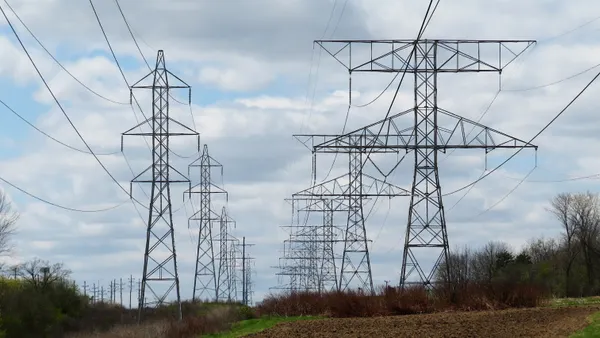
The three cancelled corridors are the Lake Erie–Canada Corridor, the Southwestern Grid Connector Corridor and the Tribal Energy Access Corridor.
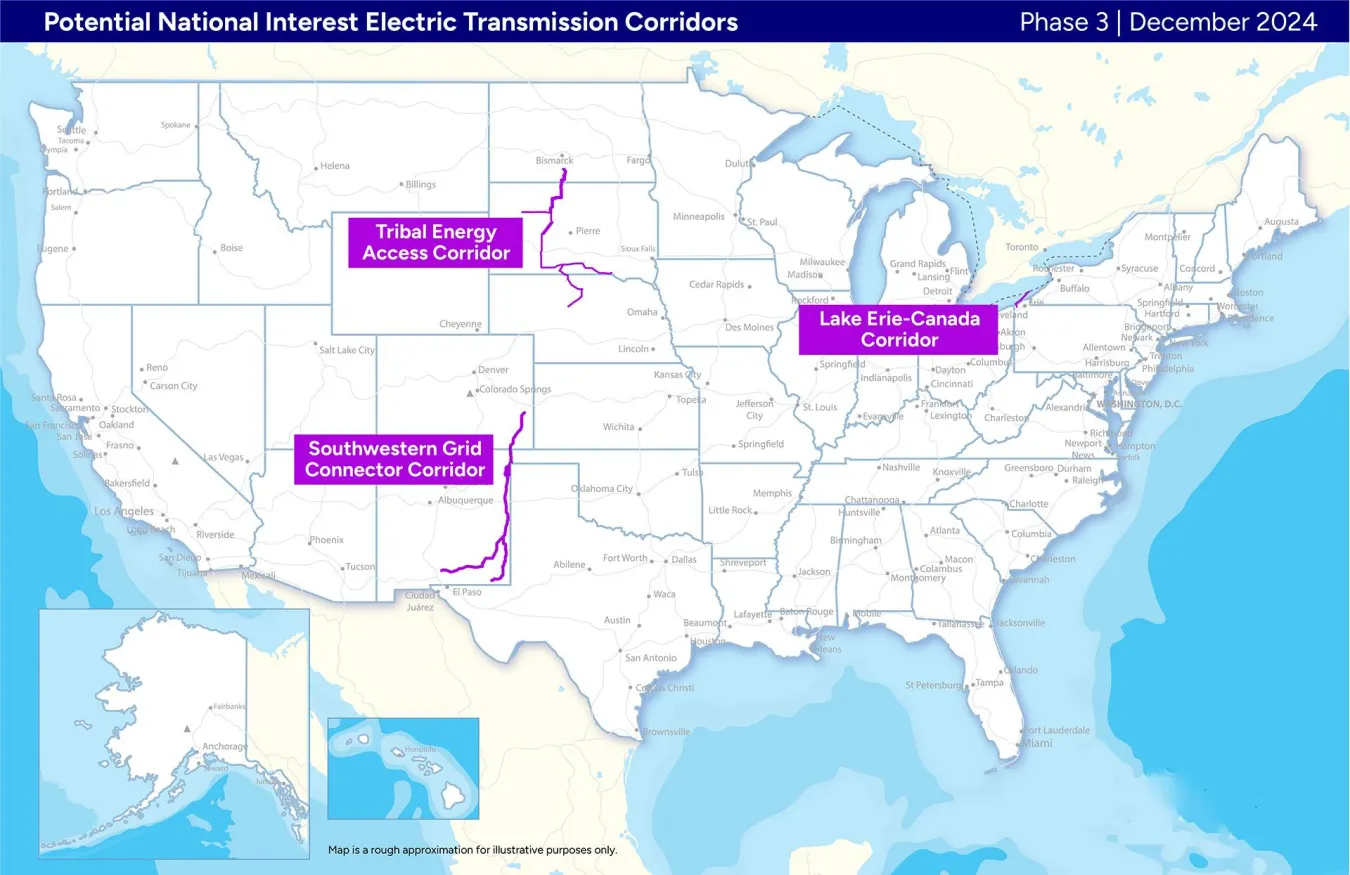
The DOE’s webpage about the NIETC process no longer includes details about the three projects. A cached version, from March 2026, said that the three proposed corridors would serve various purposes, including providing needed resource adequacy support to the PJM Interconnection, providing “cross-interconnection and interregional connections” between the Southwest Power Pool and WestConnect regions, and facilitating Tribal energy and economic development “by addressing a lack of extra high-voltage transmission.”
According to the current DOE webpage, a NIETC designation can unlock federal financing tools, “specifically public-private partnerships,” as well as allow the Federal Energy Regulatory Commission to “issue permits for the siting of transmission lines within the NIETC under circumstances where state siting authorities do not have authority to site the line, have not acted on an application for over one year, or have denied an application.”
DOE said a NIETC is an area of the country where the agency has “determined the lack of adequate transmission harms consumers and that the development of new transmission would advance important national interests in that area, such as increased reliability and reduced consumer costs.”
Cattle producer-only trade association R-CALF USA praised DOE’s decision, as it had raised concerns in 2024 about the siting of the corridors for their potential to “disrupt independent livestock operations or result in the loss of essential grazing and haying lands.” Other groups, including the Environmental Defense Fund and Clean Air Task Force, criticized the cancellation and said DOE is turning down an opportunity to strengthen the grid.
The cancelled corridors were selected to “help address areas with significant transmission congestion,” CATF said in a release. “Transmission congestion increases costs and reduces reliability for ratepayers.”
“If the goal is affordable, reliable, and secure electricity, we should be making it easier to build the infrastructure the grid needs — not dismantling federal frameworks designed to facilitate it,” said Nicole Pavia, CATF’s Director of Clean Energy Infrastructure Deployment.
EDF noted that while Wright said the current designation framework had “proved ineffective,” DOE’s National Transmission Needs Study from July said that NIETC designation “enables DOE and FERC to use valuable federal financing and permitting tools to spur construction or modification of transmission facilities within a NIETC.” The National Transmission Needs Study is a triennial report, the findings of which form the basis for NIETC designations, according to DOE.
DOE’s release said the Trump administration has taken other steps to build new transmission infrastructure and modernize existing infrastructure, citing several billion-dollar loans made by its Office of Energy Dominance Financing to build, rebuild and reconductor transmission lines.