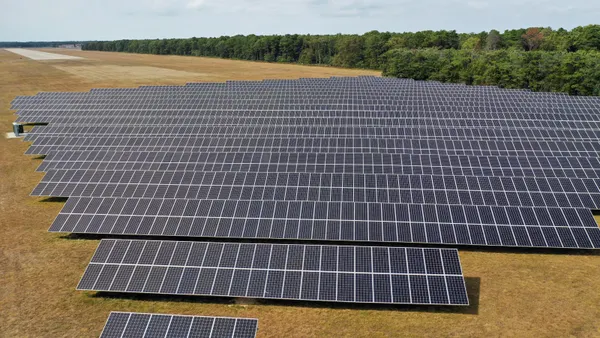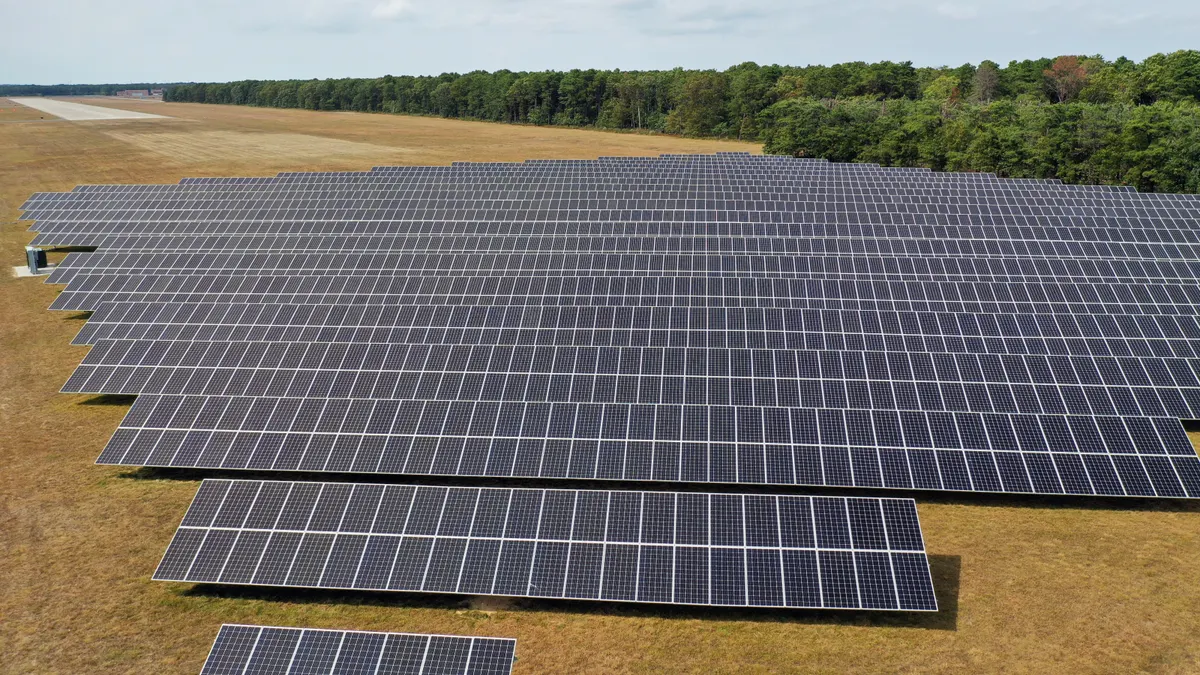
The New York Power Authority on Monday revealed it will own 51% of a 240-MW solar project in St. Lawrence County, with EDF Power Solutions North America as a minority owner overseeing construction.
It is NYPA’s largest solar deal since being tasked with developing and owning renewables projects by the 2023-24 Enacted State Budget. The authority provides electricity to municipal utilities and rural cooperatives in the state, but prior to the budget change it primarily owned hydroelectric resources.
Construction on the Rich Road Solar project is expected to begin in late 2027, with commercial operations set to begin in 2030.
“Amid industry headwinds, NYPA has built the business structures, assembled a team of seasoned professionals, and refined the project pipeline needed to advance large-scale renewable development across the state,” President and CEO Justin Driscoll said in a statement. “This year, those efforts are bearing fruit.”
Rich Road Solar is the first NYPA project to “leverage a public-private partnership model and secure expiring federal tax credits,” Driscoll said. The project development demonstrates “a successful model” for the state to accelerate clean energy projects, he added.
Smaller solar projects have previously advanced. NYPA is currently developing Somers Solar, a publicly developed 20-MW project in Washington County that is expected to be operational in late 2027.
NYPA’s majority ownership of Rich Road demonstrates “how public-private partnership can deliver competitive clean energy at scale,” EDF Power Solutions North America CEO Tristan Grimbert said in a statement. The project “has been a long time in the making and today has taken a significant step forward.”
Rich Road’s 20-year Tier-1 renewable energy certificates contract was awarded as part of the New York State Energy Research and Development Authority’s 2025 Renewable Energy Standard Request for Proposals. Benefits from the project include $1.2 million in host community electricity benefit payments through the first 10 years of commercial operation, the authority said.
NYPA has also committed to making $300,000 in annual contributions to the Renewable Energy Access and Community Help program “once the project begins operating,” the authority said. The program provides bill credits to low-income families.
The New York Energy Alliance, which says it supports “abundant and reliable energy and electricity” cast doubt on the project’s economics, noting that NYPA’s 2025 renewables plan indicated renewables projects cannot cover their costs in the state’s energy market. The group’s LinkedIn profile says renewable energy “has led to reliable sources of energy, like hydropower, natural gas and nuclear power plants, getting shut down or blocked from being built.”
In December, NYPA’s board approved an update to its renewables plan, adding about 2.5 GW of planned capacity for a total of 5.5 GW, including solar, wind and storage projects. The report pegged new solar costs at about $100/MWh, and said developers could expect to recoup $50/MWh. “New renewable energy projects cannot cover their costs just selling their outputs into the [New York Independent System Operator] market alone,” the report said.
“Rich Road is a canary in the coal mine. Twenty of the 29 private partnerships in NYPA’s renewables plan are projects whose earlier state deals had already failed,” NYEA said.